Pap Steve here. If you asked me to pick one green for a beginner in the South, I’d pick Swiss chard every time. It’s pretty, forgiving, and keeps on giving, which makes it the Wonder Years of vegetables. Here’s how to grow Swiss chard in South Carolina so you’re picking it for as much of the year as our weather allows.
Meet Chard: Beet’s Leafy Cousin
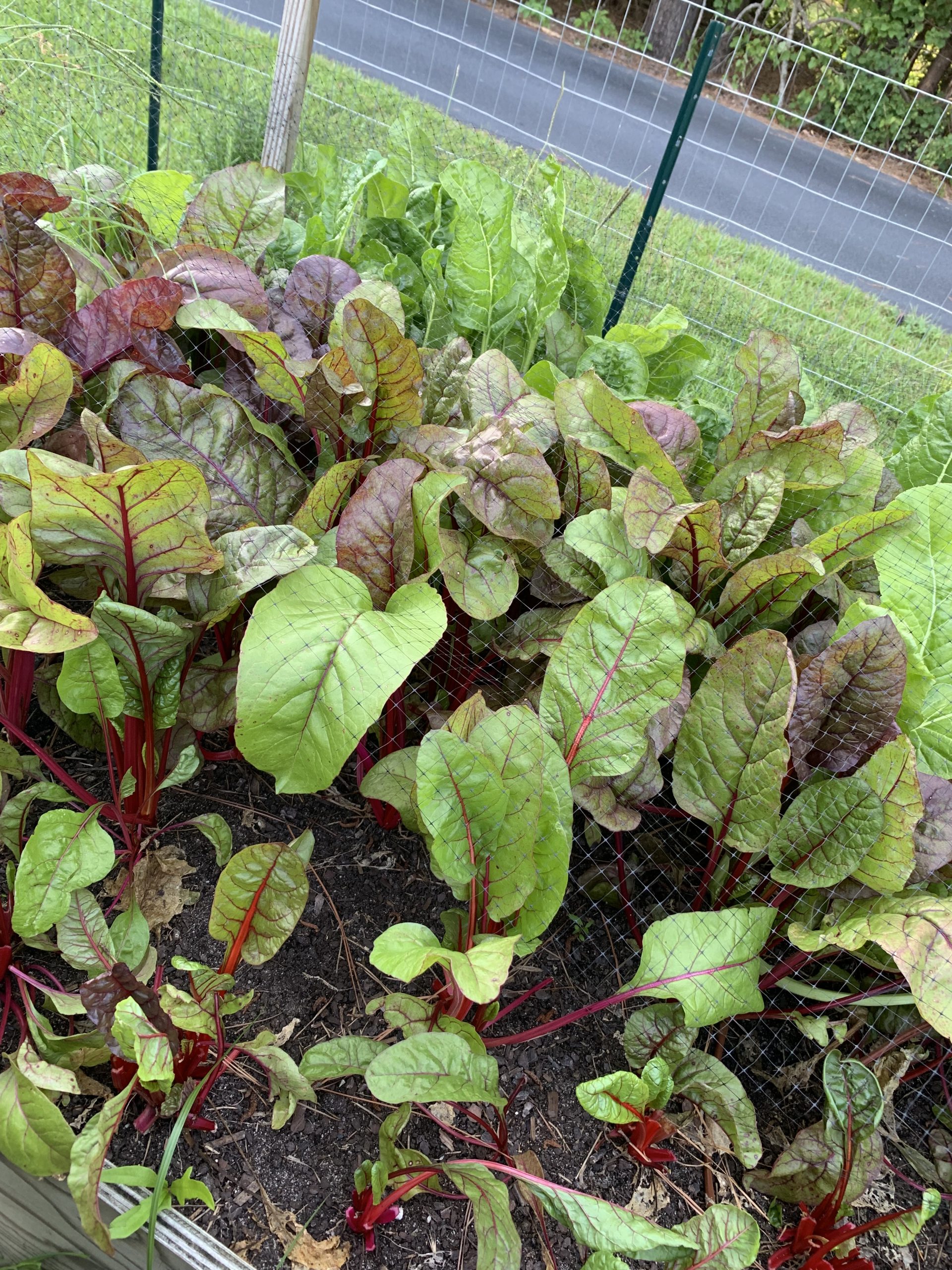
Swiss chard is the same species as the beet (Beta vulgaris), just without the swollen root. Clemson Extension describes stalks in white, pink, gold, orange or red, depending on the variety, and an earthy flavor a lot like beet greens. Young leaves go in salads. Bigger leaves get cooked like spinach in sautés, soups and stews. Don’t toss the stems; chop them and cook them along with the leaves. Here in Blythewood, in Richland County, I grow both rainbow chard and standard green chard, and both have proven hardy and heat tolerant, much tougher in our Southern summers than I expected.
When to Plant Chard in South Carolina
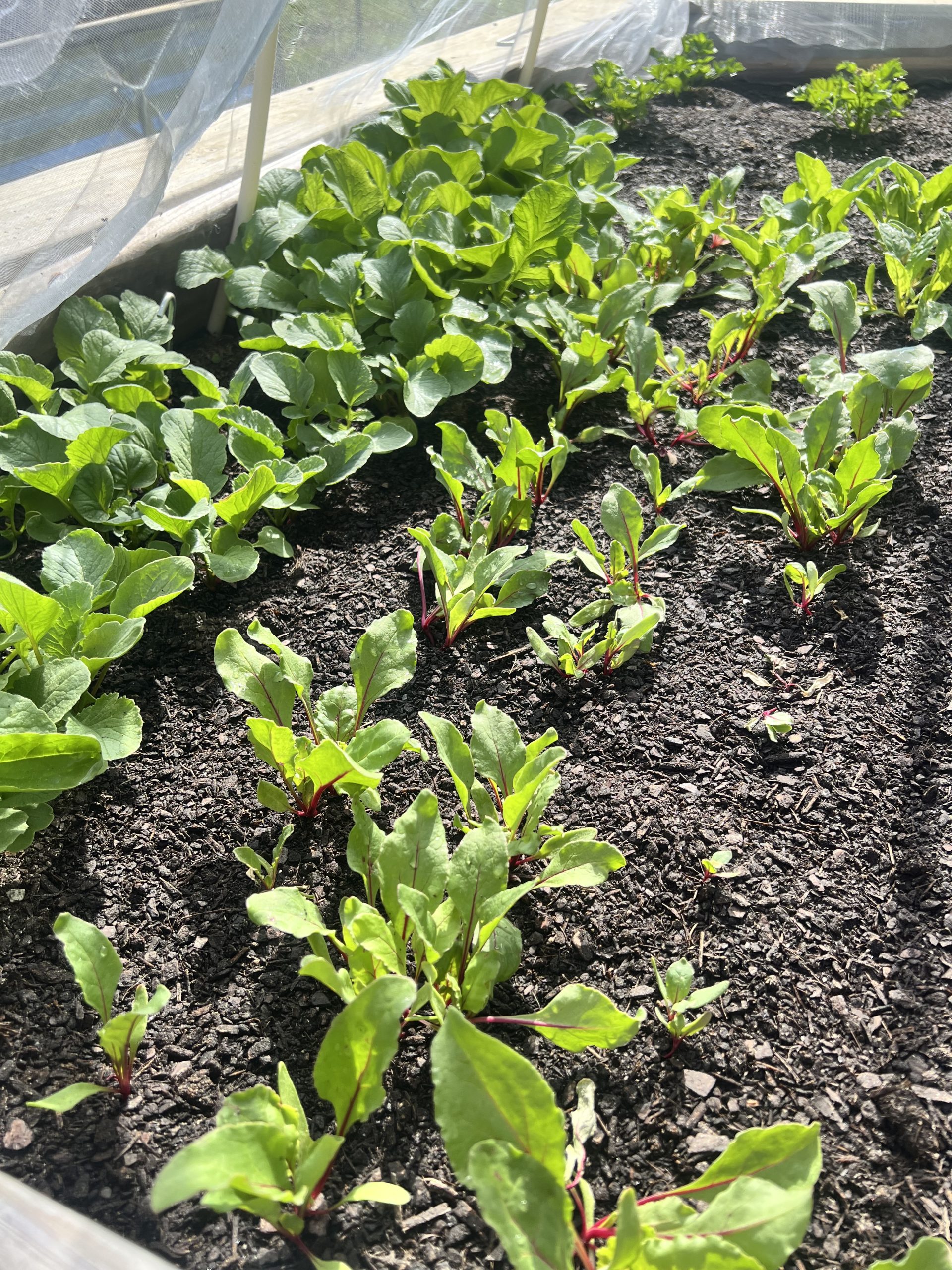
According to Clemson HGIC, you can sow chard in spring or late summer, and it reaches maturity in roughly 40 to 45 days. Its fall direct-seeding window runs from about July 15 to September 30 in the Piedmont and August 1 to October 30 on the Coastal Plain. The spring window starts February 1 on the Coastal Plain and in March in the Piedmont. We usually sow chard in mid September. We start from seeds that I soak overnight in water.
So what does “year-round” really mean here? Chard tolerates light frost, and it also hangs on through more heat than lettuce or spinach. A planting that goes in during fall can often be picked through a mild winter with some protection, then keep producing into spring. Eventually it bolts (sends up a flower stalk), usually in its second spring, and that’s your signal to start a fresh crop. A summer heat wave can slow it down, too, so a little afternoon shade helps.
How I Grow It in the Raised Beds
- Soil: Clemson recommends a pH of about 6.0 to 6.5, with fertilizer based on a soil test. My eight 4’x8′ metal beds get compost and nothing else.
- Sowing: plant seed about a half inch deep and keep the soil moist. Each chard “seed” is really a cluster, so several sprouts come up together. Thin them to the strongest one.
- Sun: full sun is best. It handles some shade better than fruiting crops do.
- Water and mulch: water deeply and mulch to save moisture and keep grit off the leaves.
Cut-and-Come-Again Harvesting
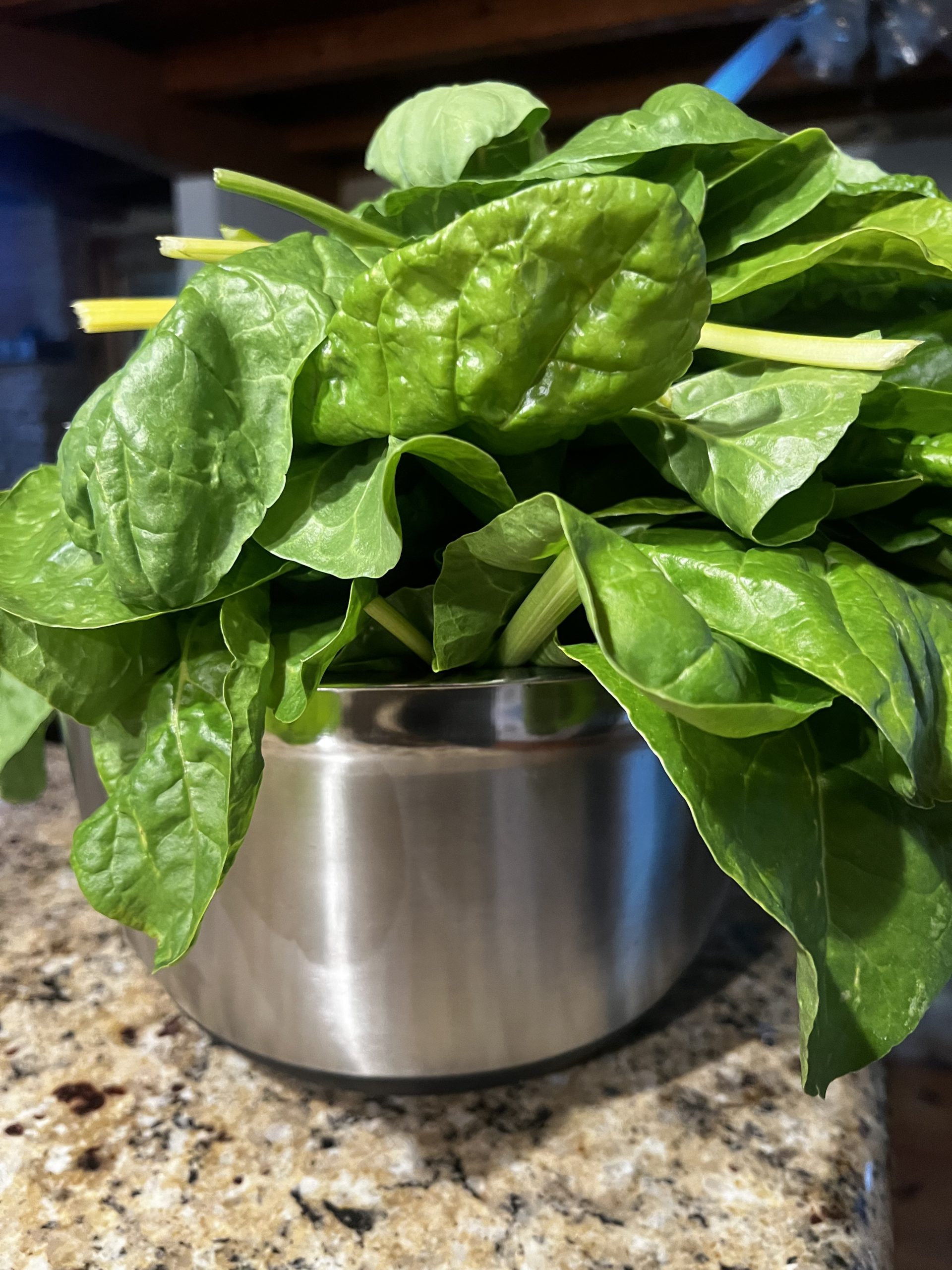
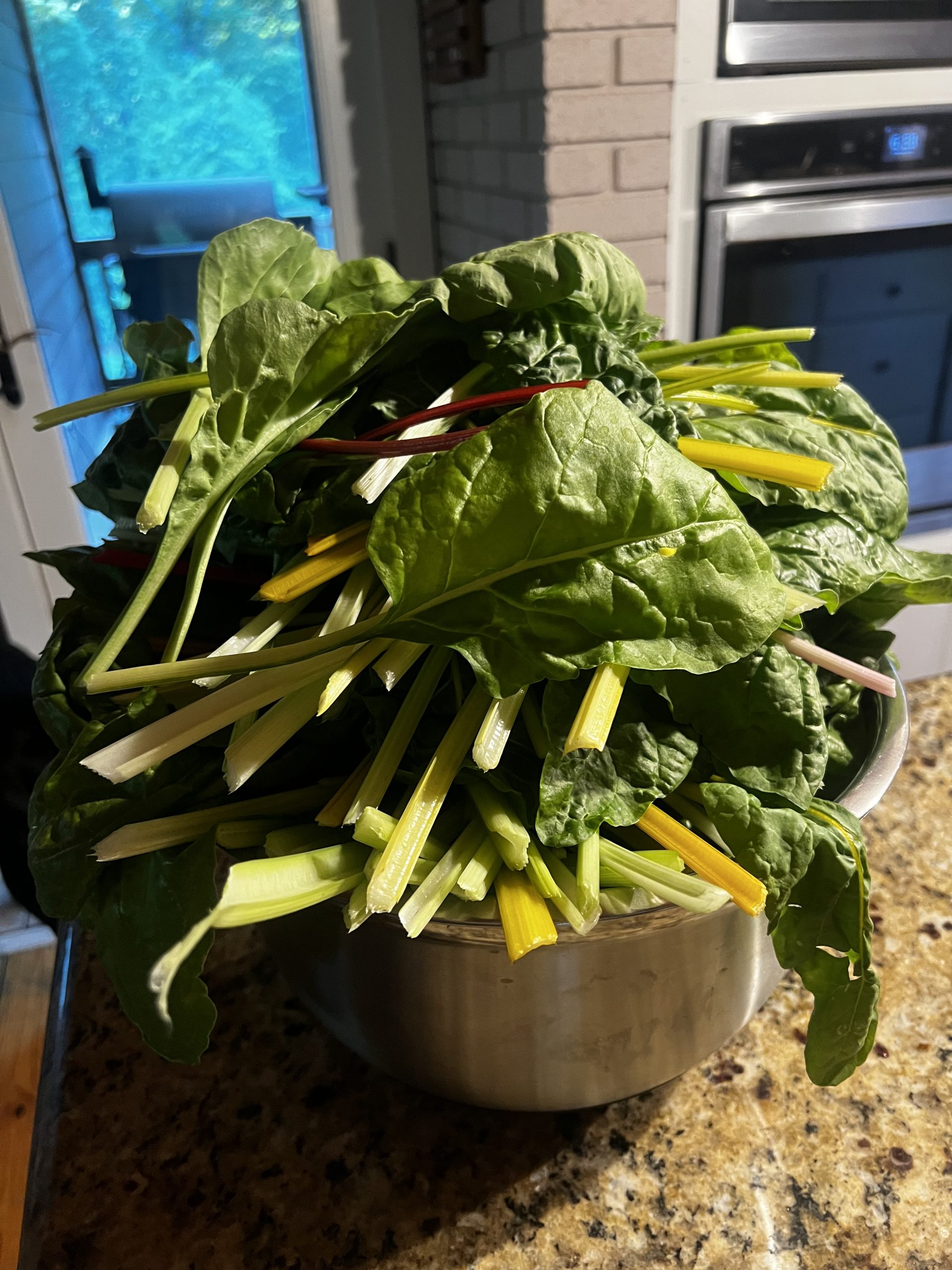
Here’s the magic trick. Don’t pull up the whole plant. Clemson suggests picking the outer leaves once they’re about 4 to 12 inches long and leaving the center to keep growing. Picking from the outside in keeps the plant producing for months. It’s the Energizer Bunny with leaves. We usually harvest weekly for meals but leave a section to grow that we harvest for freezing. We have about twenty quarts vacuum sealed in the freezer. I’ll post more on that process in another post.
Pap Steve’s Field Notes
- Leaf spots are the main disease Clemson says to watch for on chard and beets. Pick off spotty leaves and water the soil, not the leaves.
- Buy fresh seed. Old seed germinates poorly, according to Clemson.
- Frost: on a hard-freeze night, put row cover on hoops over it. My gardening posts show the setup.
- Looks: chard is so pretty Clemson suggests planting it with pansies and mums. Edible landscaping, baby.
- Preserving: chard is a low-acid green. Freeze it after blanching, or pressure can it only with a tested USDA recipe. My canning category covers the basics my mother taught me, the same way her mother taught her.
Growing up spending summers on the family dairy farm in Windham, I learned that the best crops are the ones that just keep showing up for work. That’s chard. When my granddaughter and grandson come by the garden, those rainbow stems are hard to miss. We named our homestead Brandowdale South after Brandowdale, my family’s dairy farm in Windham, NY, which carried the name of my Brandow ancestors who settled there.
Chard in the Kitchen
Treat the leaves like spinach and the stems like celery. Stems take longer to cook, so start them in the pan a few minutes ahead of the leaves. Young leaves are tender enough to eat raw in a salad. Bigger leaves wilt down a lot when cooked, so a full colander turns into a side dish for two, not a feast for five. Clemson notes chard is a good source of vitamins A, C and K, plus iron and magnesium, so you can call it health food and feel smug about it.
FAQ
How long does Swiss chard take to grow?
About 40 to 45 days to maturity, according to Clemson. You can pick baby leaves sooner.
Can Swiss chard survive winter in South Carolina?
It often can in milder parts of the state, especially under row cover. Hard freezes can damage the leaves.
Does chard grow back after cutting?
Yes. Pick the outer leaves, leave the center, and new leaves keep coming.
Why is my chard bolting?
Chard is a biennial, so it naturally flowers after a winter’s cold, usually in its second spring. Once it bolts, replant.
Can I grow chard in containers?
Yes. Clemson notes that it works well in containers alongside flowers.
Now go plant some chard and quit stallin’. How do you cook yours? Drop it in the comments.
God Bless Y’all,
Pap Steve
papstevereviews.com




 English