Quick answer
This is the tested National Center for Home Food Preservation (NCHFP) Tomatillo Green Salsa, using green tomatoes in place of tomatillos, which that recipe explicitly allows. You need 5 cups of cored, chopped green tomatoes (don’t peel them, and don’t broil or roast them for this canned version), the measured amounts of long green chiles, jalapeños, onions, and finely chopped garlic, and 1 cup of bottled lemon or lime juice. Don’t cut the juice, and don’t change the vegetable amounts. Only the spices and herbs are adjustable.
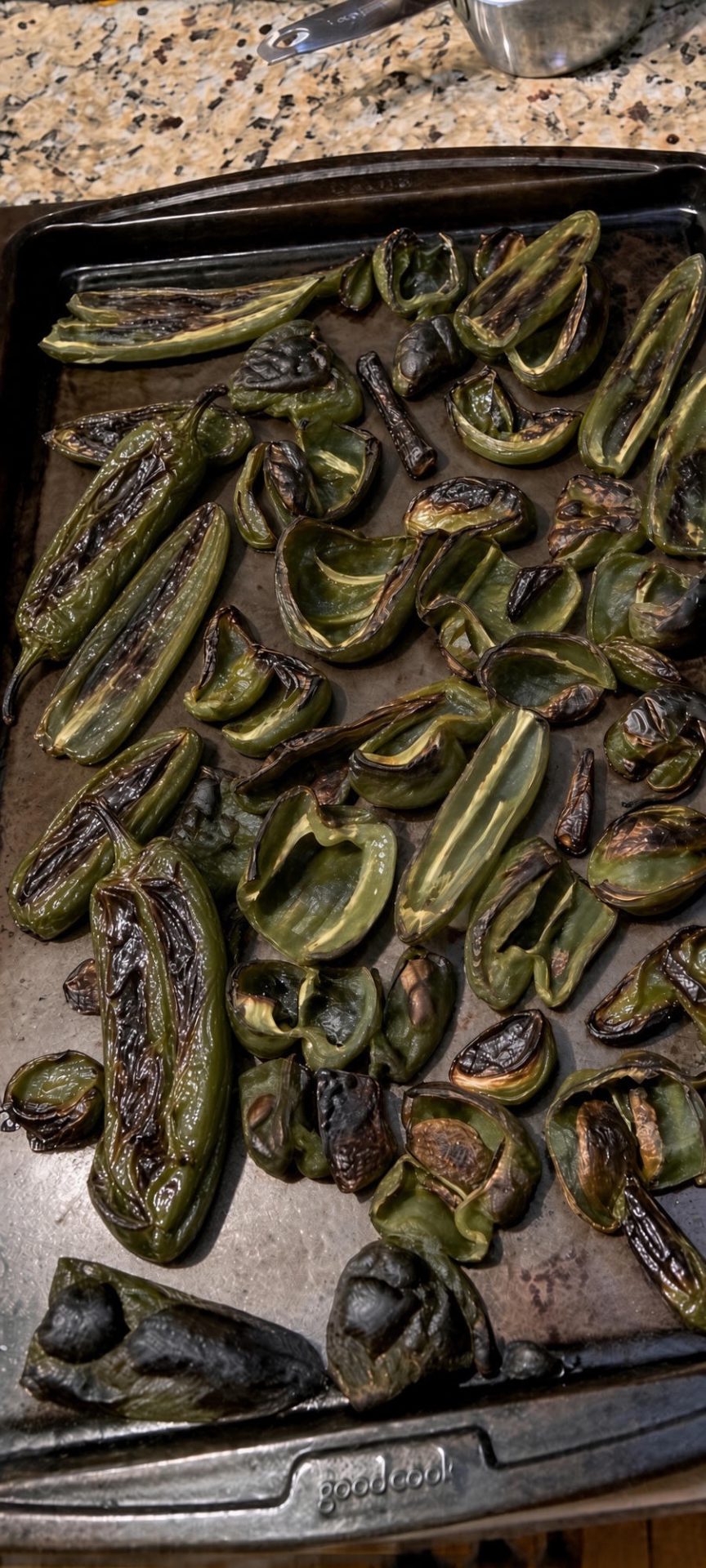
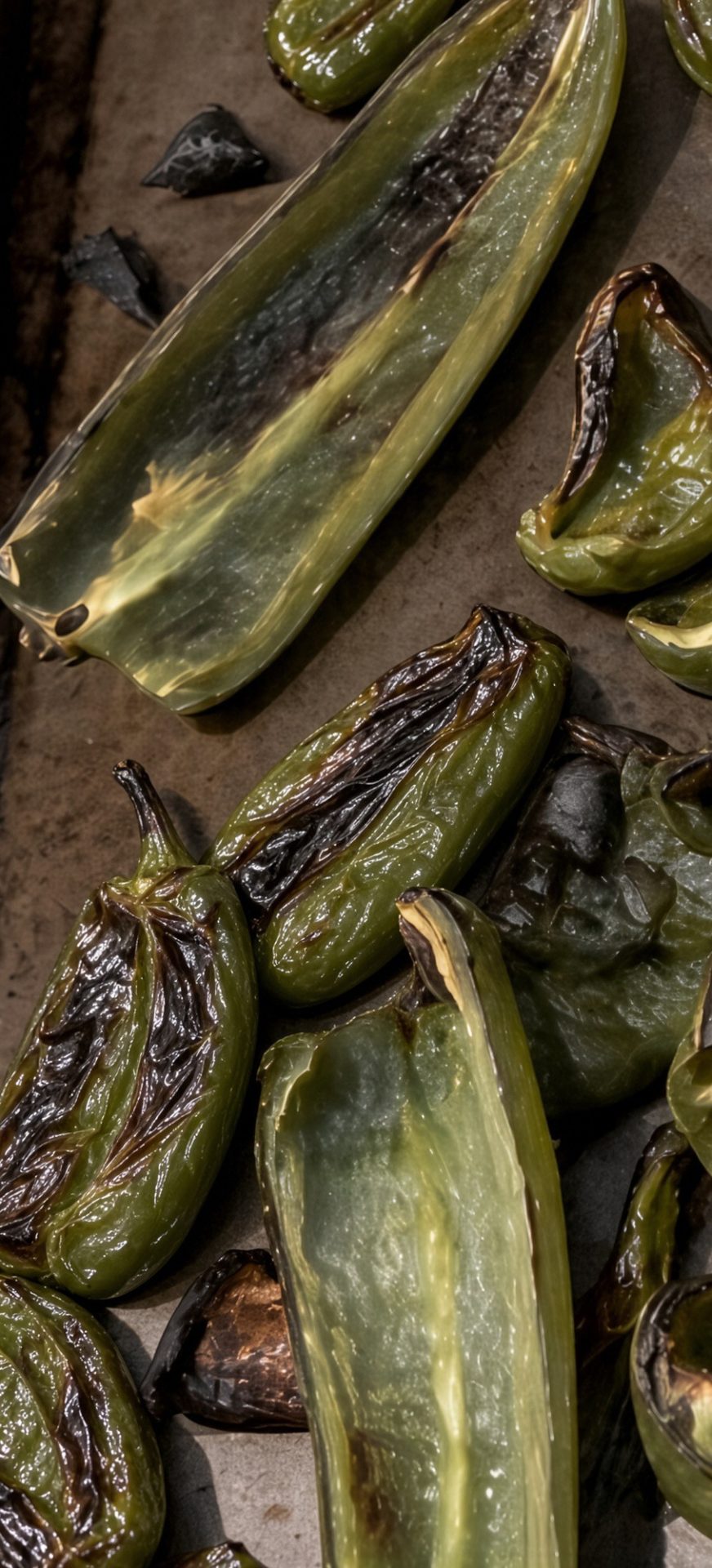
I broil the peppers for the char, which is the NCHFP method for blistering and peeling chiles: slit them, broil or roast at 400°F for 6 to 8 minutes until the skins blister, cover with a damp cloth, cool, peel, seed, and chop, then measure 1½ cups long green chiles and ½ cup jalapeños. No oil. The green tomatoes go into the pot chopped, not broiled.
Fill hot pint jars with ½-inch headspace and process in a boiling-water canner: 15 minutes at 0–1,000 ft, 20 minutes at 1,001–6,000 ft, or 25 minutes above 6,000 ft. We’re under 1,000 ft in Blythewood, so pints get 15 minutes. The recipe yields about 5 pints.
If you want the tomatoes, onions, and garlic broiled too, that’s a fridge or freezer salsa, not this canning recipe. That version is farther down the page.
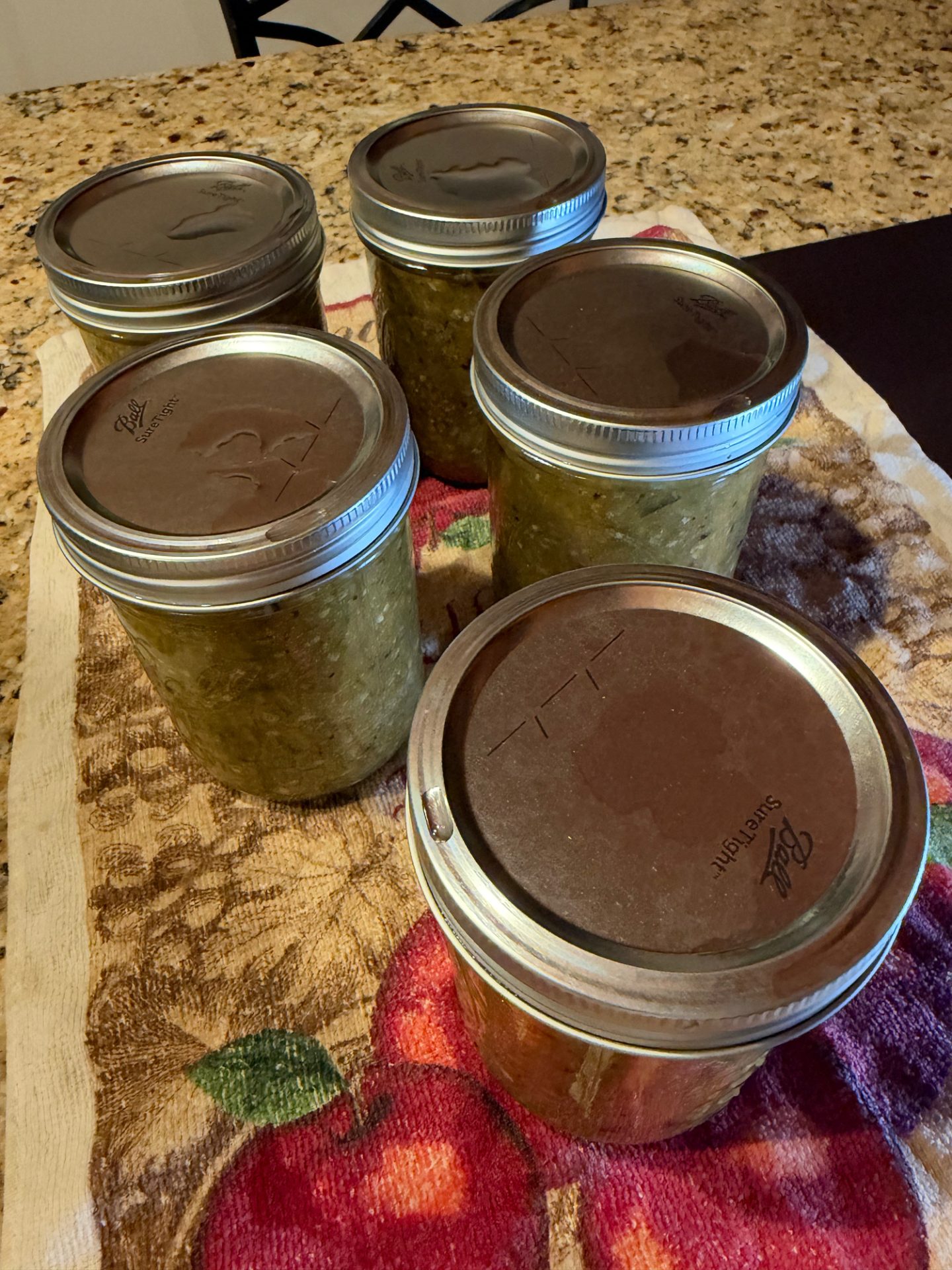
This batch of salsa was made from our final picking of the year. We pulled all our tomato plants and picked the last of the green tomatoes for this recipe. We overwinter our pepper plants to get a jump on the spring season. All the peppers used here came from those plants.
When the season winds down in Blythewood, the tomato plants in the raised beds are often still loaded with green fruit. Some of that goes into my green tomato relish. This salsa is another tested way to put those same end-of-season tomatoes in a jar.
My mother taught me to can, and her mother taught her. The rule I still follow is simple: for shelf-stable salsa, I use a tested recipe and I don’t freelance the proportions. I don’t have a lab. I have a kitchen and a grandpa’s common sense. So I follow the recipe.
Why green tomatoes can stand in for tomatillos
The NCHFP recipe is written for tomatillos. Right under the processing table, it says, plainly: “You may use green tomatoes in this recipe instead of tomatillos.” That’s a one-for-one swap: 5 cups chopped green tomatoes in place of 5 cups chopped tomatillos. Everything else stays as written.
That’s not a blogger trick. It’s in the tested recipe: Tomatillo Green Salsa, National Center for Home Food Preservation.
Use firm, sound green tomatoes from healthy, living vines. The NCHFP tomato guidance is not to can tomatoes from dead or frost-killed vines. If some fruit already has a pink blush, you can let those ripen indoors instead. The hard green ones are what you want here.
Core the tomatoes and chop them. Don’t peel them. The tomatillo version of this recipe does not call for peeling or seeding the fruit, and there’s no reason to peel the green tomatoes either. For this canned salsa, leave the tomatoes raw-chopped. Don’t broil or roast them before they go in the pot.
What you’ll need
Yield: about 5 pints. Jar size: pints, or half-pints at the same process time. Don’t use quarts. There is no tested process time for this salsa in quart jars.
Processing is 15 minutes or longer, so the empty jars do not have to be pre-sterilized. Wash them well and keep them hot until you fill them.
You’ll want:
- A boiling-water canner, or a deep pot with a rack
- Clean pint or half-pint canning jars, new lids, and bands
- A large saucepan
- A broiler pan or rimmed baking sheet, for the peppers
- A jar lifter, funnel, and a headspace tool
- A clean, damp paper towel for wiping rims, and a damp cloth for the peppers
- Plastic or rubber gloves for the hot peppers
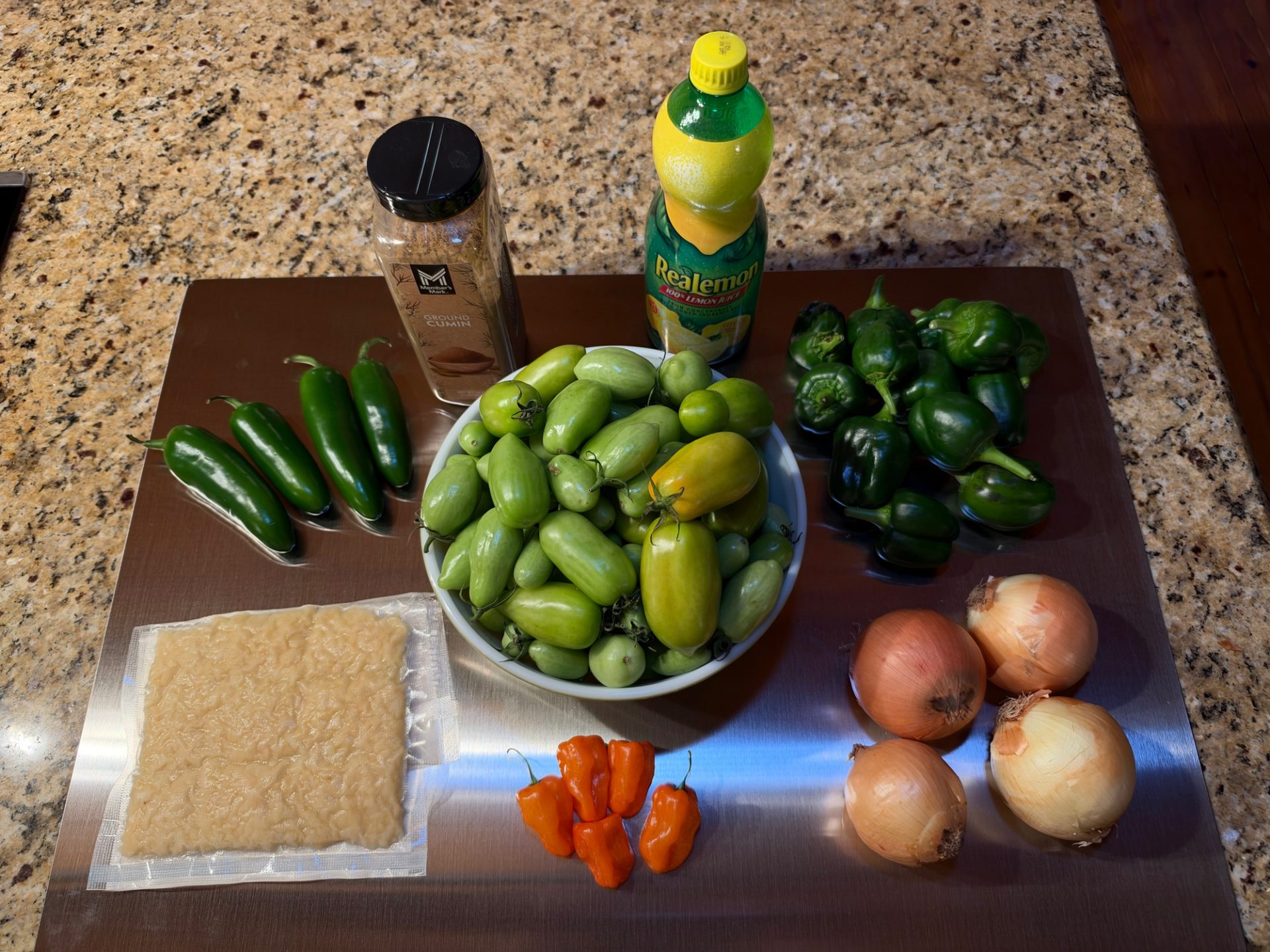
Ingredients
This is the NCHFP Tomatillo Green Salsa recipe, with green tomatoes in place of tomatillos. Keep the vegetable and acid amounts as written. Cumin and oregano are optional. I use canning or pickling salt; the NCHFP ingredient list just says “salt.”
- 5 cups cored, chopped green tomatoes (do not peel; do not broil or roast)
- 1½ cups seeded, chopped long green chiles (Anaheim, poblano, or another long green chile), measured after broiling, peeling, seeding, and chopping
- ½ cup seeded, finely chopped jalapeño peppers, measured after prep (broiling the jalapeños is optional)
- 4 cups chopped onions
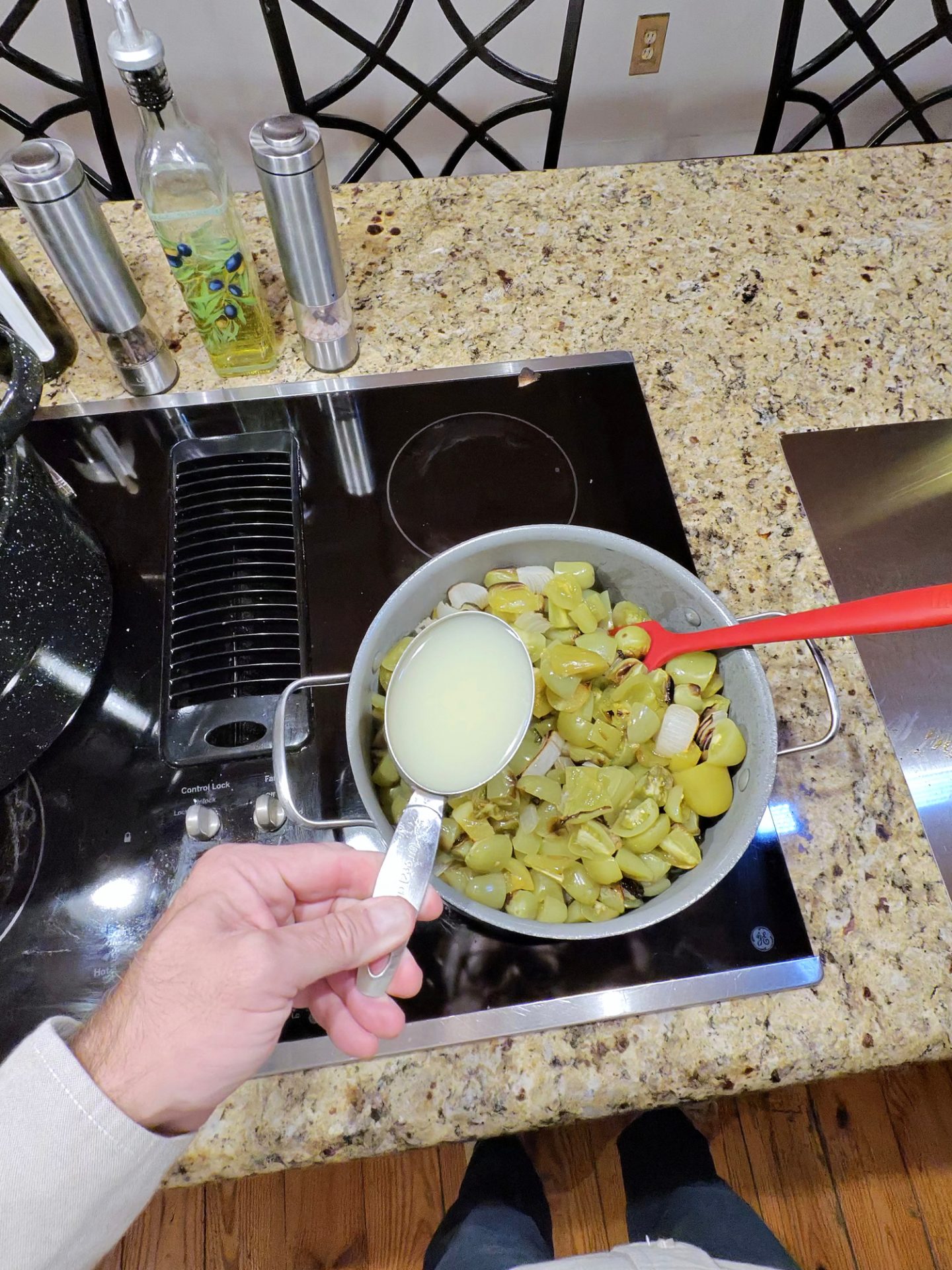
- 1 cup bottled lemon or lime juice (do not use fresh-squeezed)
- 6 cloves garlic, finely chopped
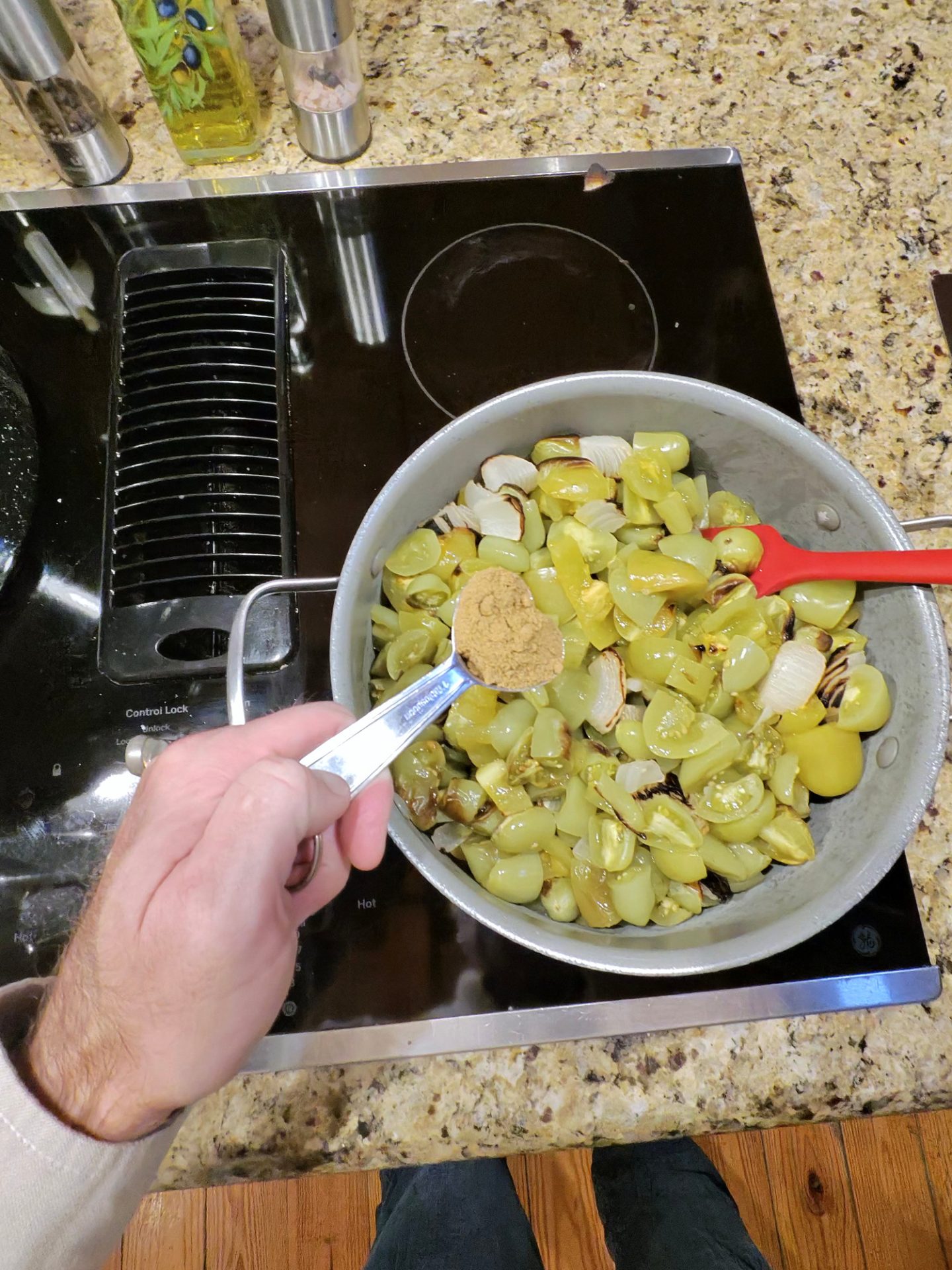
- 1 tablespoon ground cumin (optional)
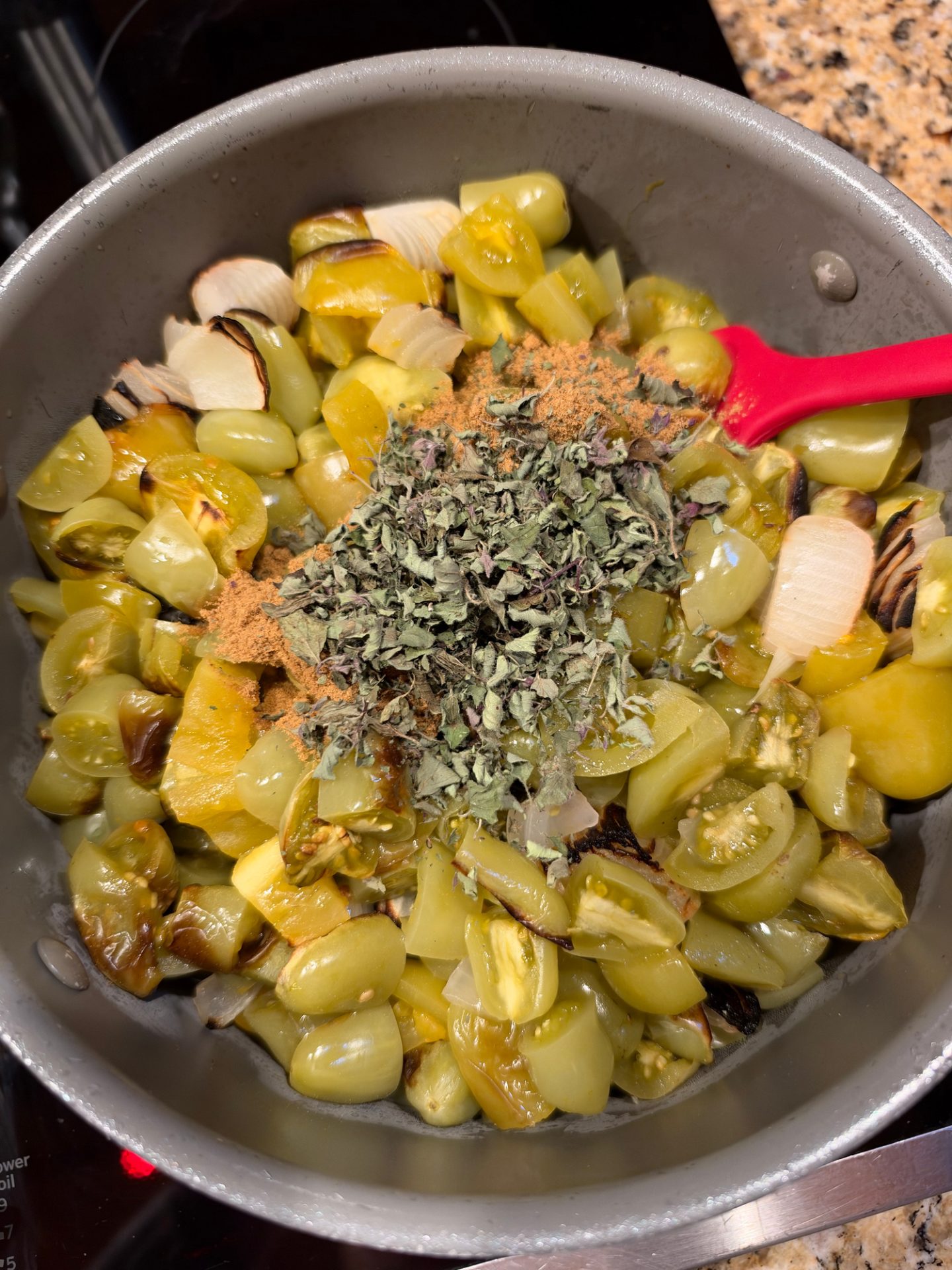
- 3 tablespoons dried oregano leaves (optional)
- 1 tablespoon canning or pickling salt
- 1 teaspoon black pepper
Canning safety, before you start
Salsa is a mix of acid food and low-acid food. The bottled juice is what brings this recipe into a safe range for a boiling-water canner. Follow these rules:
- Don’t reduce the bottled lemon or lime juice. Use a full cup, measured in a liquid measuring cup. Fresh-squeezed juice is not a substitute. The acidity of fresh juice varies, and this recipe was tested with bottled juice.
- Don’t substitute vinegar for the lemon or lime juice. The NCHFP says that swap would be less acid and potentially unsafe. (You can read the same acid rule on the NCHFP Ingredients for Salsa Recipes page.)
- Don’t change the vegetable proportions. Five cups of green tomatoes, 1½ cups long green chiles, ½ cup jalapeños, 4 cups onions, and 6 cloves of garlic. Measure the peppers after you peel, seed, and chop them, so the cups in the pot match the recipe. The only safe change in this salsa is the amount of spices and herbs.
- Don’t broil or roast the green tomatoes, onions, or garlic for the canned version. The peppers are the ones that get broiled, and they get measured after peeling. If you want everything broiled, use the fridge or freezer salsa farther down. Don’t add oil to the peppers.
- Wear gloves when you handle or cut the hot peppers, and don’t touch your face. If you skip the gloves, wash your hands thoroughly with soap and water before you touch your face or eyes.
- Don’t can this salsa in quart jars. The NCHFP table lists pints. There are no tested times for this salsa in quarts.
If you have more basic questions about water-bath canning, headspace, or why we stick to tested recipes, I walked through those on my Canning Questions page.
Step-by-step
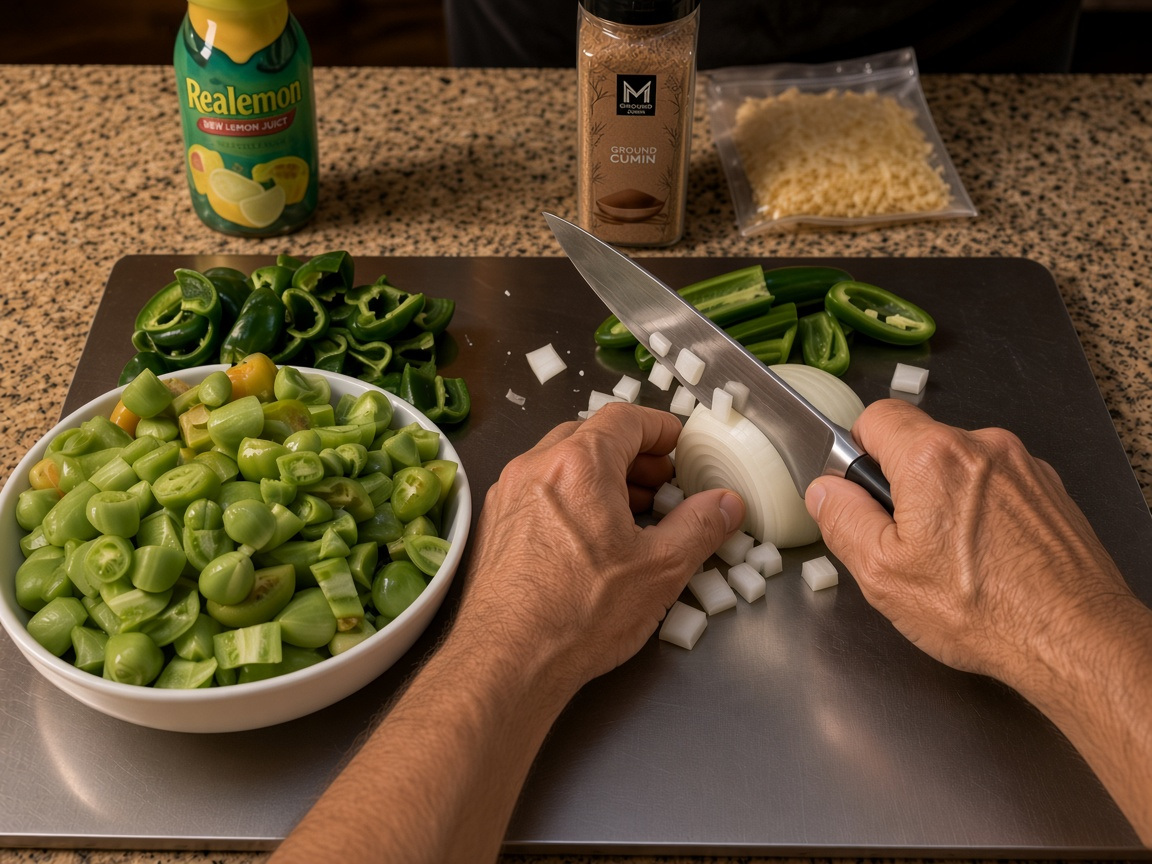
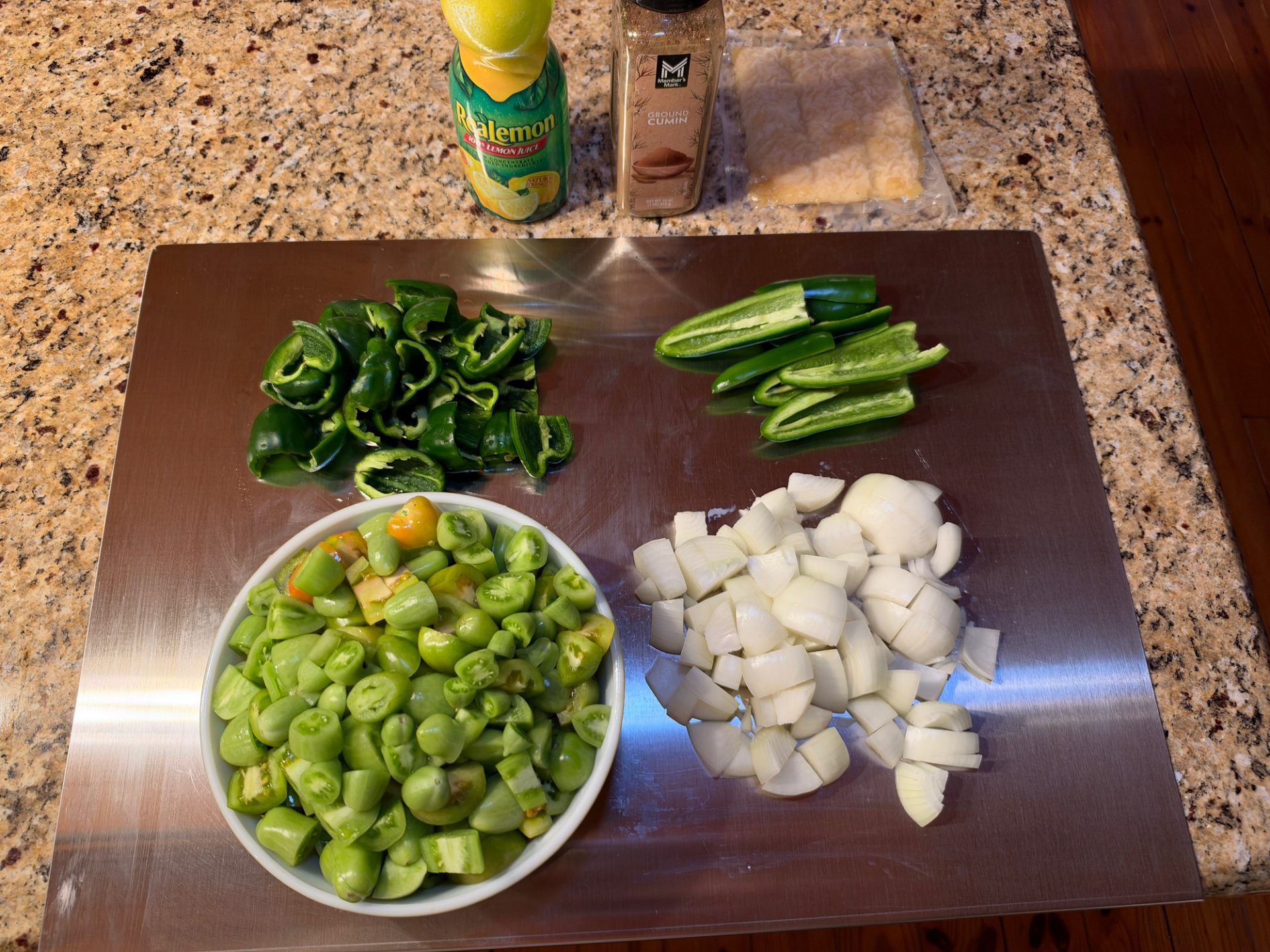
1. Prep the tomatoes, onions, and garlic
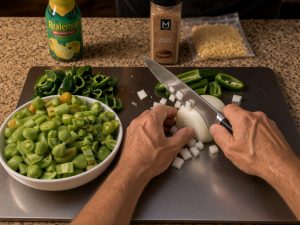
Wash the green tomatoes. Core them and chop them. Don’t peel them, and don’t broil or roast them. Measure 5 level cups.
Peel and chop the onions. Measure 4 level cups.
Peel the garlic and chop it fine. The NCHFP recipe calls for 6 cloves, finely chopped, not left whole.
2. Broil the peppers for the char
This is the NCHFP method for blistering and peeling chiles, from the USDA Complete Guide to Home Canning, Guide 3. I broil them for the char. No oil.
Put on gloves before you handle the peppers.
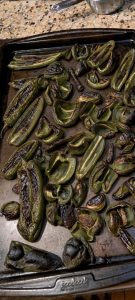
Wash and dry the long green chiles. Slit each pepper along the side so steam can escape. Place them under a broiler, or in a 400°F oven, for 6 to 8 minutes until the skins blister. Move them to a pan, cover with a damp cloth, and let them cool for several minutes. Peel off the skins, discard the seeds, and chop. Then measure 1½ level cups. Don’t measure first and then broil. The recipe amount is the chopped peppers that go in the pot.
Jalapeños do not have to be peeled. Broiling them is optional. If you broil the jalapeños too, use the same blister-and-peel steps. Whether you broil them or not, seed them, chop them fine, and then measure ½ level cup. Don’t add extra jalapeños to make it hotter. If you want more kick, you can leave a few jalapeño seeds in that same ½ cup. For less heat, use milder long green chiles, but keep the cup measures the same.
Source: USDA Complete Guide to Home Canning, Guide 3, and the NCHFP Tomatillo Green Salsa recipe, which points you to that same chile-peeling method if you want the skins off.
3. Simmer the salsa
Combine the green tomatoes, long green chiles, jalapeños, onions, garlic, bottled lemon or lime juice, cumin, oregano, salt, and pepper in a large saucepan. Stir frequently over high heat until the mixture begins to boil. Reduce the heat and simmer 20 minutes, stirring occasionally.
4. Fill the jars
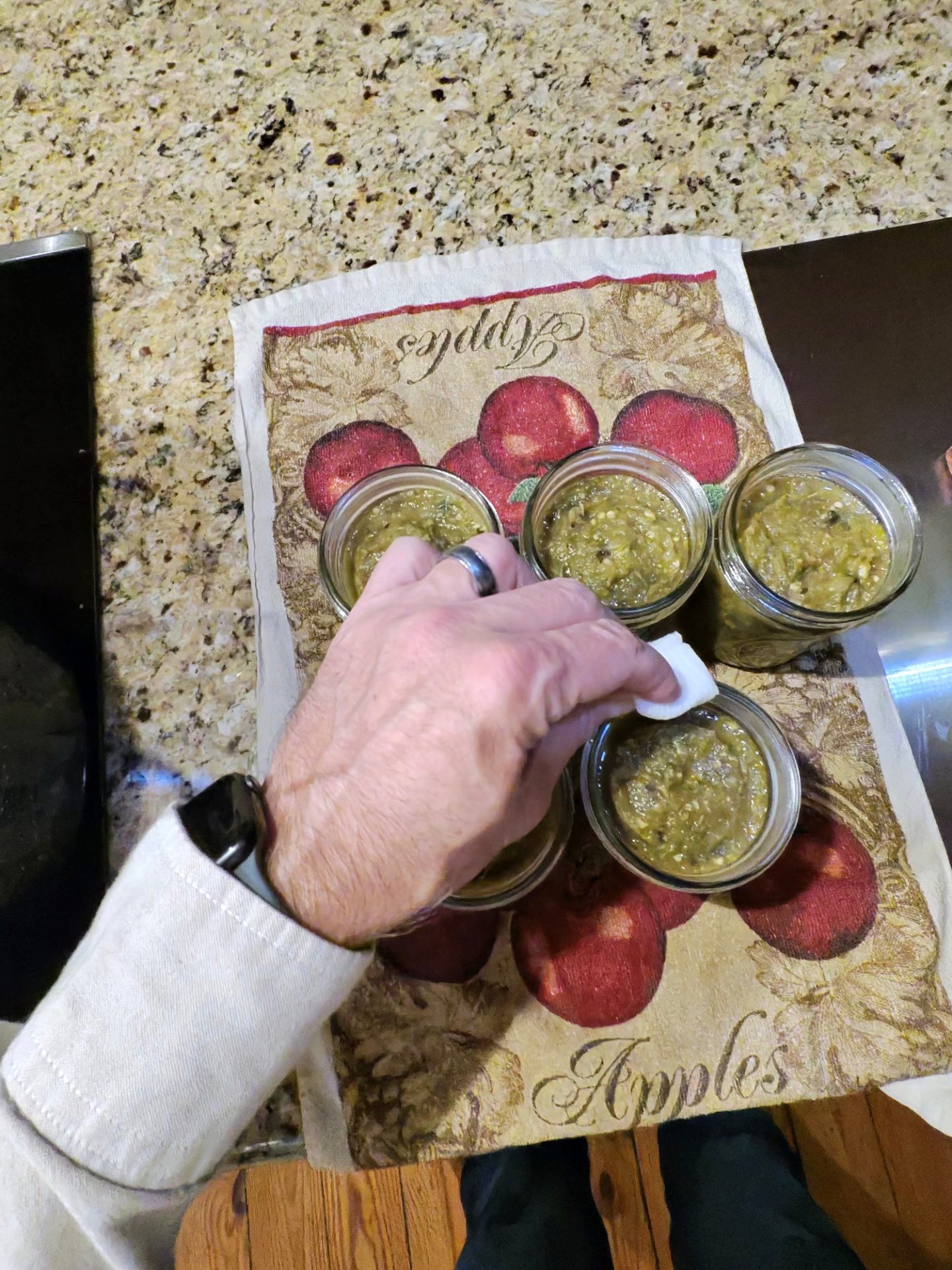
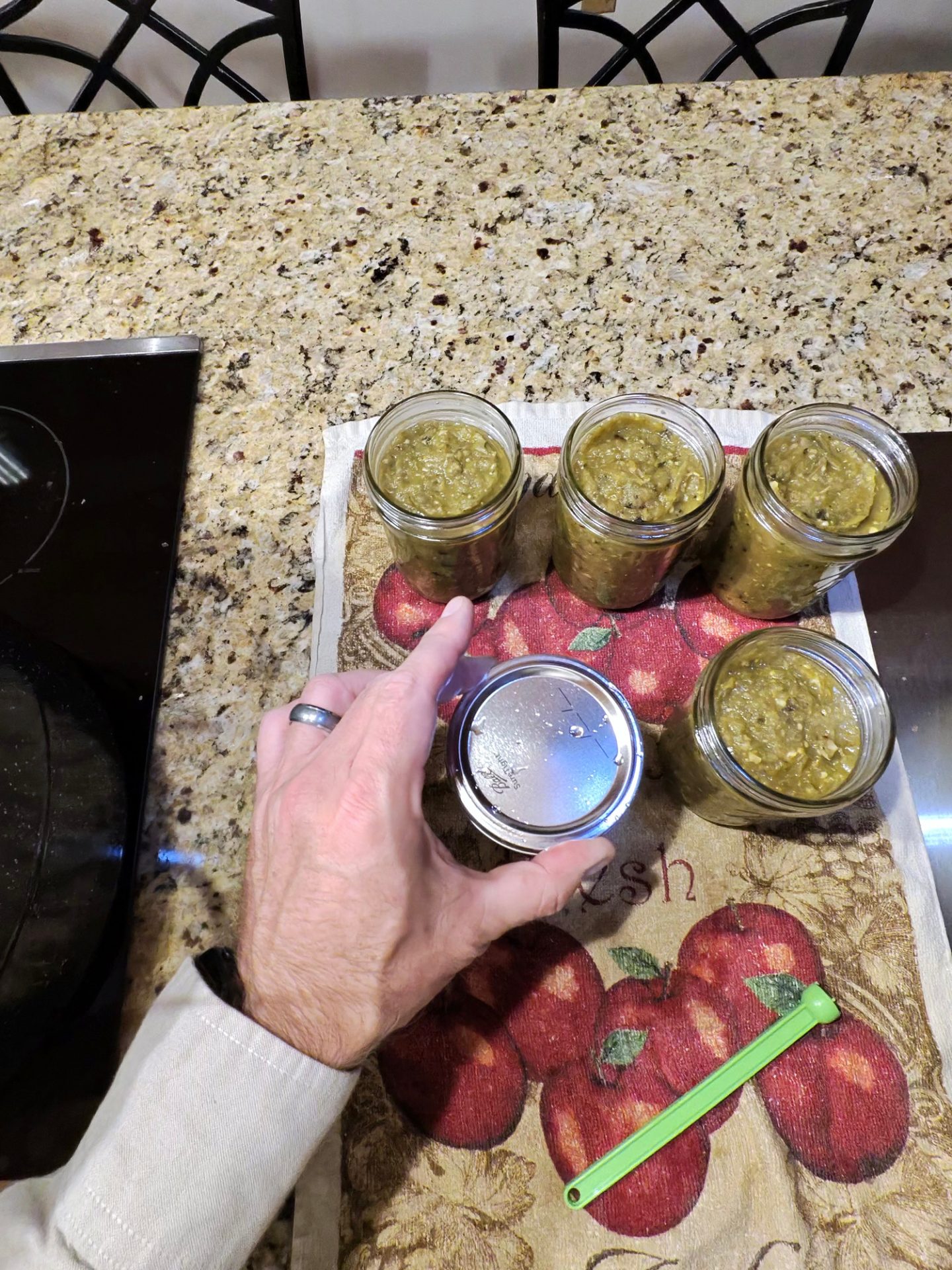
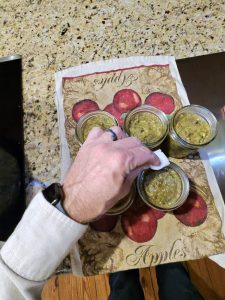
Ladle the hot salsa into clean, hot pint jars, leaving ½-inch headspace. Slide a clean spatula or bubble tool down the inside of each jar and adjust the headspace if you need to. Wipe the rims with a damp, clean paper towel. Apply the lids and screw the bands on fingertip-tight. Not gorilla tight.
I don’t have a shot that clearly shows the ½-inch headspace on the fill. These next photos, and the Short, are the water-bath steps for the canned NCHFP recipe — wiping the rims and putting the lids on.
5. Process in a boiling-water canner
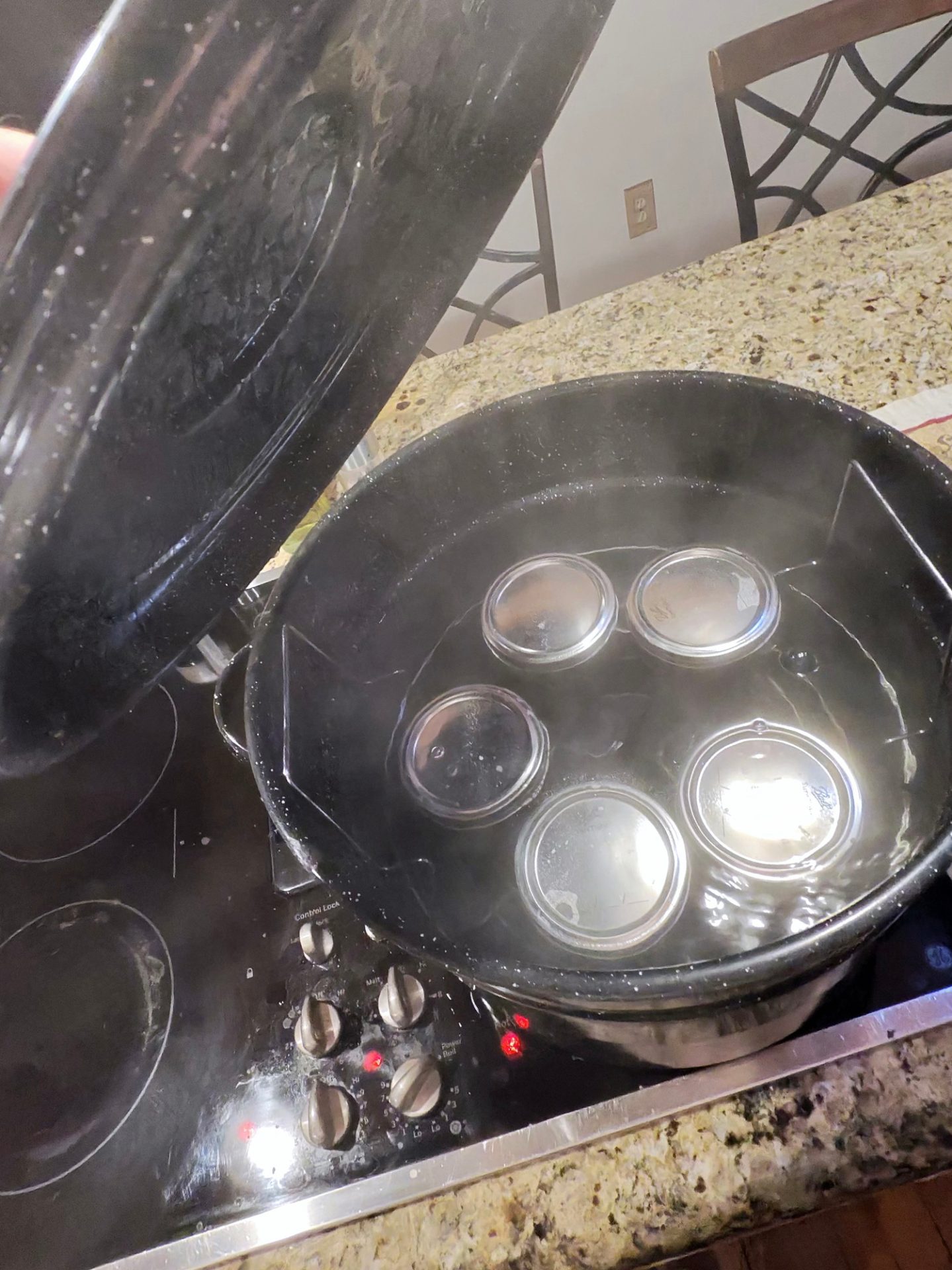
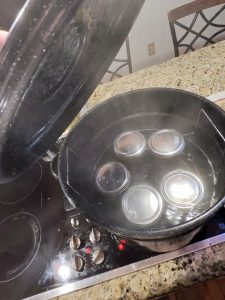
Set the jars in the canner on a rack. The water should cover the jar tops by at least 1 inch. Put the lid on the canner and bring the water to a full rolling boil, then start your timer.
Process hot-packed pints or half-pints for the time that matches your elevation:
| Style of pack | Jar size | 0–1,000 ft | 1,001–6,000 ft | Above 6,000 ft |
|---|---|---|---|---|
| Hot | Pints or half-pints | 15 min | 20 min | 25 min |
Keep the water at a gentle but complete boil for the whole process time. If the boil stops, bring it back to a vigorous boil and start the timing over, using the full original process time.
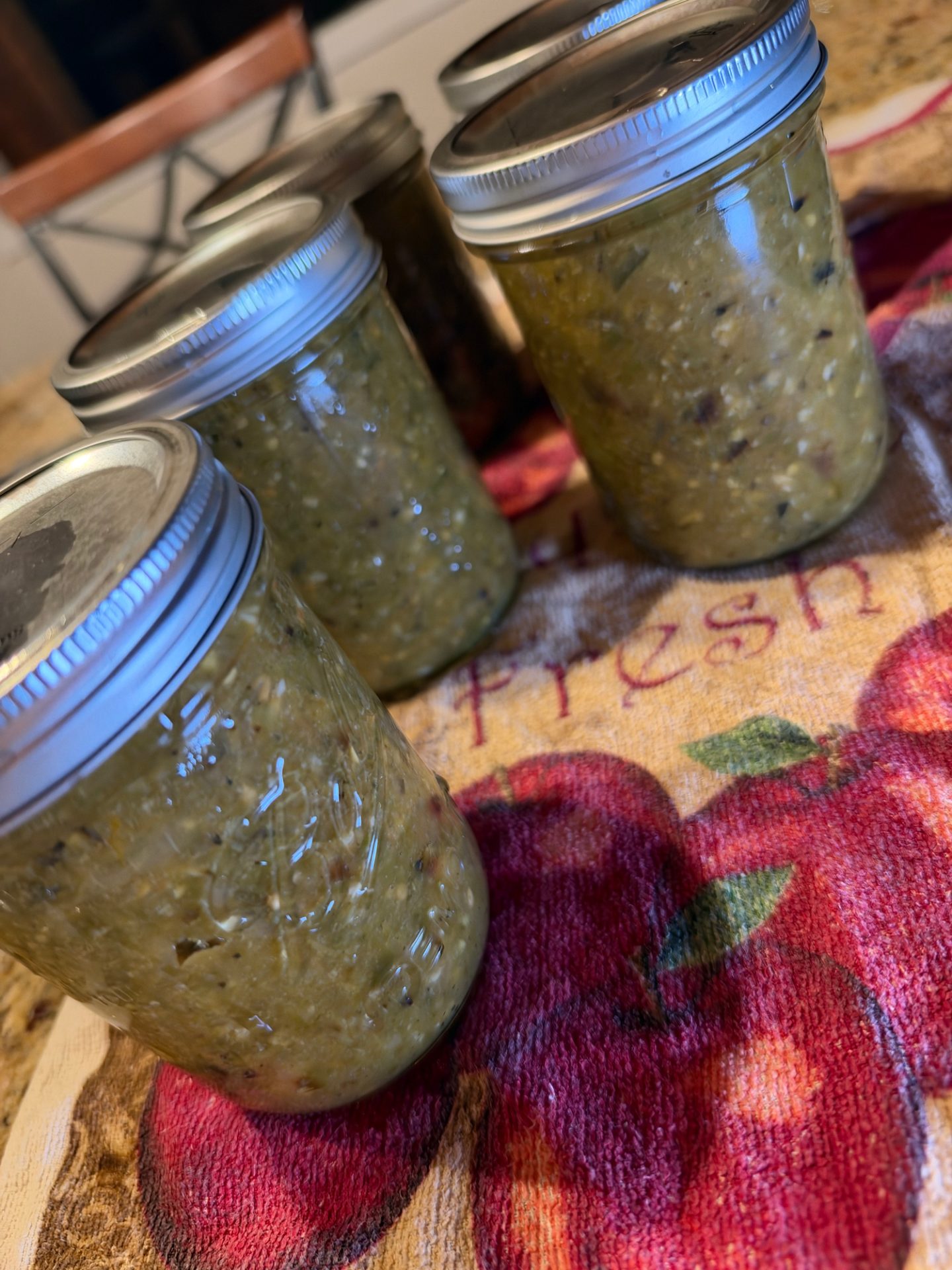
When the time is up, turn off the heat and remove the canner lid. Wait 5 minutes before you lift the jars out, so the canner contents can settle. That rest is standard NCHFP boiling-water canner practice. Then remove the jars with a jar lifter, without tilting them, and set them on a towel or rack with at least an inch between jars. Leave them alone for 12 to 24 hours. Don’t tighten the bands and don’t poke the lids while they cool.
6. Check the seals and store
When the jars are completely cool, check the seals. Press the middle of each lid. If it doesn’t flex or pop, it’s sealed. Take the bands off the sealed jars, wash the jars, and label them. I use my free jar label maker so the date is on every lid. Store sealed jars without the bands in a clean, cool, dark, dry place.
Any jar that didn’t seal goes in the refrigerator and gets used first.
How to use green tomato salsa
This is a green, tangy salsa with onion, chile, and a little heat from the jalapeños. A few ways to put it to work:
- With chips, obviously
- On tacos, burritos, or scrambled eggs
- Spooned over grilled chicken or fish
- Next to beans and rice
- As a topping for a baked potato or breakfast hash
We use this salsa with tortilla chips, over eggs, and also over burritos. Essentially anything you would use salsa verde for.
Storage
The NCHFP storage advice is to label and date the jars and store them in a clean, cool, dark, dry place. For best quality, store them between 50 and 70°F, and can no more than you will use within a year, unless a specific recipe says otherwise. This salsa recipe does not give a longer storage time, so a year is the quality window I am using. Don’t store jars above 95°F, near a stove or furnace, in an uninsulated attic, or in direct sun. Source: Storing Home Canned Foods, NCHFP.
After you open a jar, refrigerate it and use a clean spoon every time.
Never eat from a jar with a bulging lid, a broken seal, mold, or an off smell. When in doubt, throw it out.
If you want another water-bath project for the pantry while you’ve got the canner out, my apple butter is a tested recipe too.
Broiled Green Tomato Salsa for the Fridge or Freezer (NOT for canning)
The canned recipe above keeps the green tomatoes chopped, not broiled. The peppers are the ones that go under the broiler.
If you want the whole pan smoky — tomatoes, onions, garlic, and peppers, charred under the broiler — that’s a different salsa. I like that flavor too. It just isn’t this canning recipe.
I’ll be honest: I was torn on this one. Grandmothers and moms have been charring all the ingredients since the old days. I guess Grandma Alice may have been a rebel canner after all!
But these jars go on the shelf, and some of them get shared with family and the grandkids. That’s why I still stick to the tested method for anything I can. The director of the National Center for Home Food Preservation told Oregon State Extension that roasting tomatoes isn’t a safe method in their canning recipes. Liquid amounts, acid, and processing times may no longer be enough for a safe jar. So when I want that full char, this broiled-tomato batch stays in the fridge or the freezer. Source: Roasted Tomatoes, Ask Extension.
Here’s the simple version:
Broil the green tomatoes, onions, garlic, and peppers until they’re charred in spots. No oil. I don’t use any. Let them cool enough to handle, then chop. Stir in the same seasonings you like in the canned salsa — cumin, oregano, salt, and pepper — and bottled lemon or lime juice, all to taste. You can adjust this one. That’s the whole point of keeping it out of the canner.
University of Minnesota Extension says that if you’re not using a research-tested canning recipe, or you want to get creative with a salsa mixture, store it in the refrigerator for up to a week, or freeze it for up to one year. Freezing will soften the salsa. Thaw it in the refrigerator and drain before serving. Source: Canning tomatoes: Homemade salsa, UMN Extension.
Keep it in a covered container in the fridge. Label the freezer containers with the date. And don’t water-bath this version, even if it looks like it belongs in a jar.
These two Shorts show charred tomatoes and onions, not a peppers-only broiler step. They belong with this fridge or freezer salsa, not with the canning steps.
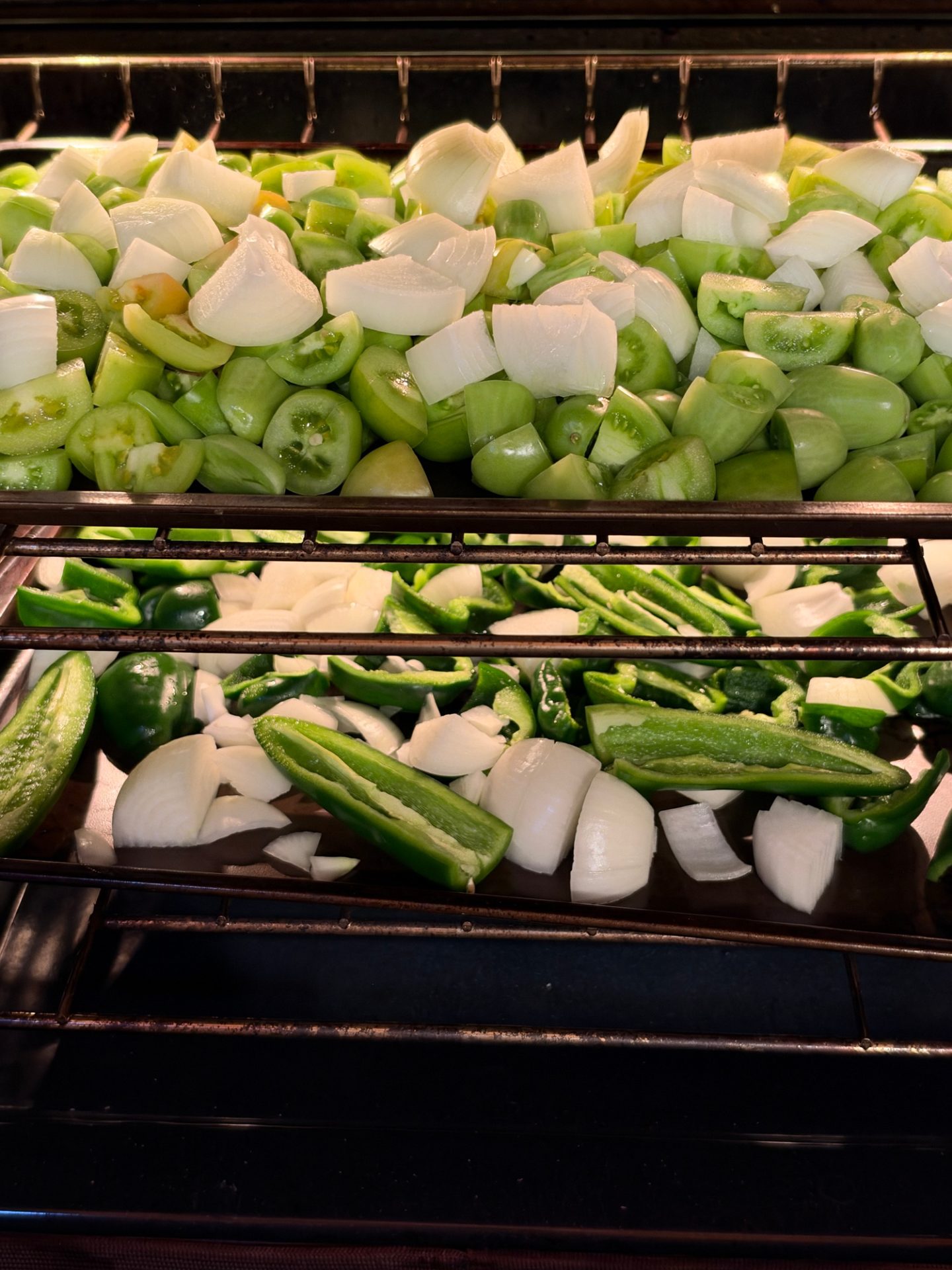
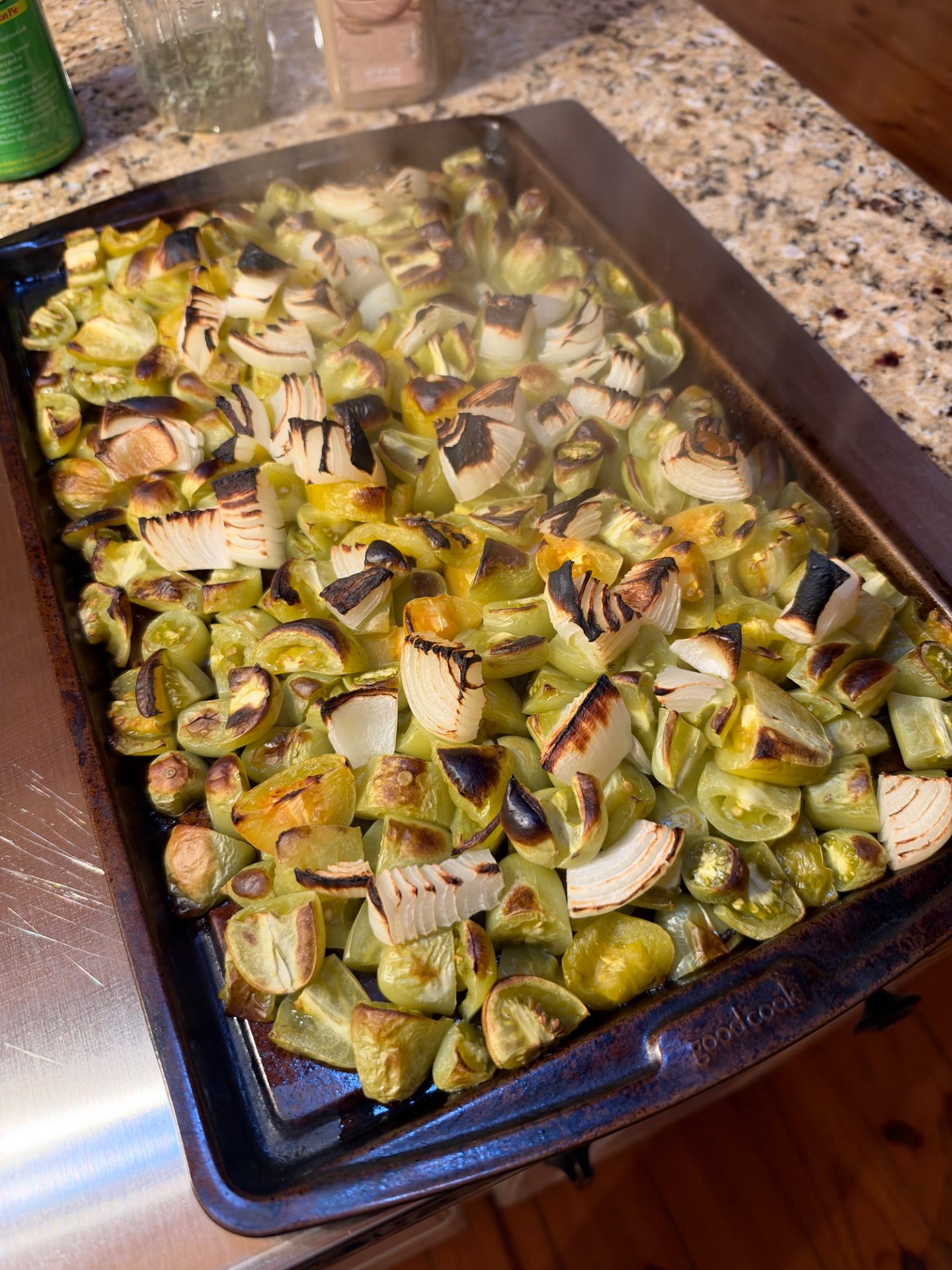
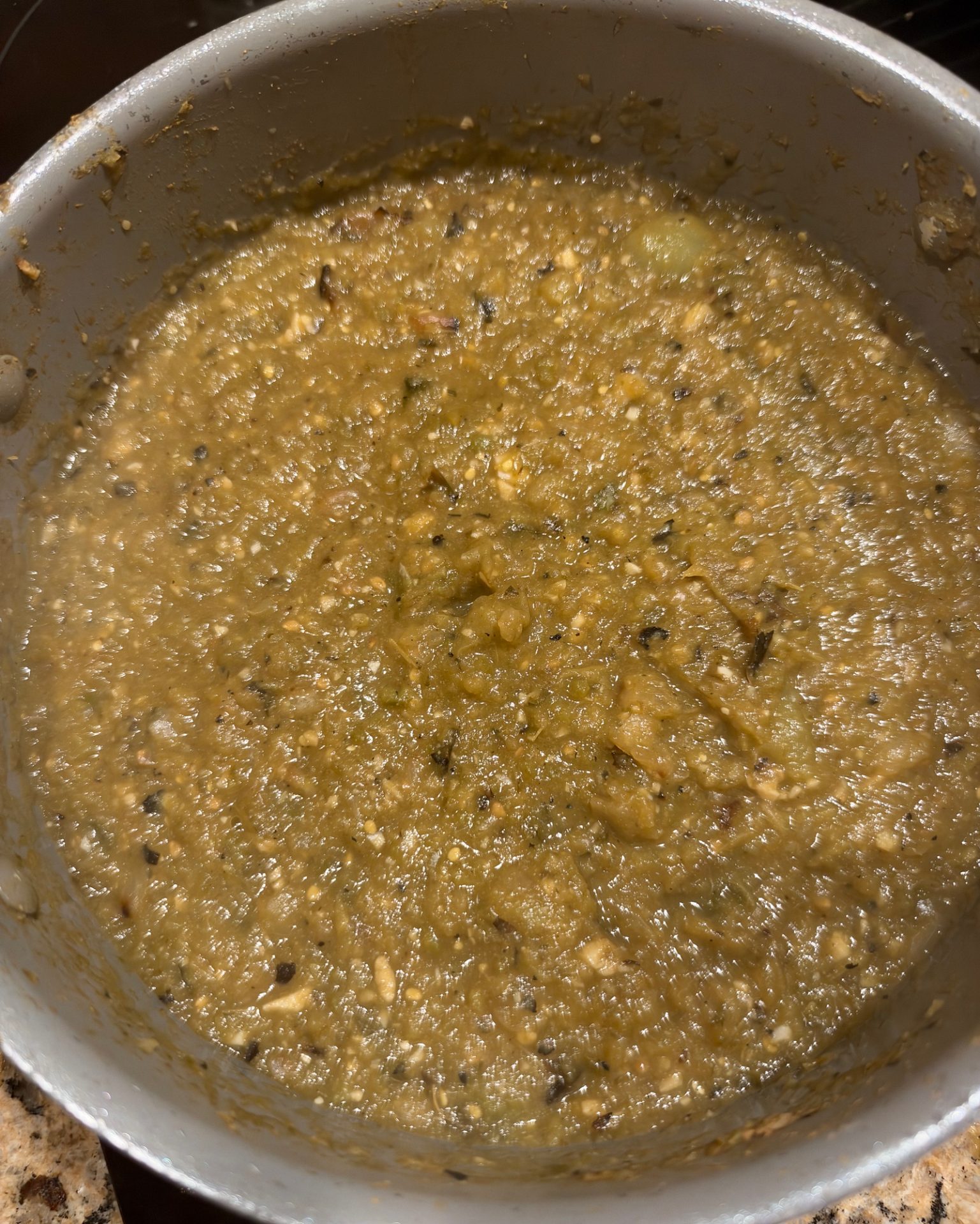
The broiled batch made about 5 pints too.
Green Tomato Salsa FAQ
Can I use green tomatoes instead of tomatillos?
Yes. The NCHFP Tomatillo Green Salsa recipe says you may use green tomatoes in this recipe instead of tomatillos. Use the same 5 cups, cored and chopped, and don’t change the other vegetable or acid amounts.
Can I roast or broil the green tomatoes before canning?
No. For the canned salsa, leave the green tomatoes chopped, not broiled or roasted. I broil the peppers for the char, then peel, seed, chop, and measure them. If you want the tomatoes broiled too, make the fridge or freezer version in the section above. Don’t can that one.
Can I use fresh lemon juice, or swap in vinegar?
No. Use 1 cup of commercially bottled lemon or lime juice. Don’t use fresh-squeezed juice, and don’t substitute vinegar for the lemon or lime juice. The NCHFP says that vinegar swap would be less acid and potentially unsafe. You can adjust the cumin, oregano, salt, and pepper. You can’t adjust the juice.
Can I can this salsa in quart jars?
No. The NCHFP table lists pints. There are no tested process times for this salsa in quarts, and you shouldn’t invent a longer time for a bigger jar. Use pints, or half-pints at the same process time.
Do I have to peel the green tomatoes? What about the garlic?
No, don’t peel the green tomatoes. Core and chop them. The garlic should be finely chopped, which is how the NCHFP lists it — not left in whole cloves.
How long will the jars keep?
Store sealed jars in a clean, cool, dark, dry place, ideally between 50 and 70°F. For best quality, use them within a year. Refrigerate after opening. If a lid is bulging, the seal is broken, or anything looks or smells off, don’t taste it. Throw it out. The fridge-or-freezer broiled salsa is different: up to a week in the refrigerator, or up to a year in the freezer, where the texture will soften.
Wrapping up
End-of-season green tomatoes don’t have to go to waste. Some of mine become relish. This salsa is the tested NCHFP path when you want a green salsa on the shelf. Broil the peppers for the char, leave the tomatoes chopped, use the bottled juice, process for your elevation, and you’ll have about 5 pints to put away. If you want the whole pan broiled, make the fridge or freezer batch and enjoy it from there.
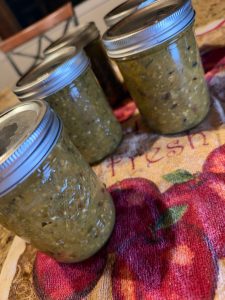
We ended up with 5 pints for the canned version.
For planting dates and the rest of the raised-bed calendar, the gardening guides page is the hub.
Green Tomato Salsa (Canning Recipe)
Ingredients
Equipment
Method
- Wash, core and chop the green tomatoes (don't peel, broil or roast them) and measure 5 level cups. Chop the onions and measure 4 cups. Finely chop 6 cloves of garlic.
- Slit the long green chiles and broil, or roast at 400°F, for 6 to 8 minutes until the skins blister. Cover with a damp cloth, cool, peel, seed and chop, then measure 1½ cups. Seed and finely chop the jalapeños (broiling optional) and measure ½ cup.
- Combine all ingredients, including the bottled lemon or lime juice, in a large saucepan. Stir over high heat until it boils, then reduce the heat and simmer 20 minutes, stirring occasionally.
- Ladle hot salsa into clean, hot pint or half-pint jars, leaving ½-inch headspace. Remove air bubbles, wipe the rims, and apply lids and bands fingertip-tight.
- Process in a boiling-water canner: 15 minutes at 0–1,000 ft, 20 minutes at 1,001–6,000 ft, 25 minutes above 6,000 ft. Turn off the heat, remove the canner lid, and wait 5 minutes before removing jars.
- Cool undisturbed 12 to 24 hours. Check seals, remove bands, label and store in a cool, dark place. Refrigerate any unsealed jars and use them first.


 English