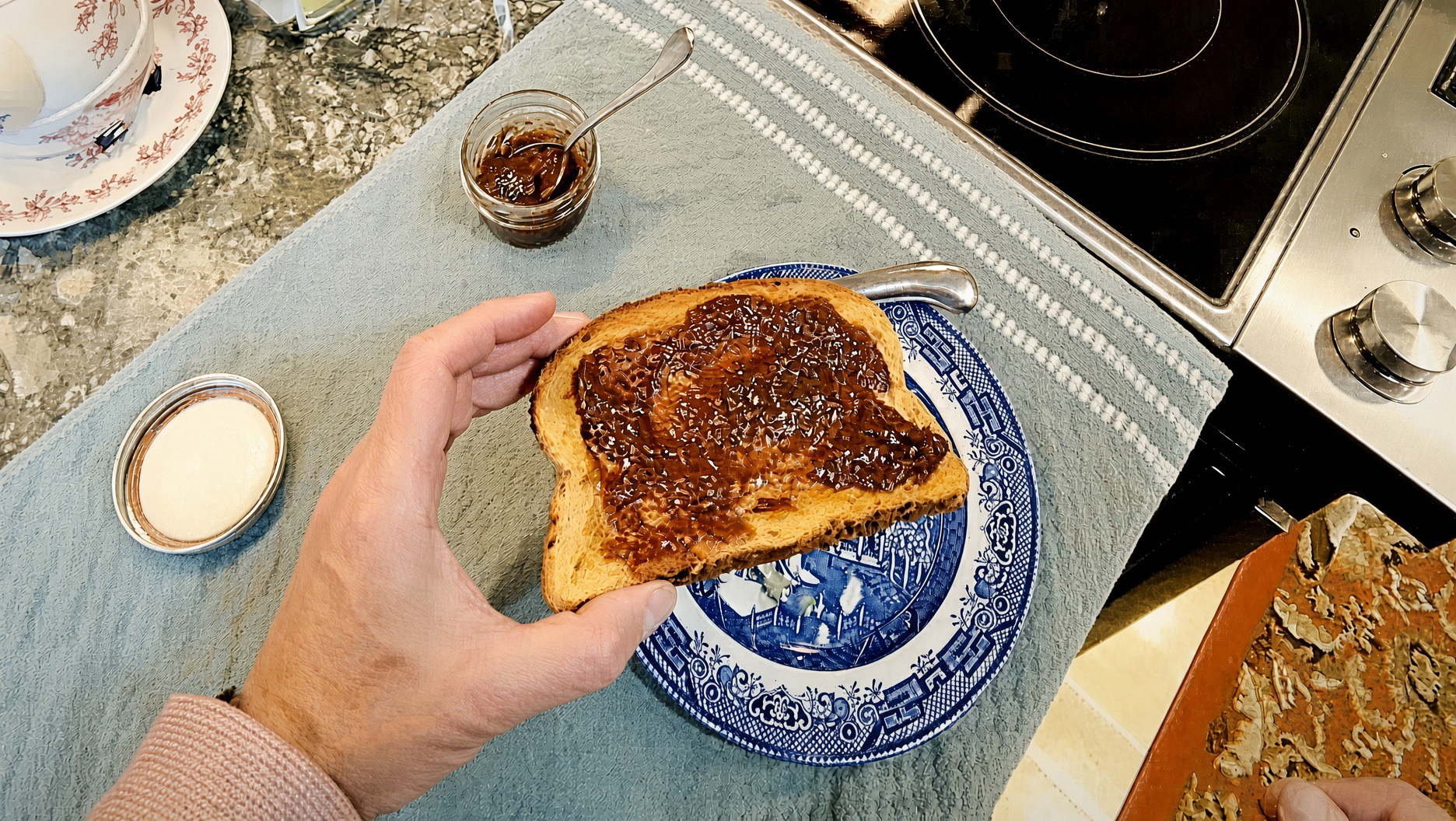
(The “fill the house with cinnamon and the pantry with jars” version)
PapSteveReviews.com – October 2026
Pap Steve here. My grandmother kept a root cellar full of jars on the family dairy farm up in the Catskills. Because of that, she got through the Depression on what she grew, raised, and put up. My mother learned canning at her elbow, and Mom passed it on to me. These days we keep the tradition going on our homestead here in South Carolina, with the grandkids “helping” and our dog Pepper on full-time crumb patrol.
Why Apple Butter Is Where I Start
Apple butter is where I tell folks to start. It’s a sweet, high-acid spread, so it goes in a plain boiling-water canner. So no pressure canner needed. (Save that beast for green beans and soup. My full take is in my All American pressure canner review.) The cook is mostly stirring, so the processing time is a few minutes, not an hour. In the end, one afternoon gets you a shelf of jars that make toast, biscuits, pork chops, and a block of cream cheese a whole lot better all winter.
First, a fair warning: I don’t freelance on canning recipes. Back in the ’80s I’d tinker with a mixtape until 2 a.m., but I won’t tinker with a tested canning recipe. This is the tested National Center for Home Food Preservation (NCHFP) recipe, with the ingredients, headspace, and times exactly as published. In fact, all I’ve added is the commentary. Grandma would’ve approved of that part too.
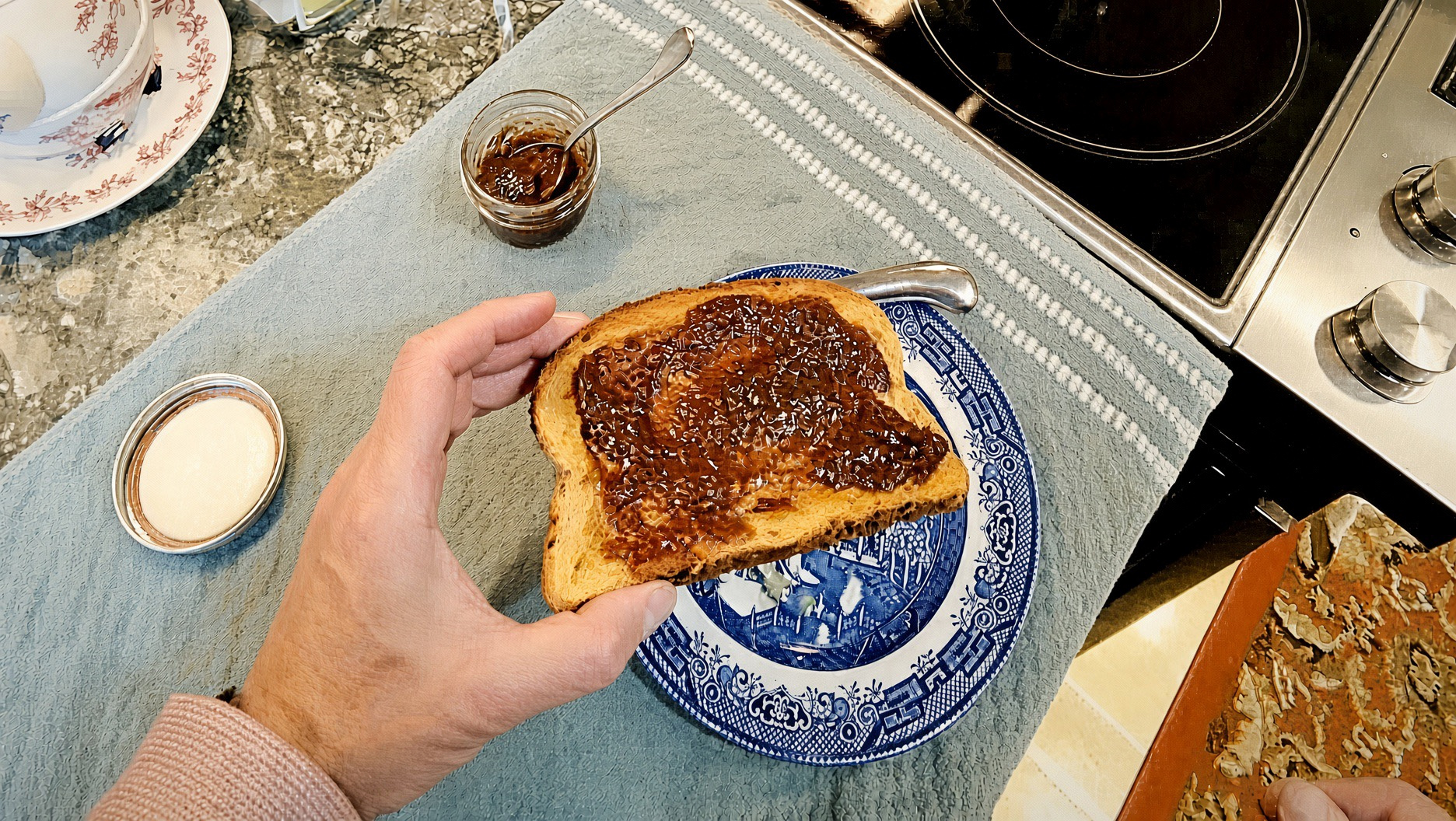
Serves: About 9–10 pints. Enough for every toast-lover you know, or two grandkids with a spoon.
Total time: About 4 hours on the stovetop, mostly cooking down and stirring. Figure 8–10+ hours with the slow-cooker option.
Difficulty: Easy. If you can stir and watch a clock, you’re qualified.
The Gear That Matters
- Boiling-water canner, or any big stockpot with a rack that’s deep enough to cover the jars with 1 inch of water
- Half-pint or pint canning jars, new lids, and bands
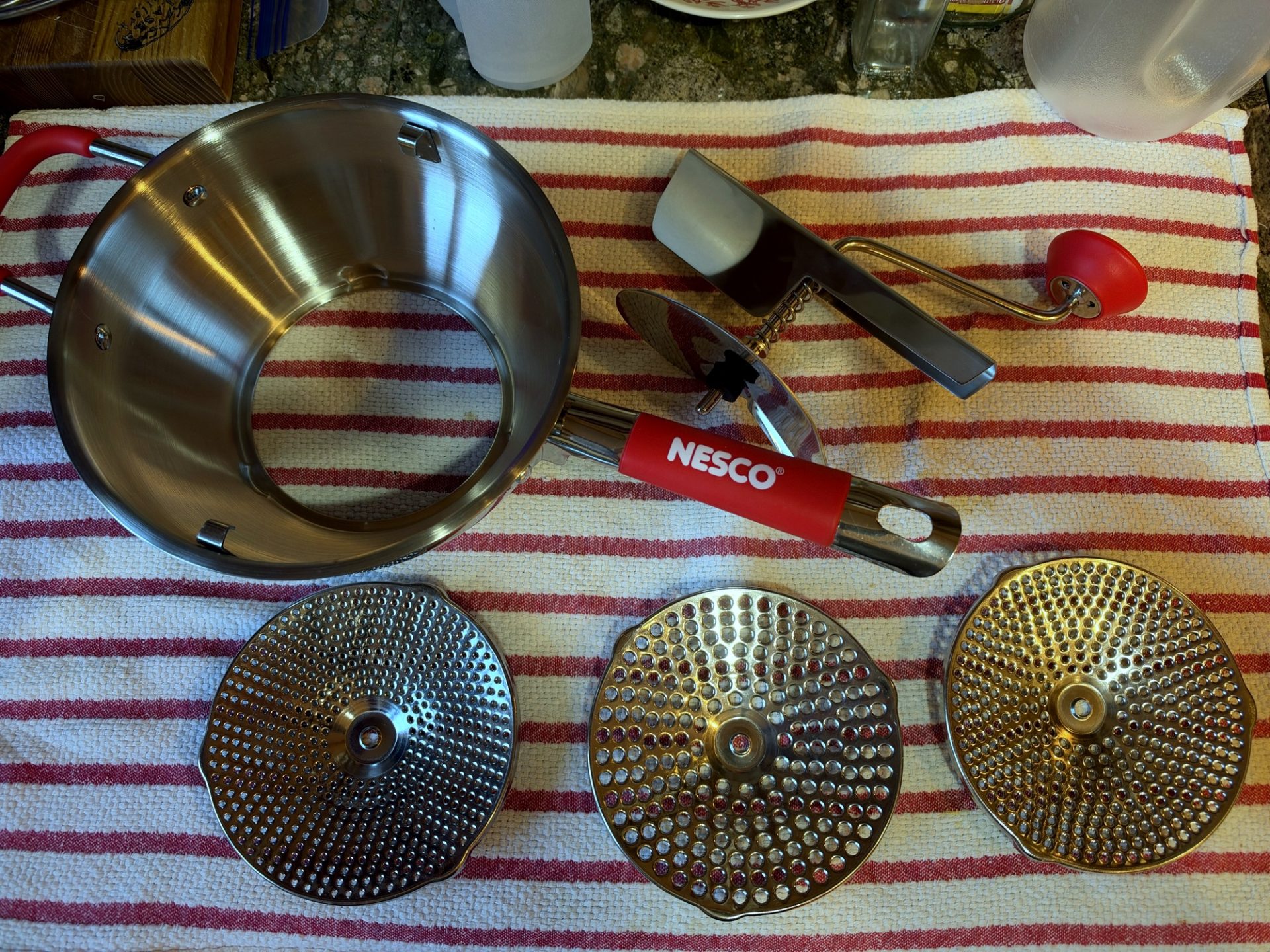
- A food mill, colander, or strainer to press the cooked apples
- A heavy-bottomed pot for the cook-down. Thin pots scorch, so use a heavy one, because apple butter spits like a mad cat.
- Jar lifter, canning funnel, and a headspace tool or ruler
- Optional: a slow cooker, if you’d rather let it cook down while you watch the game.
Ingredients
(This is the NCHFP tested recipe. Don’t change a thing: the sugar, vinegar, and spice amounts stay as written. And no thickeners: no flour, cornstarch, or Clear Jel. The only thing that thickens apple butter is time.)
The Apples
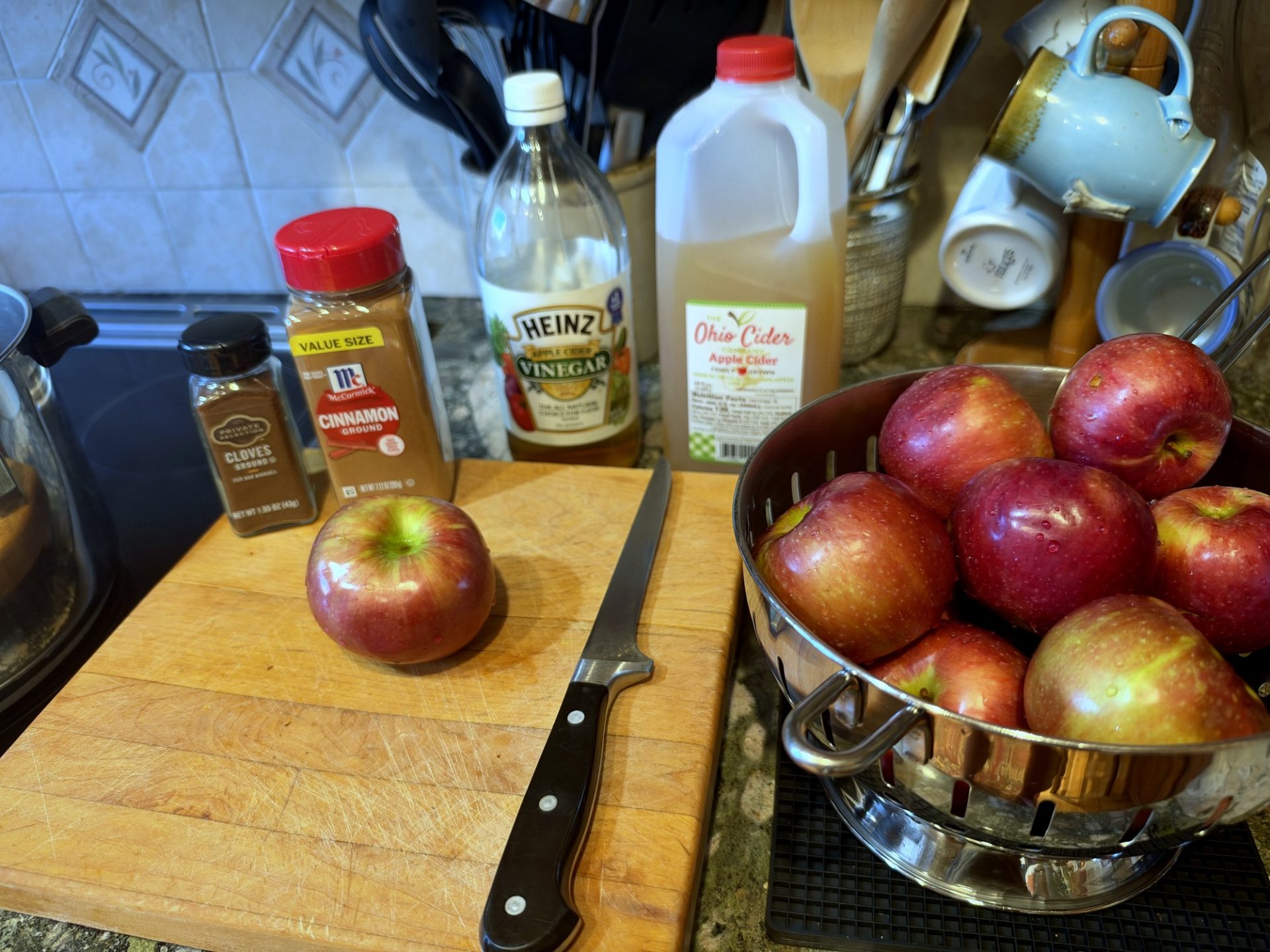
- 8 lbs apples (NCHFP suggests Jonathan, Winesap, Stayman, Golden Delicious, McIntosh, “or other tasty apple varieties”)
- 2 cups apple cider
- 2 cups vinegar
The Sweet & Spice
- 2¼ cups white sugar
- 2¼ cups packed brown sugar
- 2 Tbsp ground cinnamon
- 1 Tbsp ground cloves
Yield: about 9–10 pints (per NCHFP). Have 10 pints’ worth of jars ready.
Pap Steve’s Dead-Simple Instructions
- Get the canner going. Fill the water-bath canner, set the rack in, and start heating.
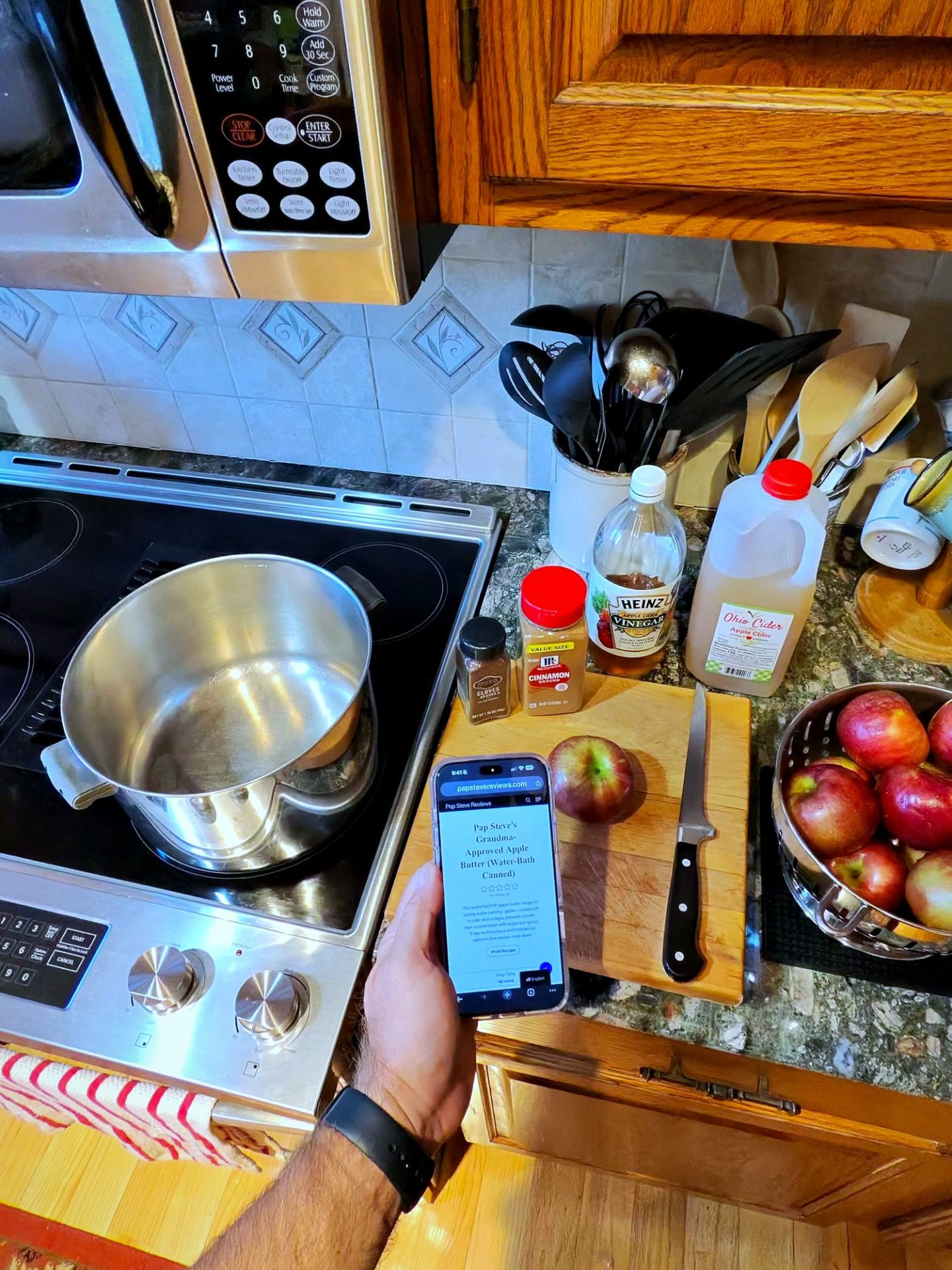
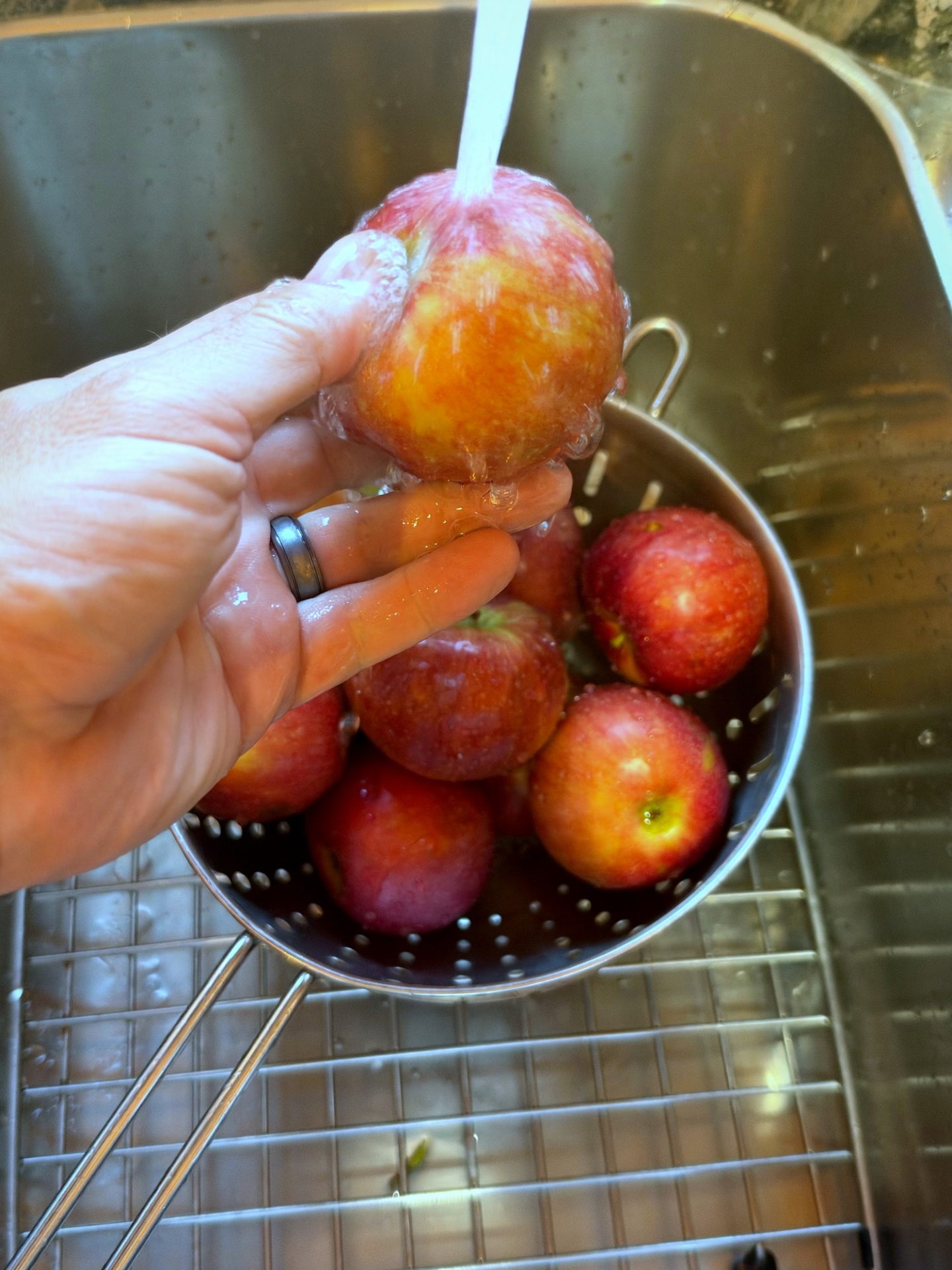
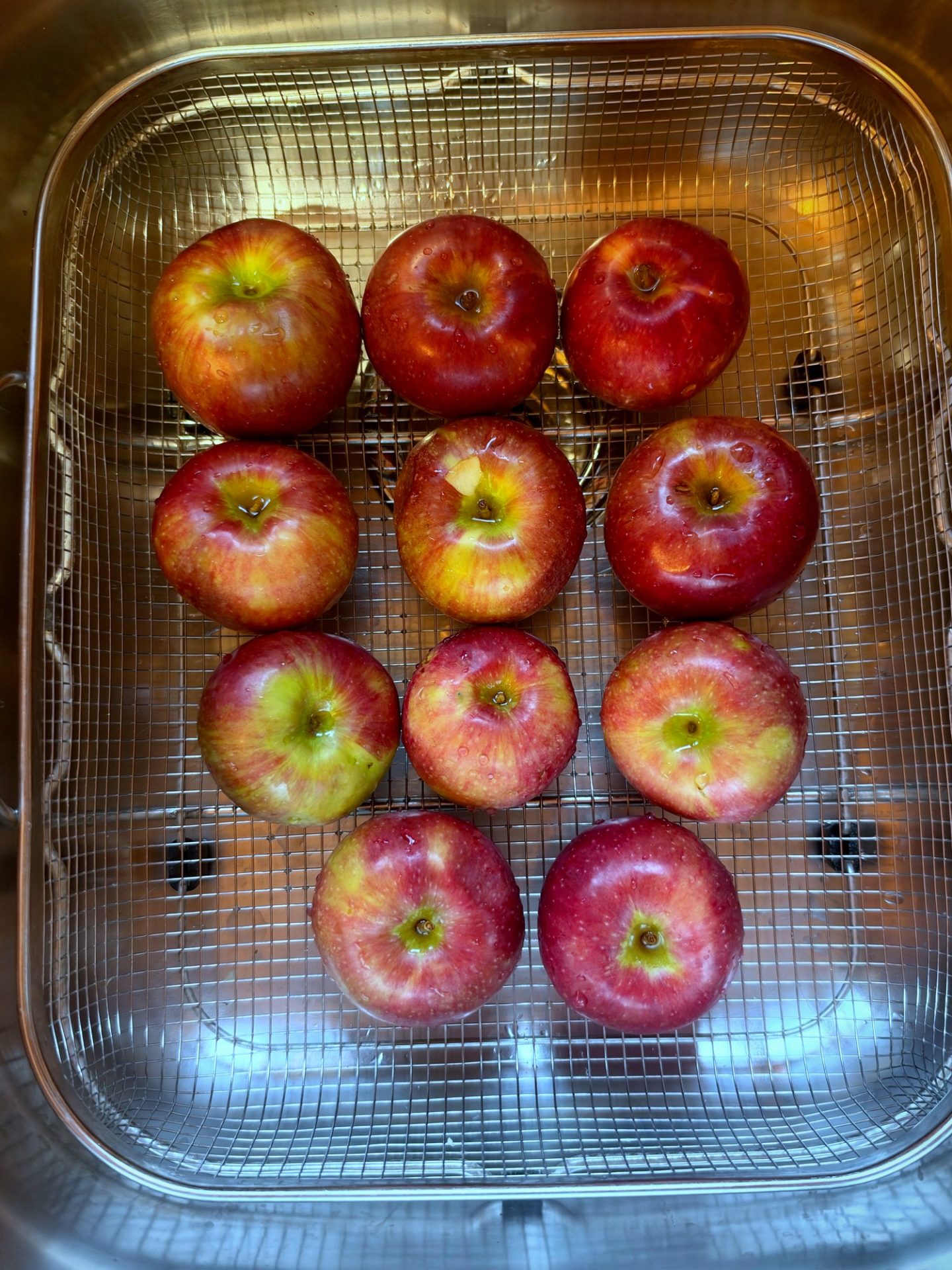
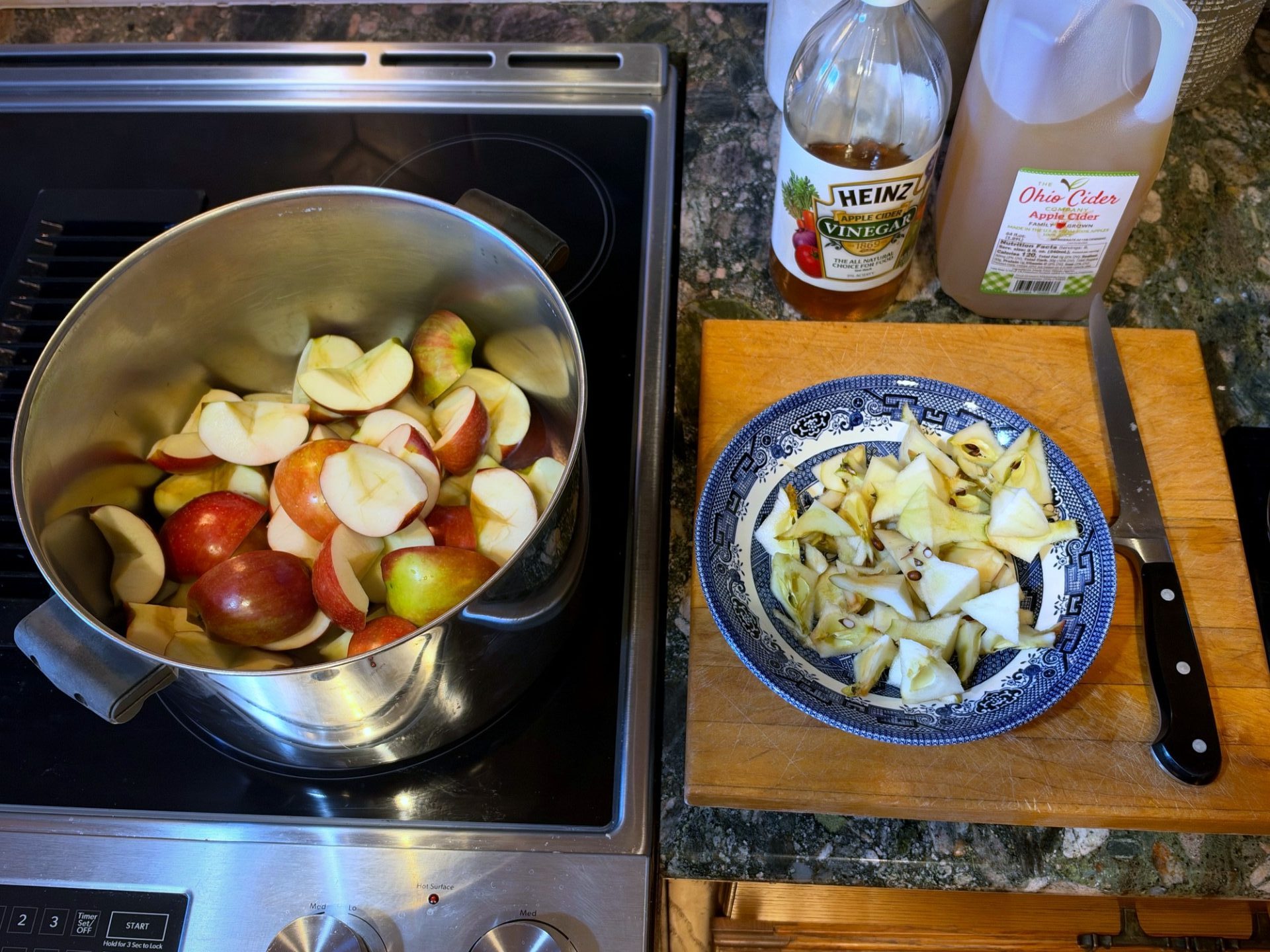
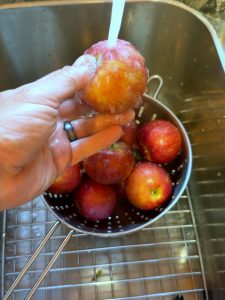
- Prep the apples. Wash them, pull the stems, and then quarter and core them. No peeling, because the food mill handles the skins, and life’s too short.
Cook and Press the Apples
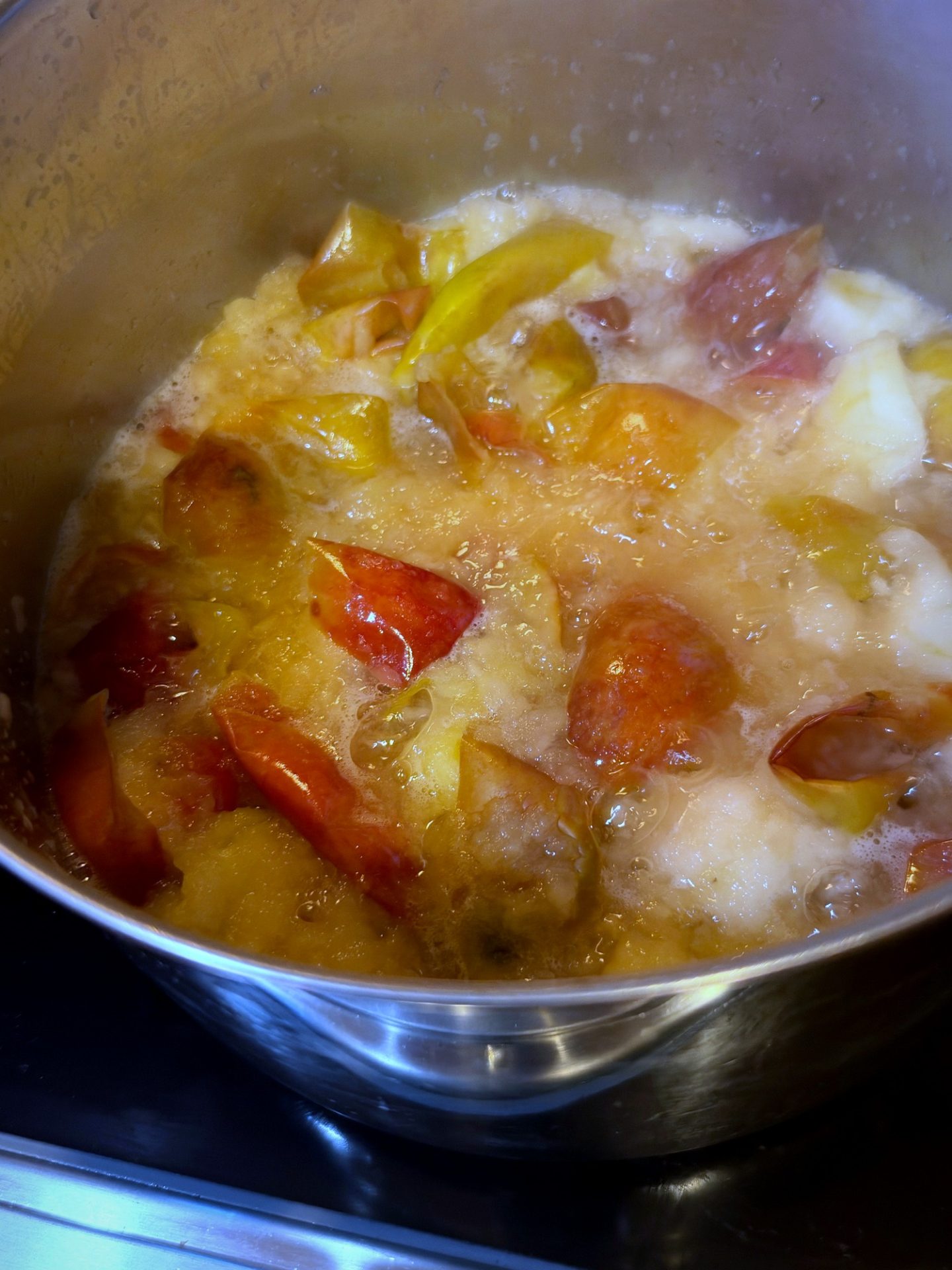
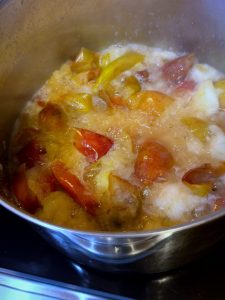
- Cook them soft. Next, put the apples in the pot with the cider and vinegar and cook slowly until soft. Low and slow, because this isn’t a drag race.
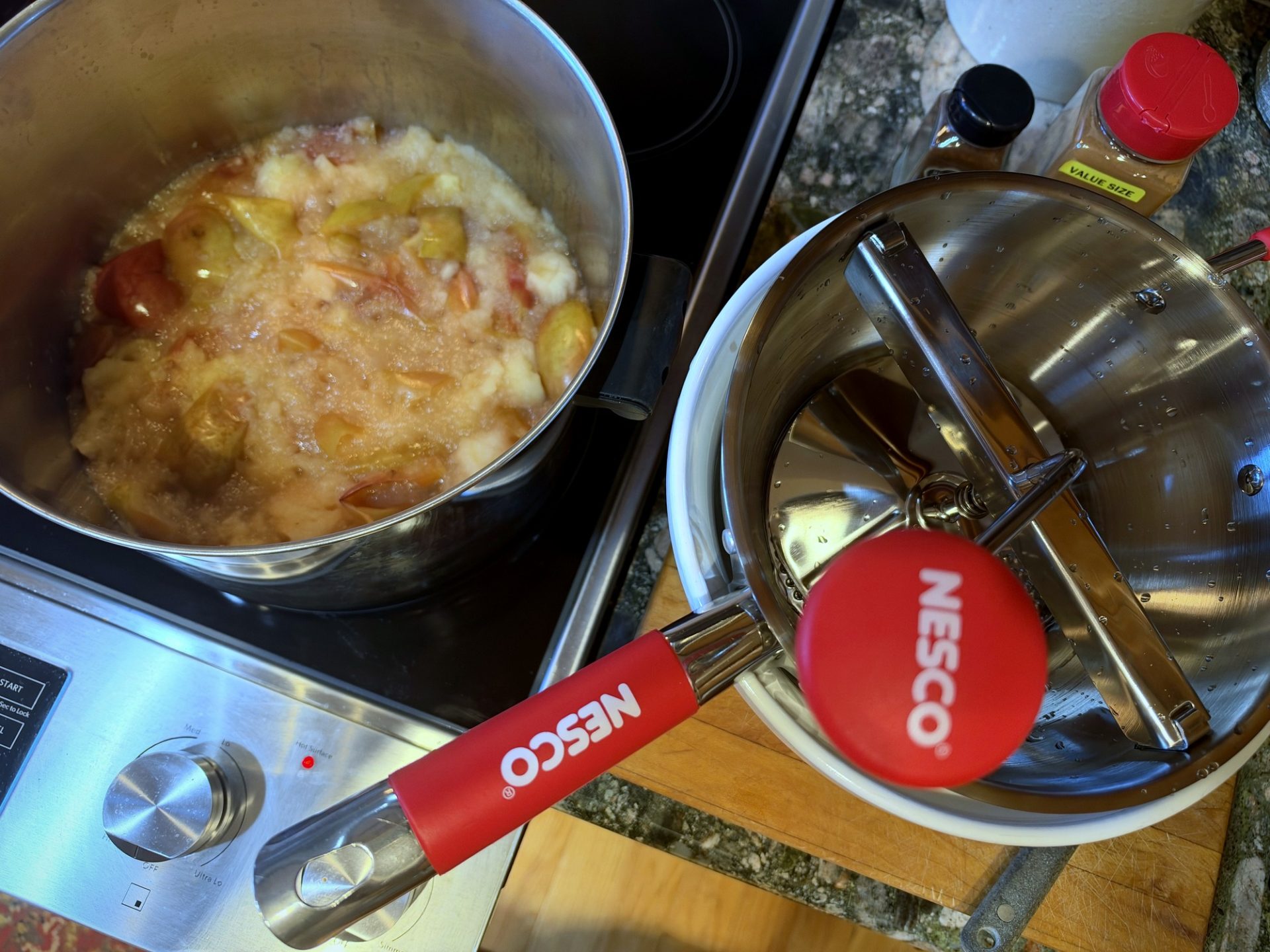
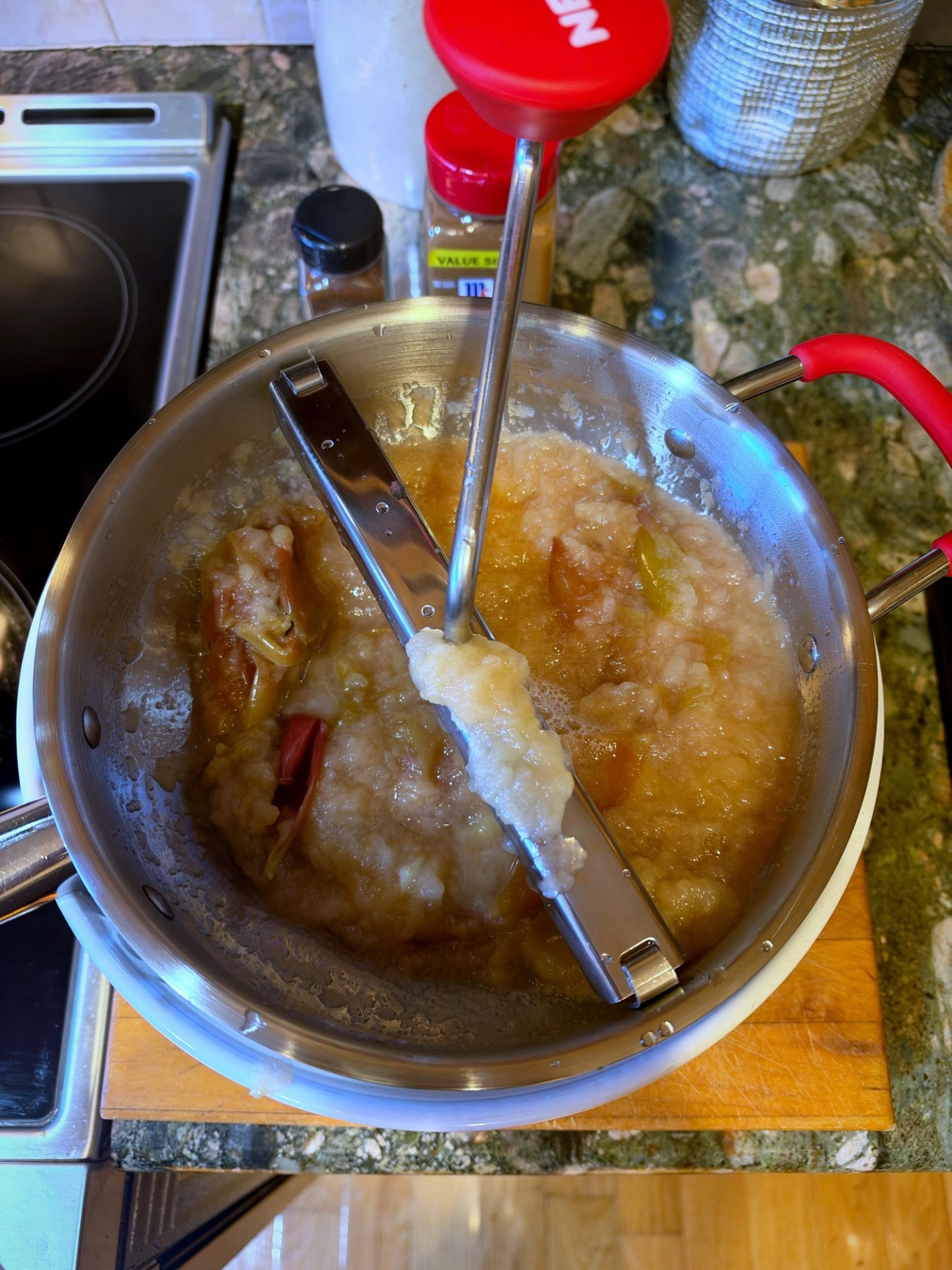
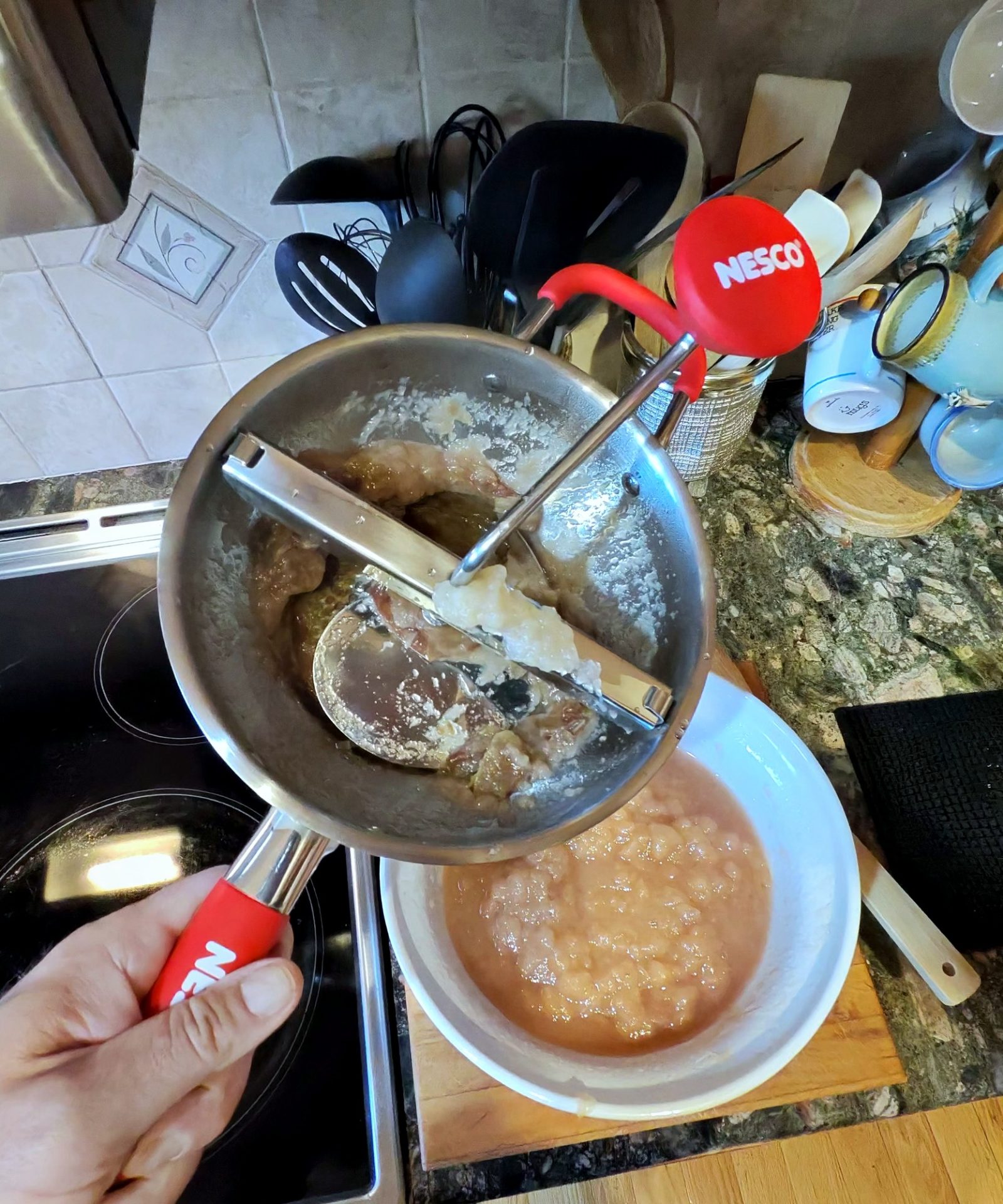
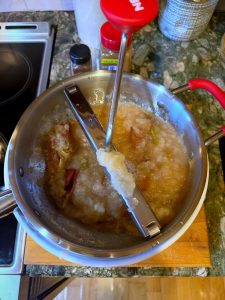
- Press it. After that, run the soft fruit through a food mill, colander, or strainer until you have smooth pulp. Meanwhile, the skins go to the compost.
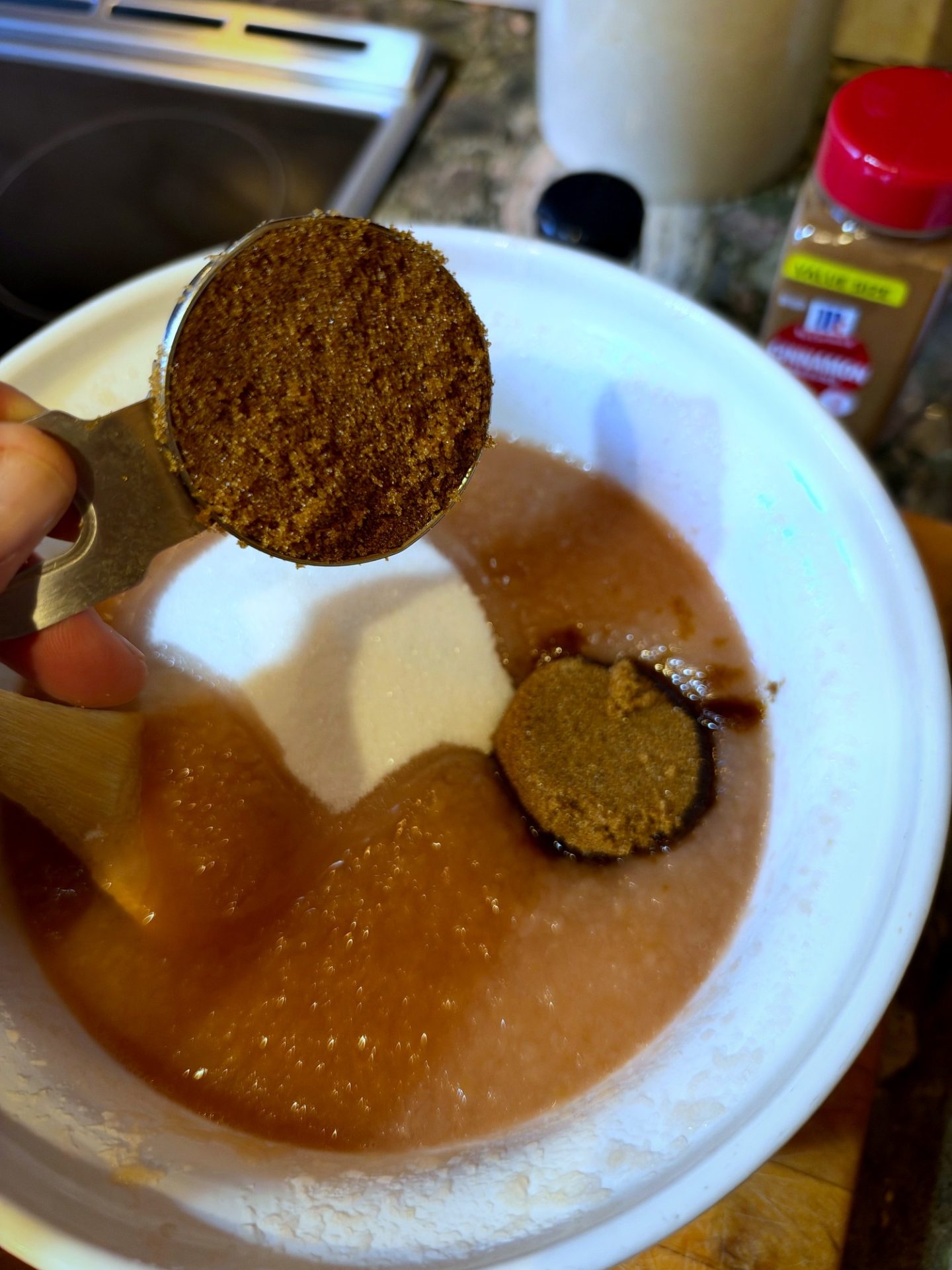
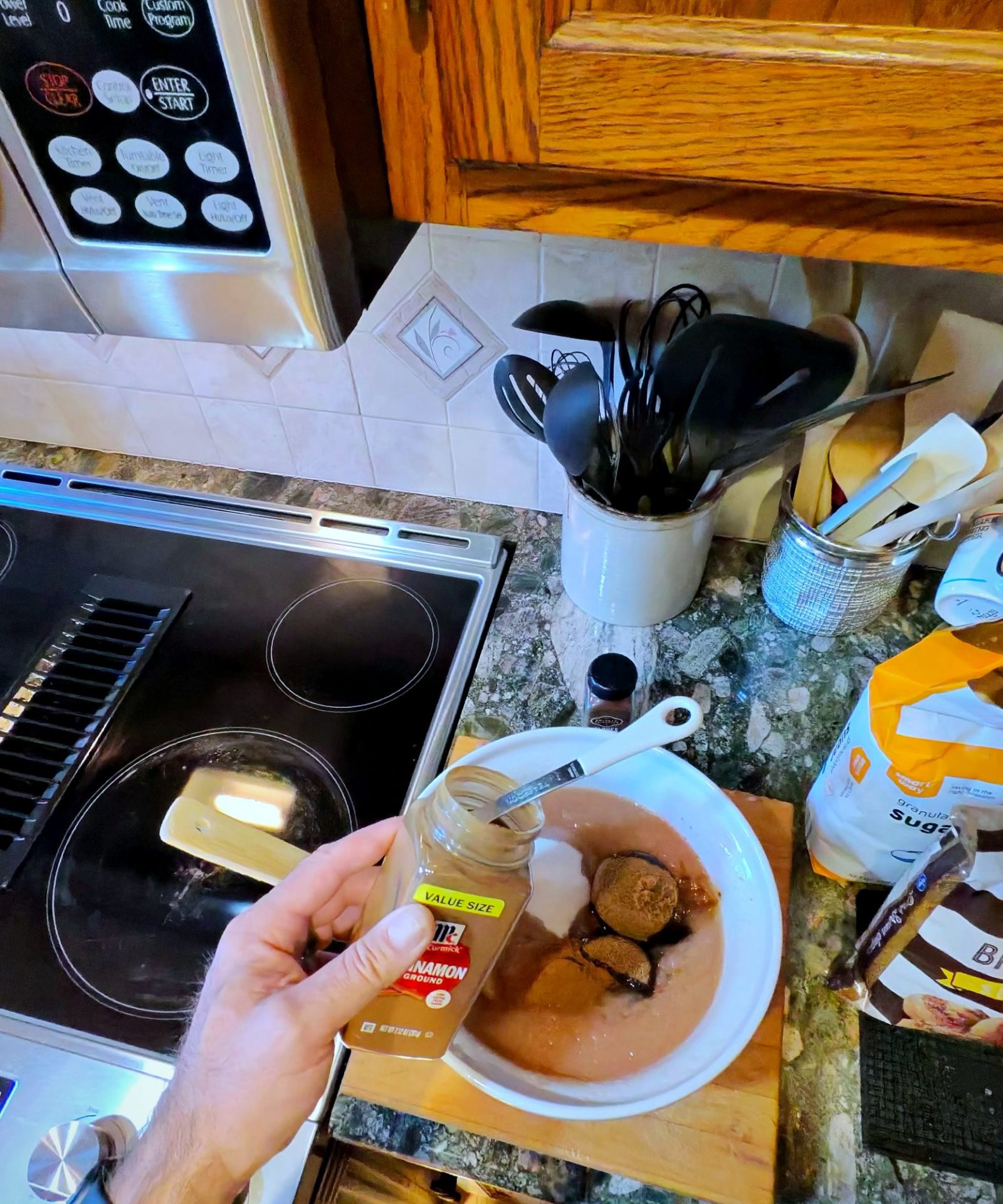
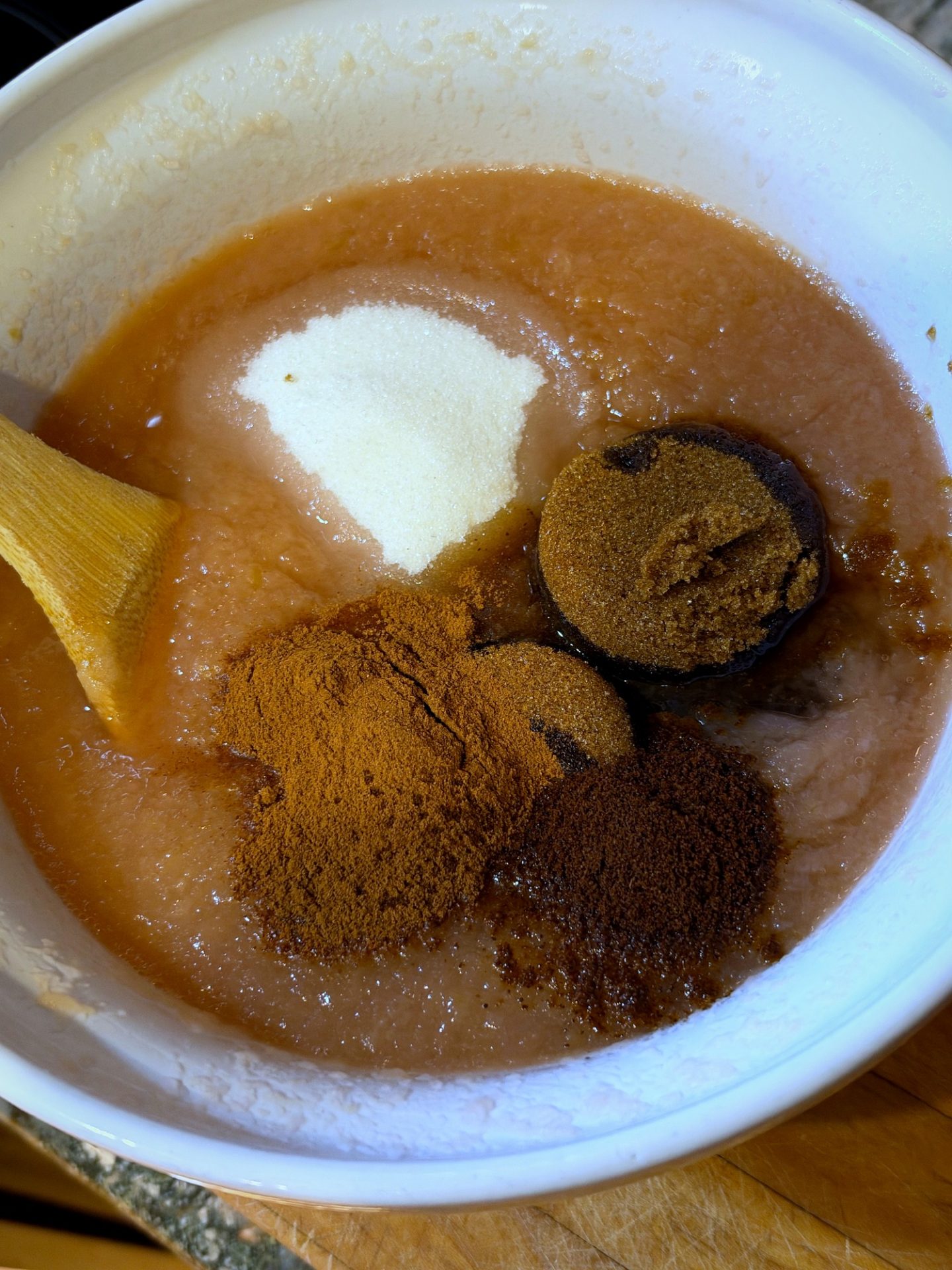
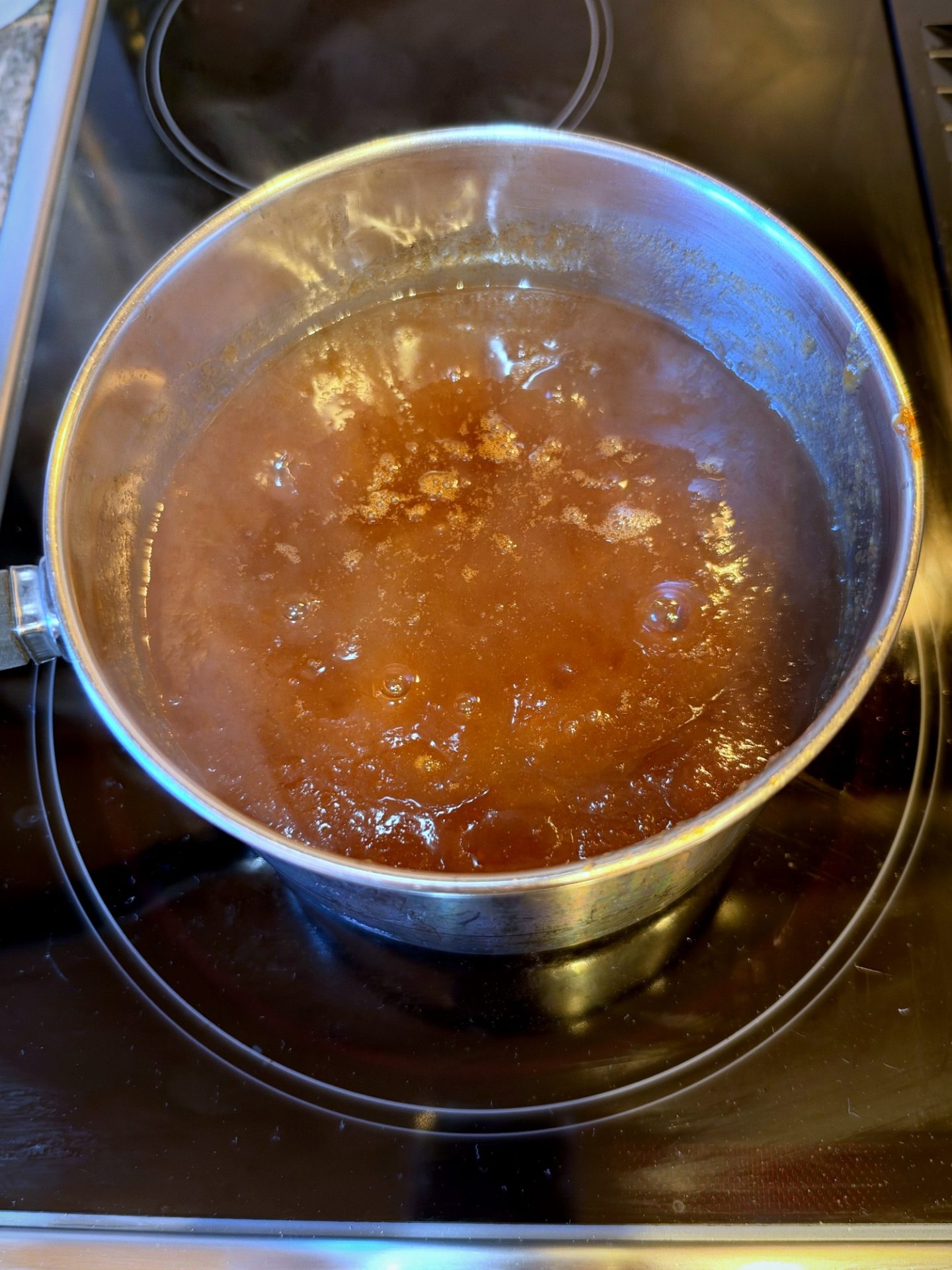
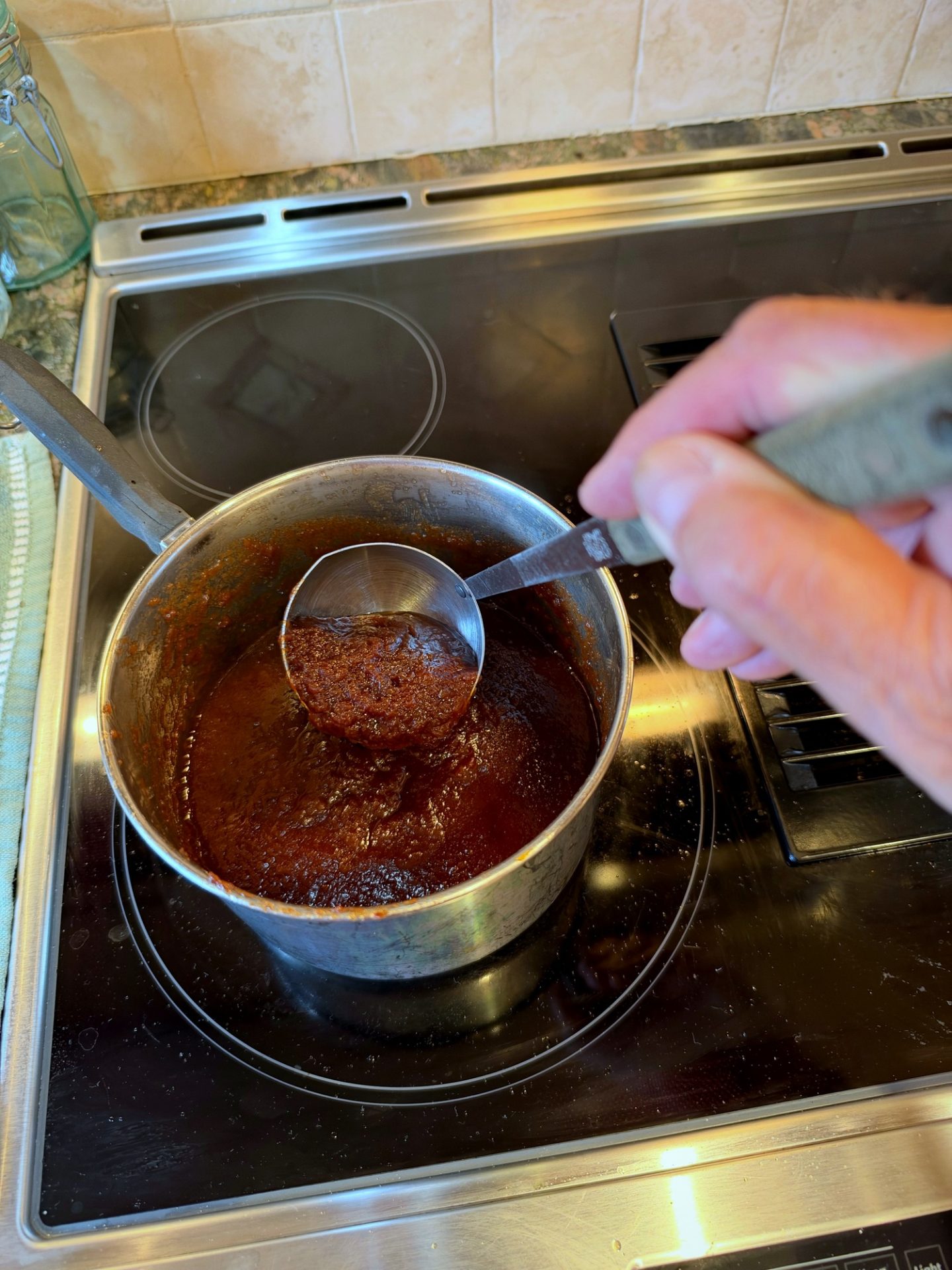
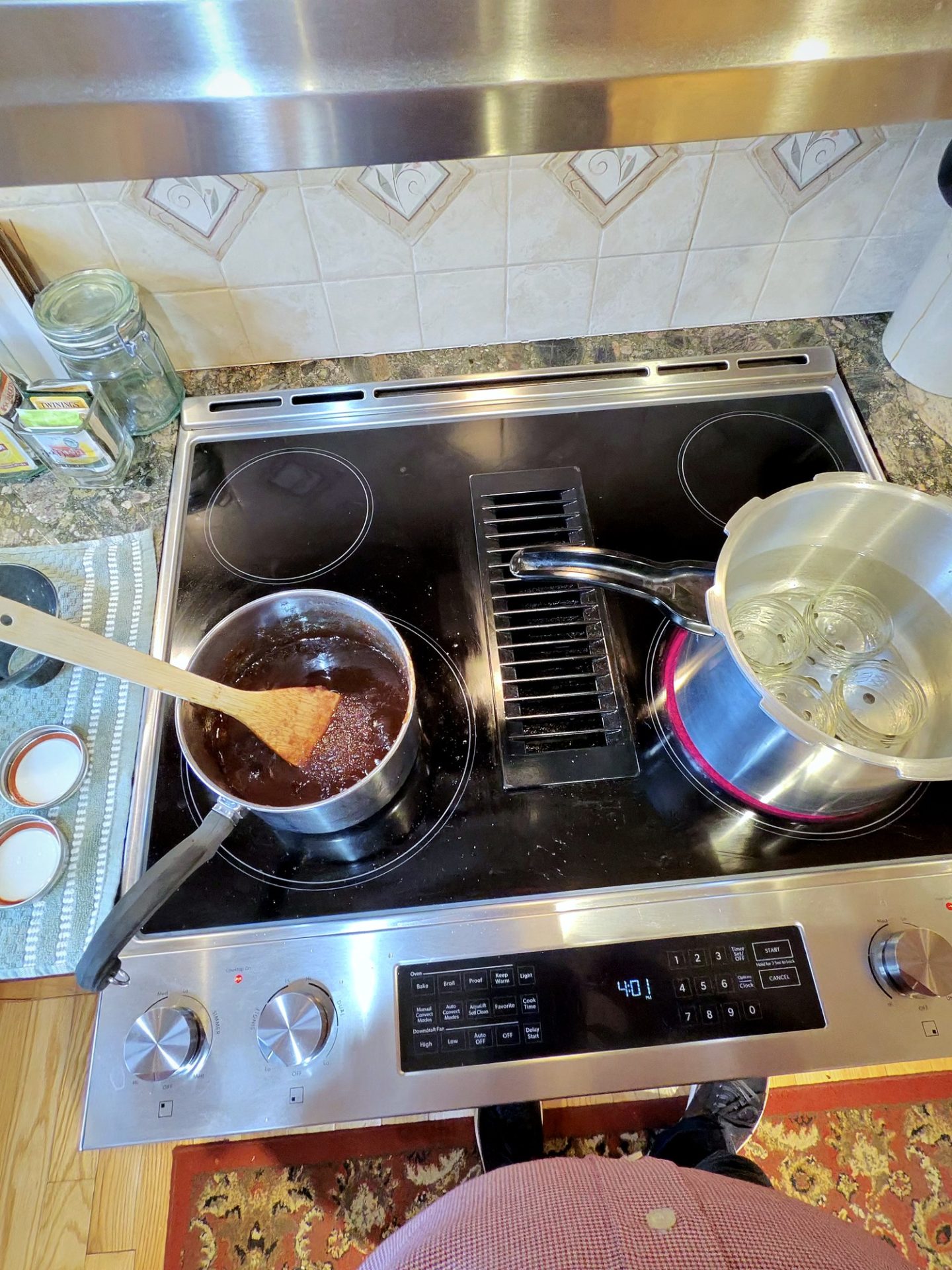
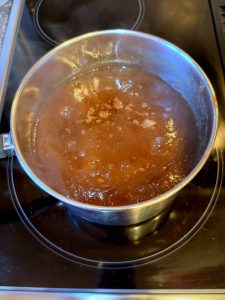
- Cook it down. Then return the pulp to the pot with both sugars, the cinnamon, and the cloves. Cook it, stirring frequently, until thick. It will spatter, so use a long spoon and wear long sleeves. Your house is about to smell better than any candle store at the mall.
- Slow-cooker option: after you add the sugar and spices (end of this step), you can do the cook-down in a slow cooker on LOW instead. Oregon State University Extension says to plan on about 8–10 hours, depending on your cooker and batch size. Keep the lid ajar so moisture can escape, and stir now and then so it doesn’t scorch. Most of the thickening happens in the last few hours. Then do the same doneness test and the same canning steps below. In short, nothing changes but the pot.
Jar It and Process It
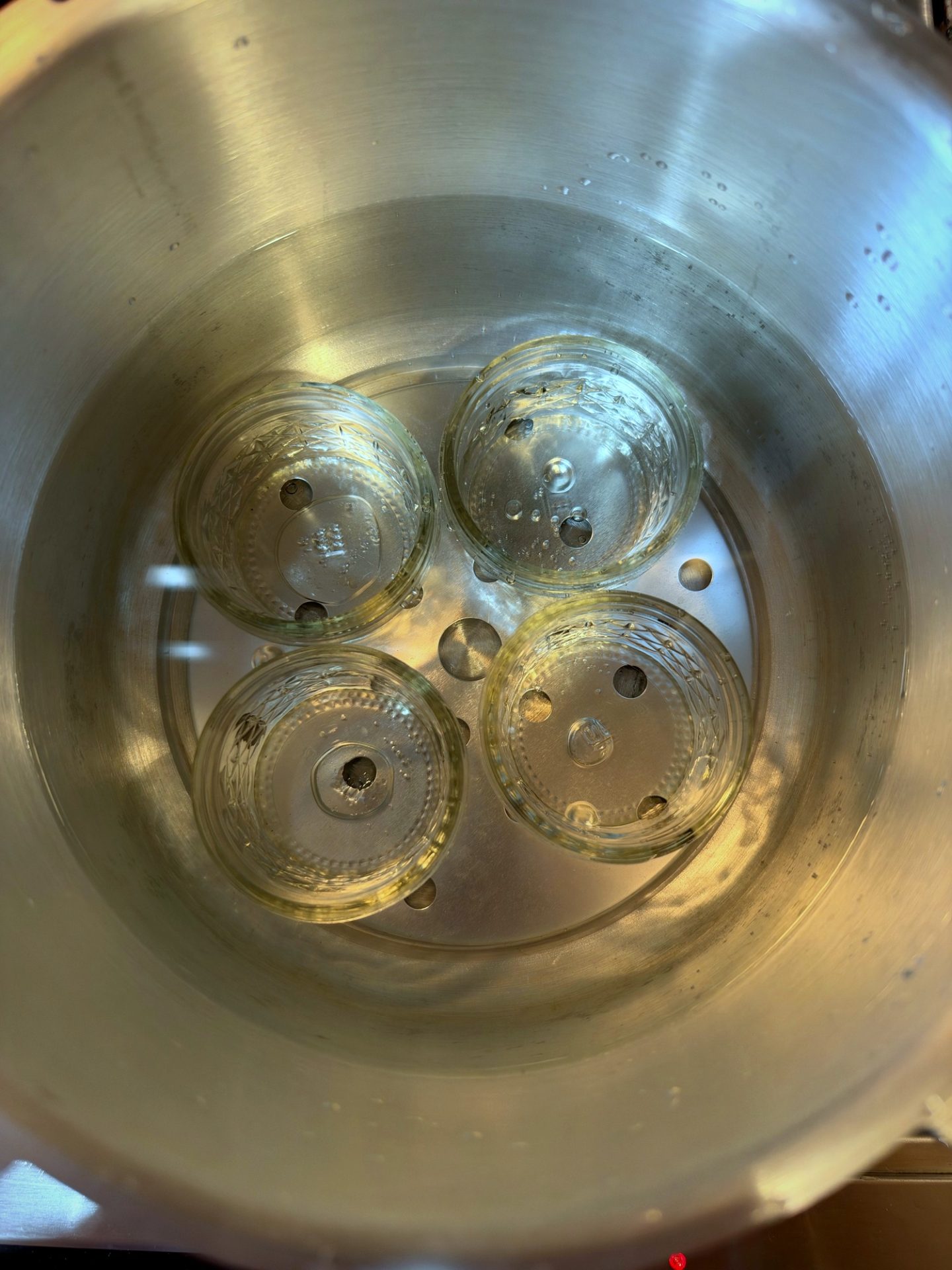
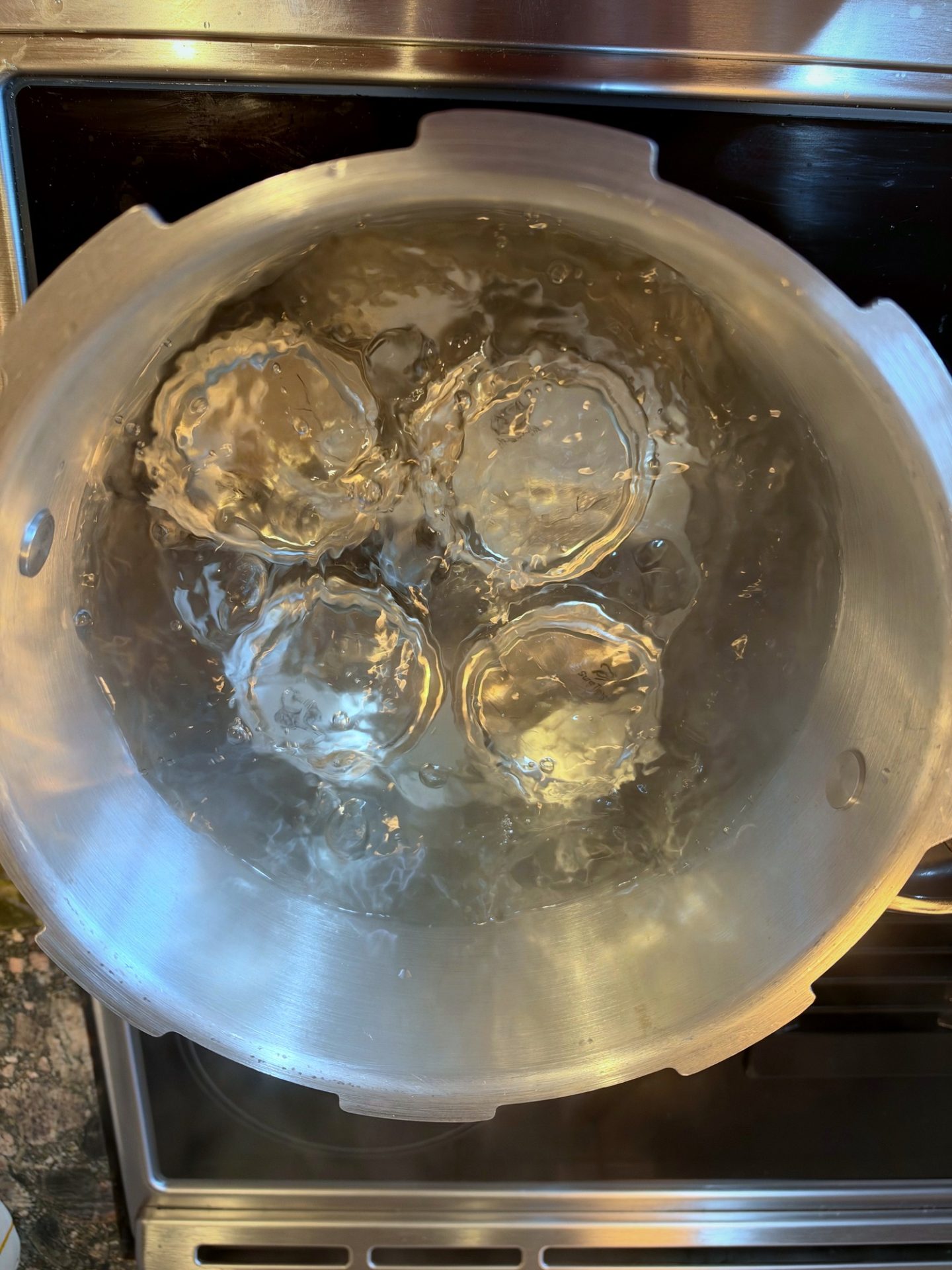
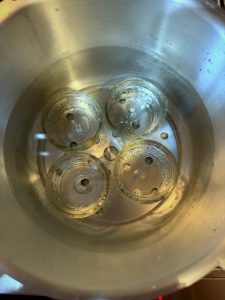
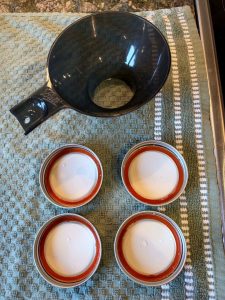
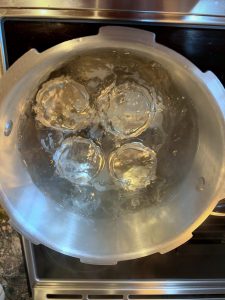
- Sterilize the jars. NCHFP says to fill hot butter into sterile half-pint or pint jars, because the processing time is under 10 minutes. To sterilize, stand the jars upright on the rack, cover them with hot water to 1 inch above the tops, and boil 10 minutes. Above 1,000 ft, add 1 minute for each additional 1,000 ft. Also, keep the jars hot until you fill them. (Quart jars don’t need presterilizing.)
- Test for done. Use either test:
- Spoon test: pull out a spoonful and hold it away from the steam for 2 minutes. It’s done if it stays mounded on the spoon, but not if it runs.
- Plate test: spoon a little onto a plate. It’s ready when no rim of liquid separates around the edge, otherwise keep cooking.
- Fill. Once the butter is done, ladle the hot butter into the hot, sterile jars, leaving ¼-inch headspace. Then remove any air bubbles, wipe the rims clean, and put on the lids and bands.
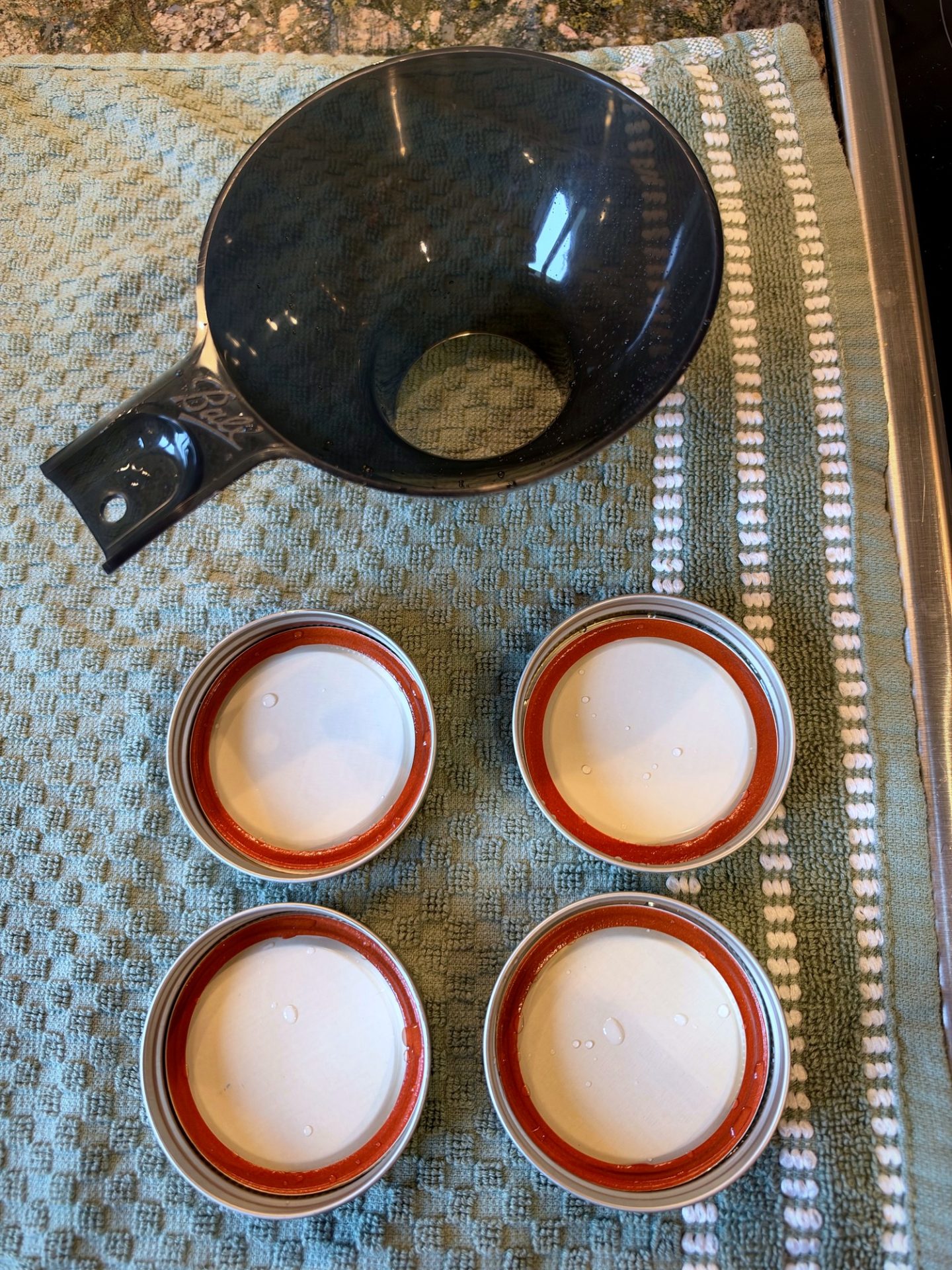
- Process in the boiling-water canner. Keep the jars covered by at least 1 inch of water at a full rolling boil, and use these times (NCHFP, hot pack):
| Jar size | 0–1,000 ft | 1,001–6,000 ft | Above 6,000 ft |
|---|---|---|---|
| Half-pints or pints | 5 min | 10 min | 15 min |
| Quarts | 10 min | 15 min | 20 min |
- Let ’em rest. Finally, lift the jars out and set them on a towel, away from drafts. Leave them alone for 12–24 hours and listen for the ping. That’s the sweetest sound in the kitchen. Then check the seals. However, any jar that didn’t seal goes in the fridge and gets eaten first, and nobody’s complaining.
Pap Steve’s Field Notes
- Know your altitude. The times change with elevation. Here in the Columbia, SC area we’re under 1,000 ft, so pints get 5 minutes. Up at the family place in the Catskills (Windham sits well above 1,000 ft), it’s the 10-minute row. So look up your elevation, and don’t guess.
- Stick to the recipe. Also remember, these times are for this tested recipe only. If you want less sugar, use NCHFP’s separate Reduced Sugar Apple Butter recipe. It has its own, longer times, so don’t swap numbers between the two recipes.
- No thickeners, no shortcuts. Also, don’t add flour, cornstarch, or pectin “to speed it up.” Instead, cook it down, and let the spoon test tell you when it’s ready.
- Storage: keep the jars on a cool, dry, dark shelf. Then take the bands off, label, and date them.
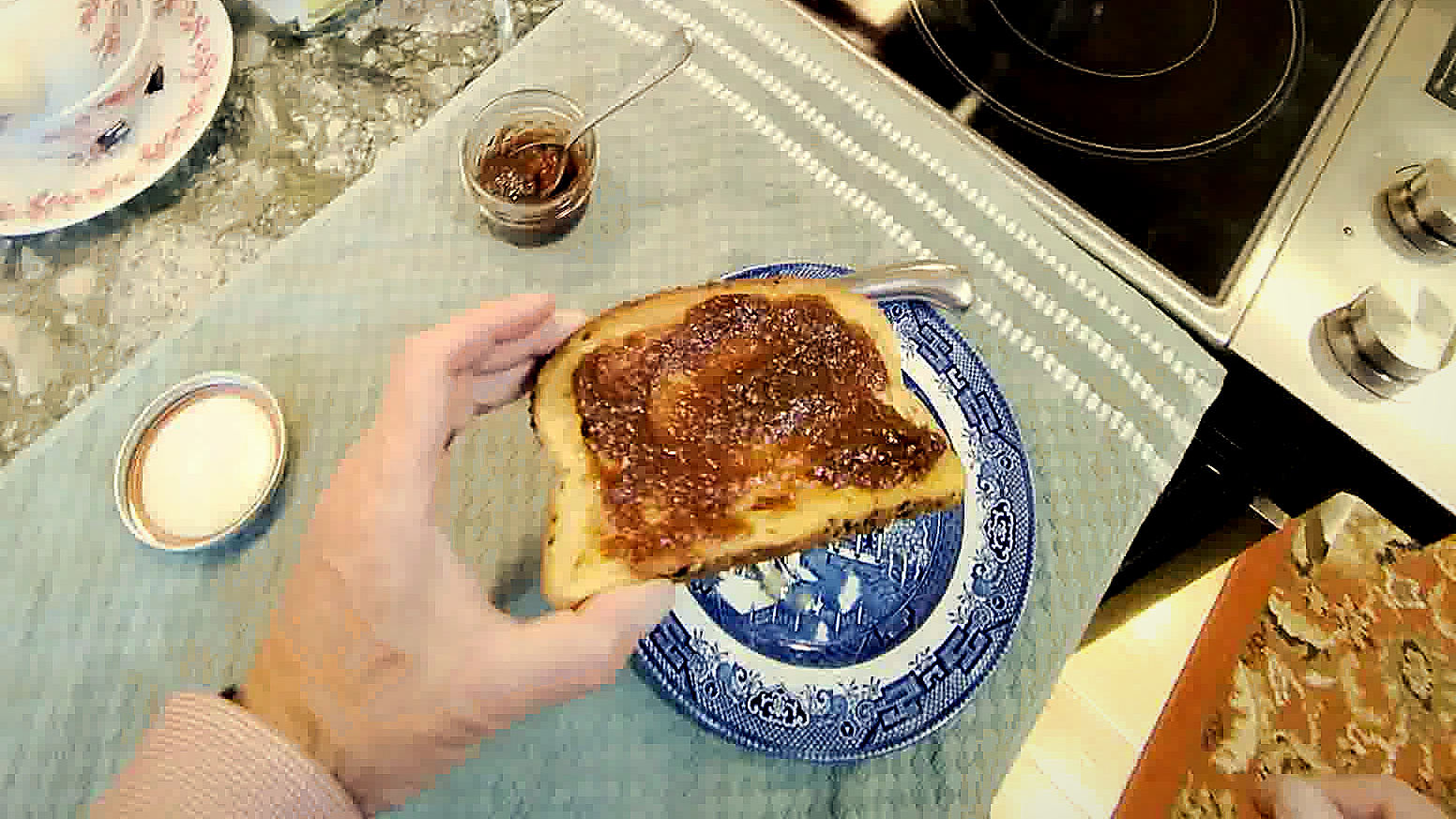
- How to eat it: on toast or biscuits, swirled into oatmeal, glazed on pork chops, or spooned over a block of cream cheese with crackers.
- Gift jars: half-pints with a kraft label and some twine make an easy Christmas gift. Also, pepper jelly is coming in November.
- Pressure canner curious? Apple butter doesn’t need one, but low-acid foods do. Here’s why I trust my All Americans.
Where the Numbers Come From
Sources I used so the numbers stay honest:
- National Center for Home Food Preservation, “Apple Butter” (adapted from the USDA Complete Guide to Home Canning, 2015): https://nchfp.uga.edu/how/can/canning-fruits-and-fruit-products/apple-butter/
- NCHFP, “Sterilization of Empty Jars,” linked from the apple butter page
- Oregon State University Extension, “Fruit butters” (for the slow-cooker method): https://extension.oregonstate.edu/catalog/sp-50-304-fruit-butters
Grandma didn’t have a website, but she had a full root cellar, and that’s the point. So spend one fall afternoon on this, and come February you’ll be eating it and feeling like a genius.
So now go stir that pot, and drop your favorite way to eat apple butter (or your first canning disaster) in the comments.
God Bless Y’all,
Pap Steve
PapSteveReviews.com
Pap Steve’s Grandma-Approved Apple Butter (Water-Bath Canned)
Ingredients
Method
- Fill the boiling-water canner, set the rack in, and start heating.

- Wash the apples, remove the stems, then quarter and core them. No need to peel.
- Cook the apples slowly in the cider and vinegar until soft.
- Press the fruit through a food mill, colander, or strainer to make a smooth pulp.
- Cook the pulp with both sugars, the cinnamon, and the cloves, stirring frequently, until thick. Optional: do this cook-down in a slow cooker on LOW for about 8-10 hours, with the lid ajar and occasional stirring (OSU Extension).
- Sterilize half-pint or pint jars: cover them with hot water to 1 inch above the tops and boil 10 minutes. Above 1,000 ft, add 1 minute per additional 1,000 ft. Quart jars need not be presterilized.
- Test for doneness: a spoonful held away from the steam for 2 minutes stays mounded, or no rim of liquid separates around a spoonful on a plate.
- Fill the hot butter into the hot jars, leaving 1/4-inch headspace. Remove air bubbles, wipe the rims, and put on the lids and bands.
- Process in a boiling-water canner (hot pack). Half-pints or pints: 5 min at 0-1,000 ft, 10 min at 1,001-6,000 ft, 15 min above 6,000 ft. Quarts: 10, 15, and 20 min.
- Cool the jars undisturbed on a towel for 12-24 hours, then check the seals. Refrigerate any jar that didn't seal.
Nutrition
Notes
- Source: NCHFP, Apple Butter, https://nchfp.uga.edu/how/can/canning-fruits-and-fruit-products/apple-butter/ (adapted from the USDA Complete Guide to Home Canning, 2015).
- Slow-cooker method: OSU Extension, Fruit butters, https://extension.oregonstate.edu/catalog/sp-50-304-fruit-butters.
- Do not add thickeners (flour, cornstarch, Clear Jel, pectin). Do not alter the sugar, vinegar, or spice amounts.
- For a lower-sugar version, use NCHFP’s separate Reduced Sugar Apple Butter recipe and its own, longer process times.
- Yield per NCHFP: about 9-10 pints.
- Store on a cool, dry, dark shelf with the bands removed. Label and date the jars.


 English