Pap Steve here. Let’s talk about the cheapest insurance policy in my garden: a row cover for frost protection. South Carolina winters are mostly mild, right up until one night they aren’t. You go to bed in a T-shirt, and you wake up to a lettuce bed that looks like it watched the end of Old Yeller. Hoops plus mesh are how I keep that from happening in Blythewood.
My PVC Hoops (Not the Kit Ones)
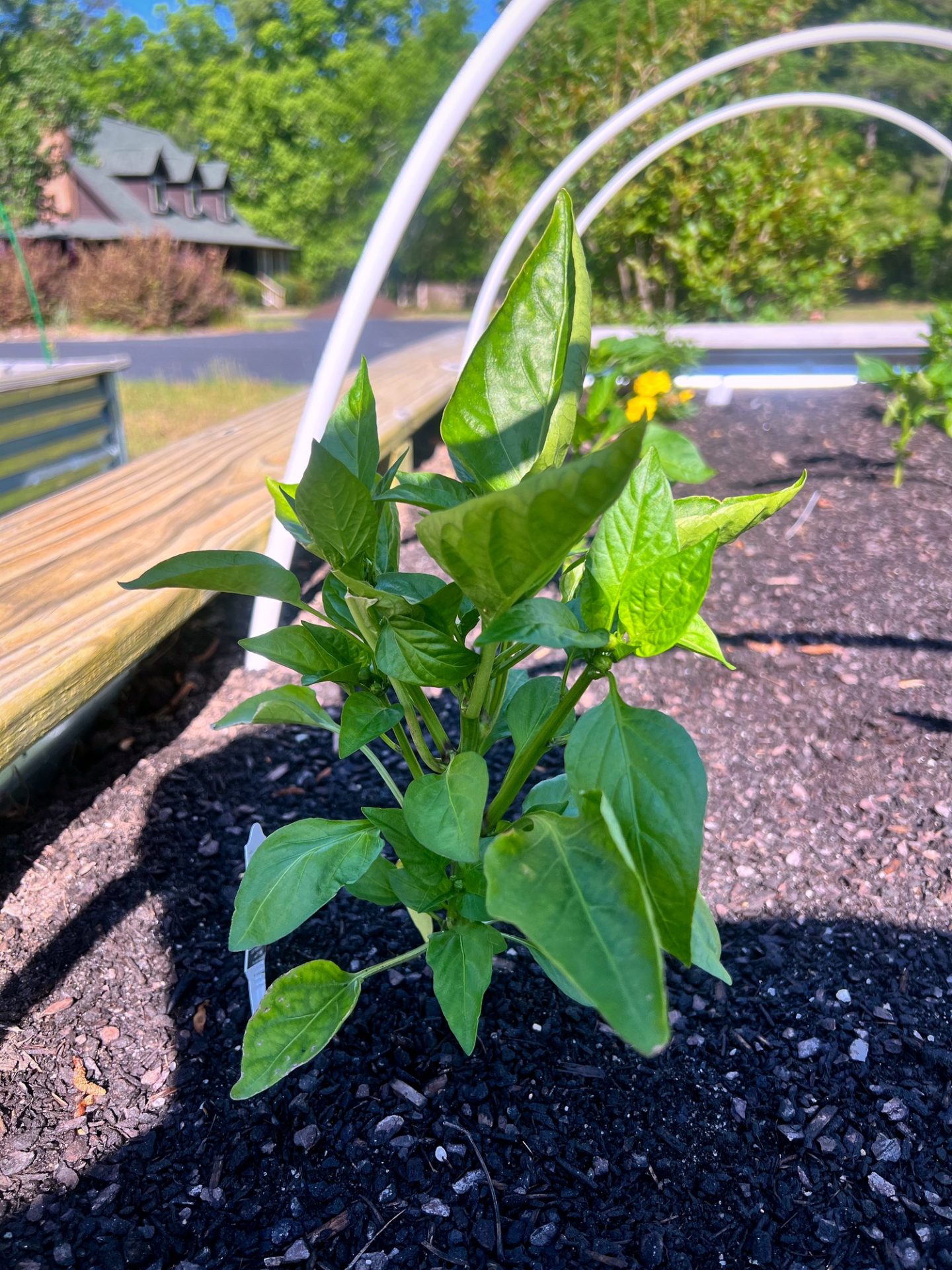
I make my own hoops from ½-inch white PEX-B — flexible pipe, not the fiberglass hoops that come with the mesh kit. It’s cheaper, easier to work with, and more durable in my gardens. These hoops last for years.
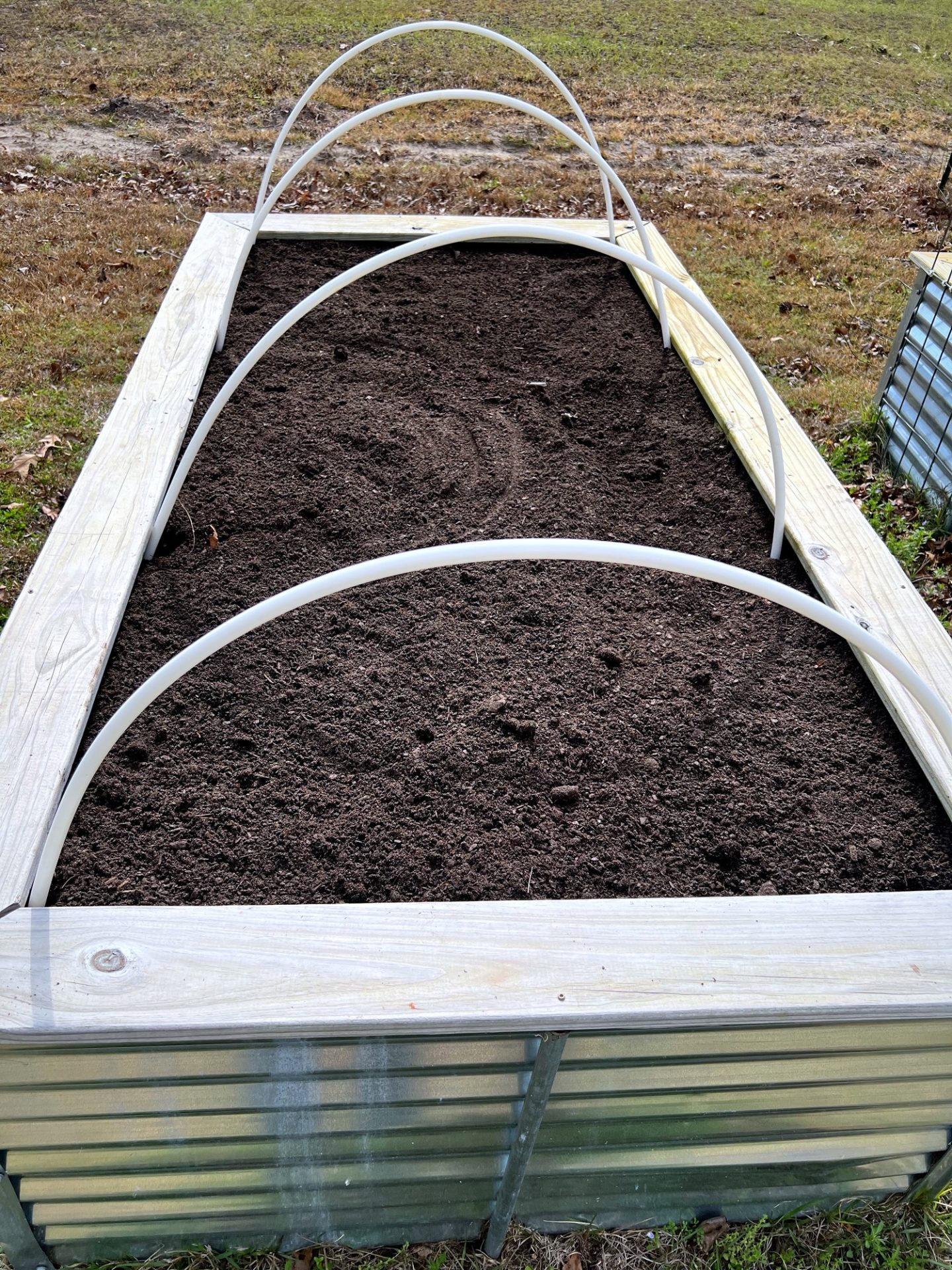
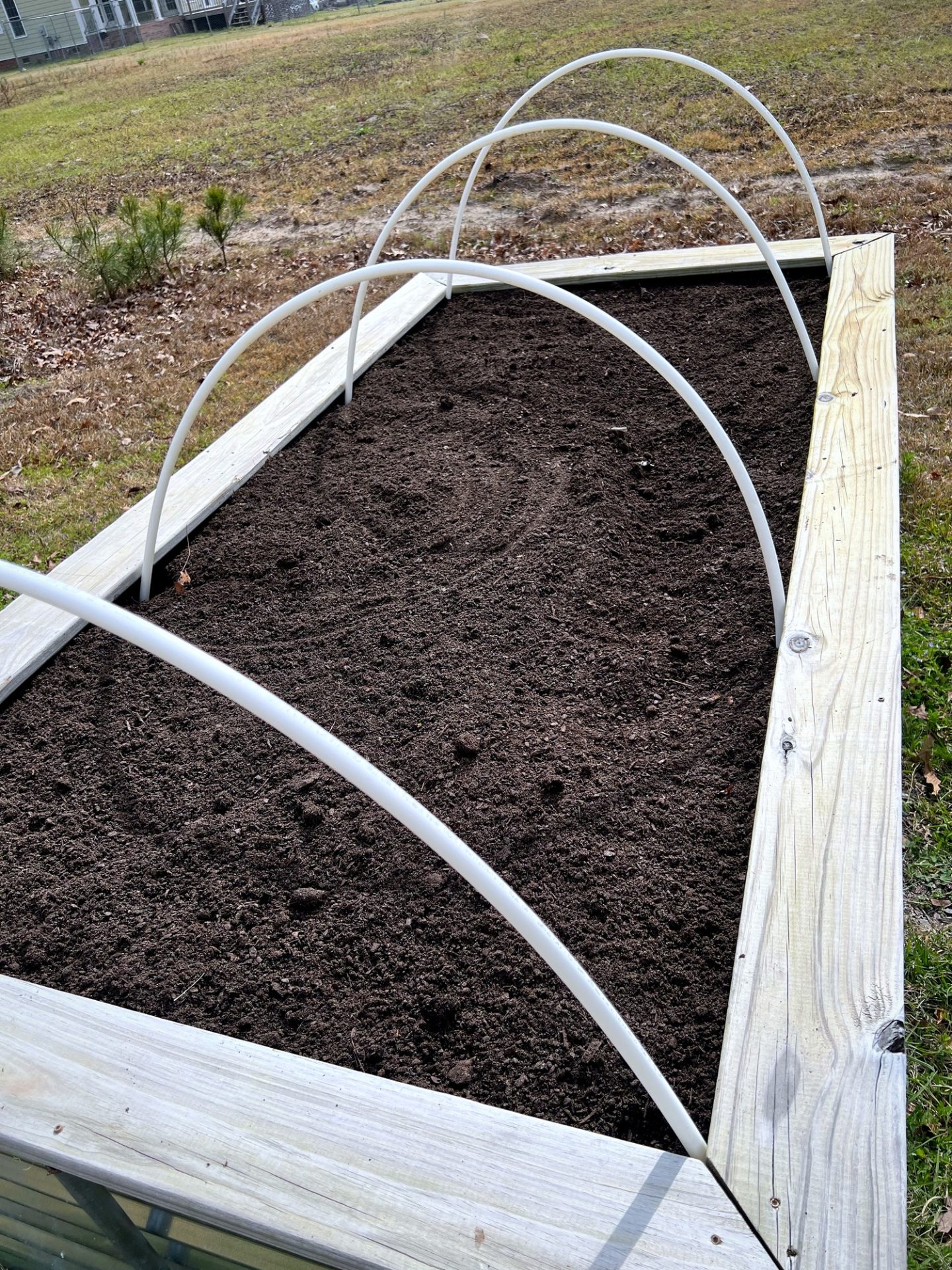
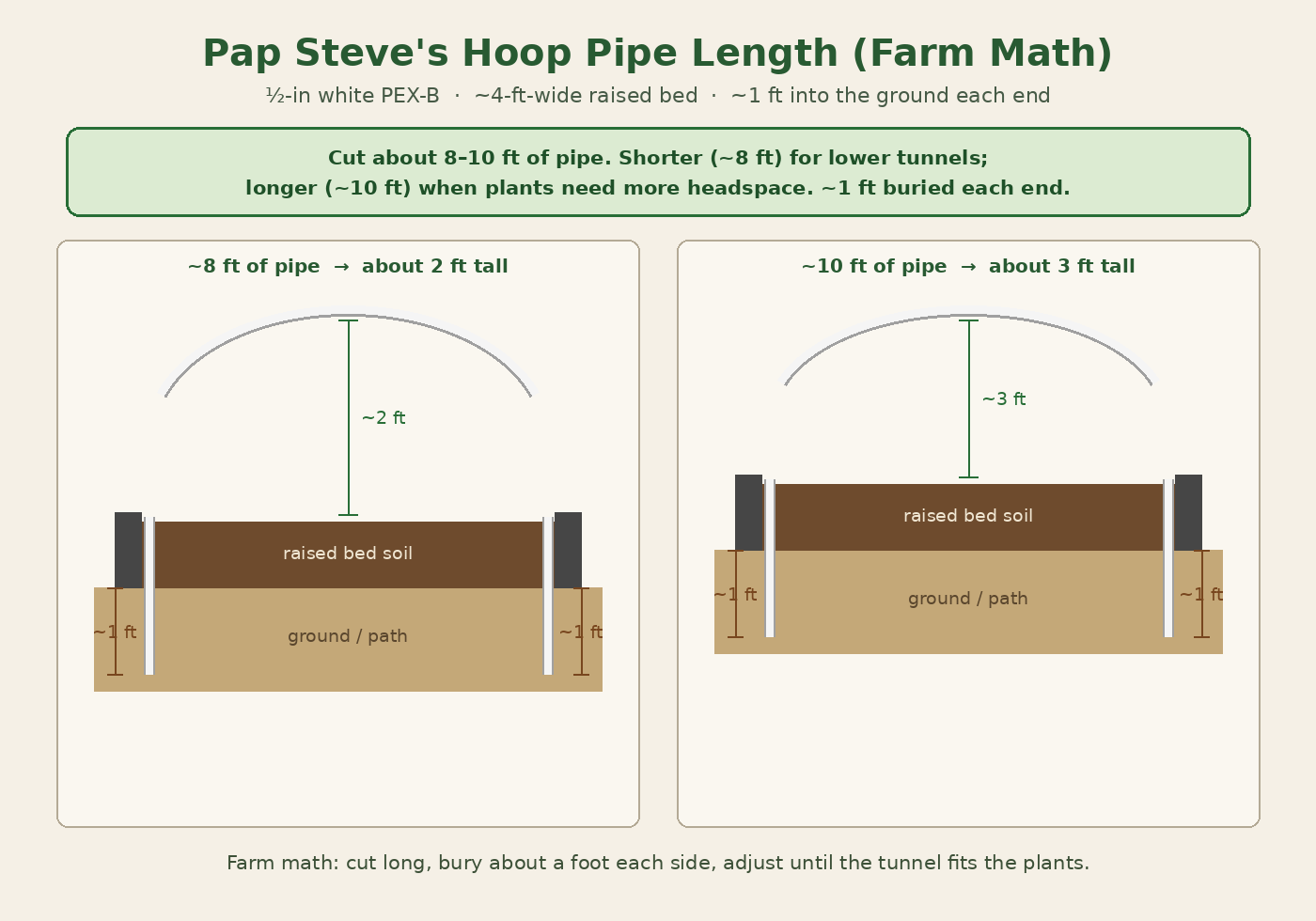
I use ½-inch white PEX-B — the flexible white pipe from Lowe’s. My raised beds run about 4 feet across. I cut roughly 8 to 10 feet of pipe depending on how tall I want the tunnel: closer to 8 feet for a lower hoop over greens, closer to 10 feet when plants need more headspace. About a foot gets shoved into the ground at each end of the raised bed. That burial is what keeps the hoop from popping out when the wind gets ideas. Farm math—measure once, cut long, adjust until it looks right.
Why Hoops Beat Fabric Flat on the Plants
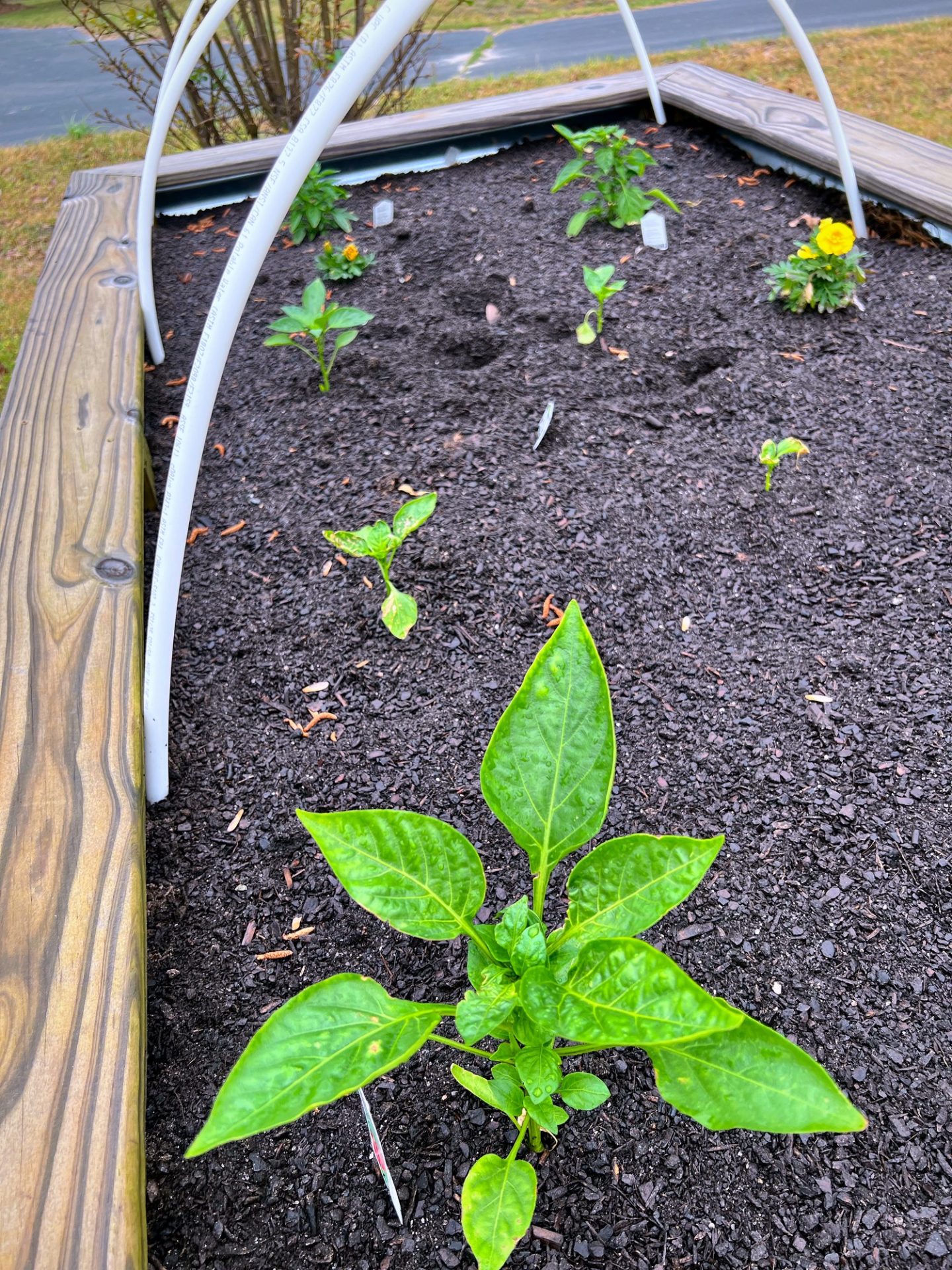
You can lay cover right on the plants, but Clemson Extension likes hooped covers—low tunnels—for cool-season growing. Where fabric touches the leaves, frost can still form right through it. Hoops give you headspace and a pocket of warmer air. They also stand up better to wind.
The Mesh I Use
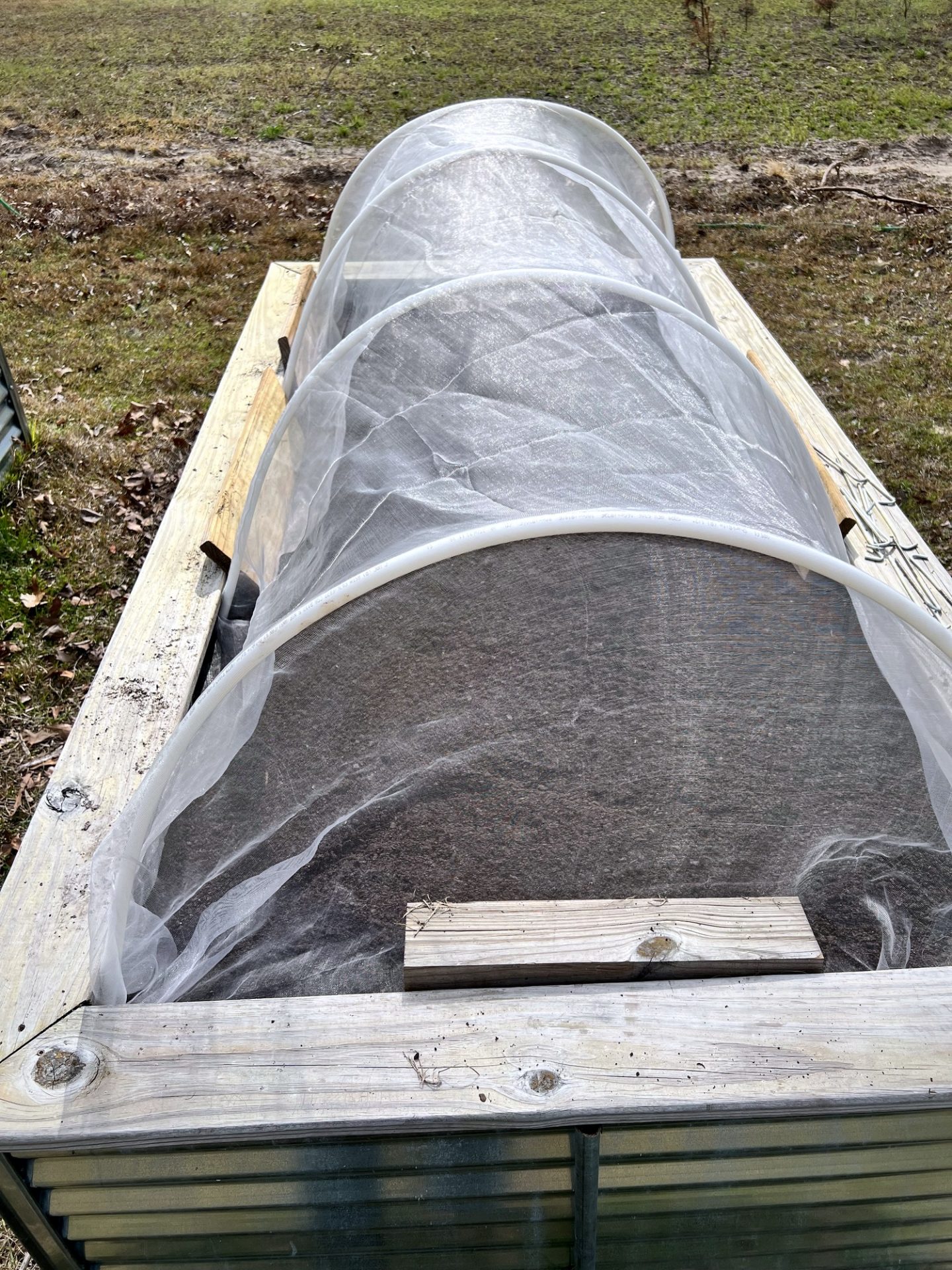
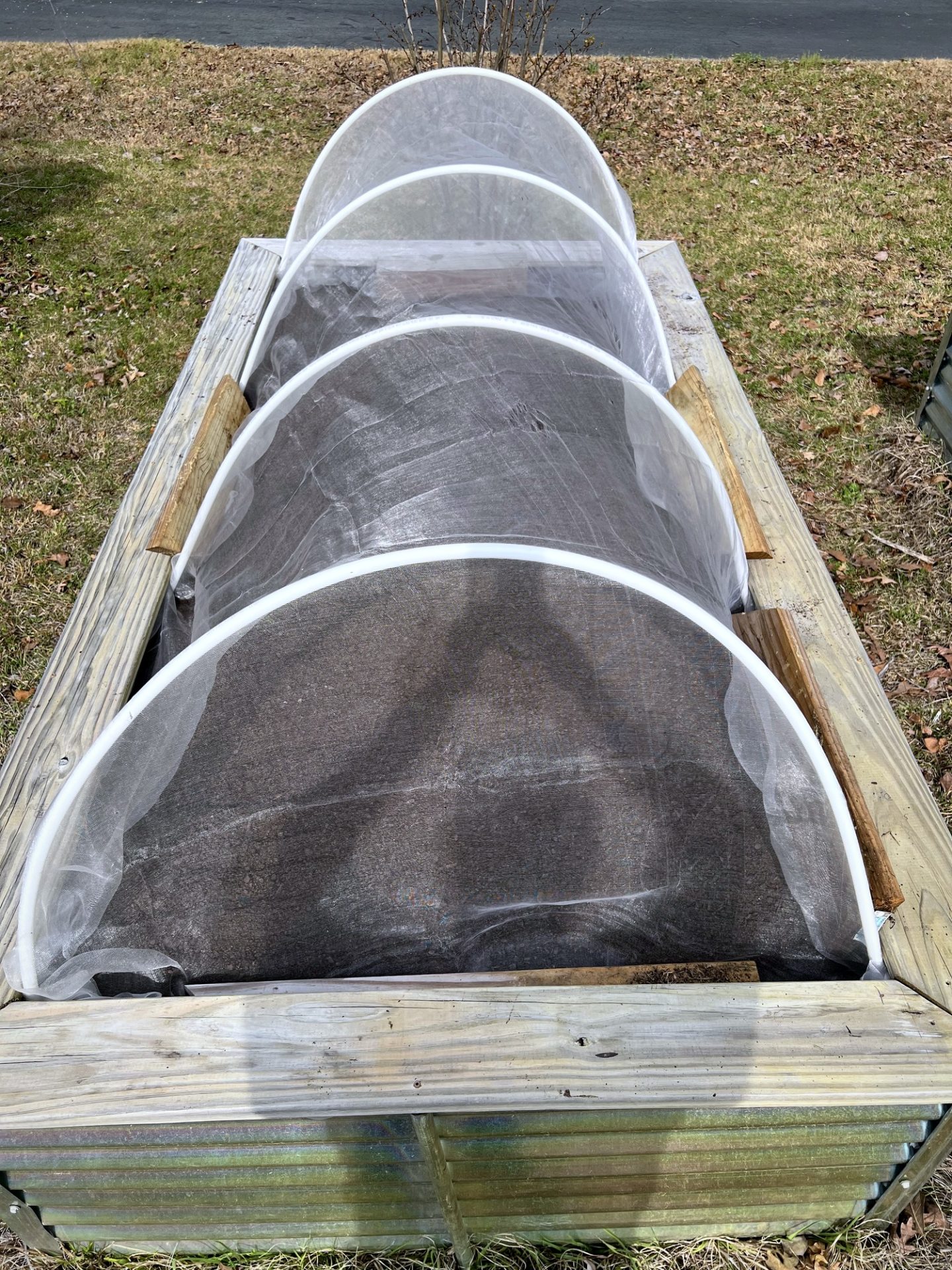
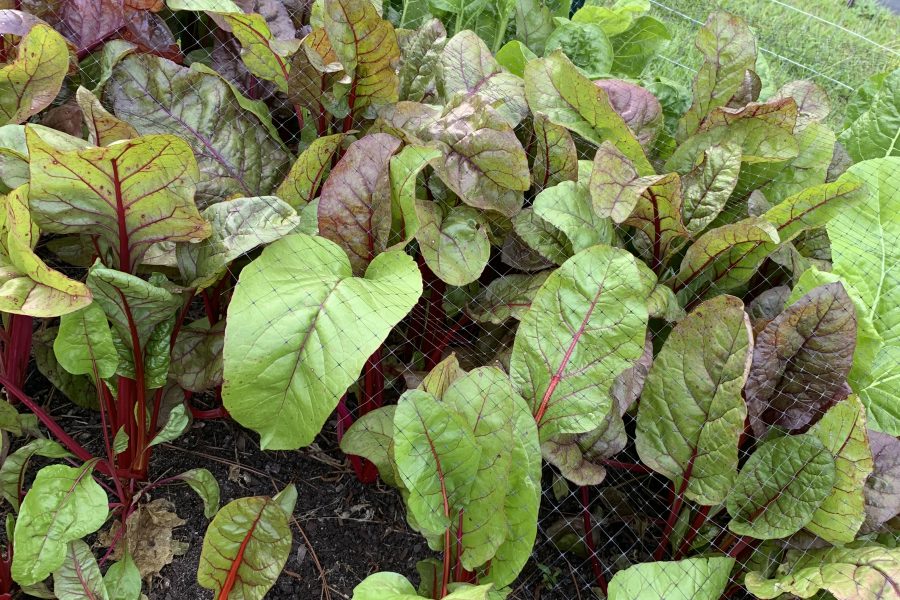
Over the hoops I run green ultra-fine polyethylene insect/bird mesh. The sheet I use is 10 ft by 30 ft, with mesh openings about 0.8 mm by 1 mm. It came from a WYRJXYB-style kit. I skip the kit’s fiberglass hoops and use my PVC instead.
I’m not going to invent a fabric weight for you. This is fine PE mesh, not a spun-bonded “X ounces per square yard” frost blanket from a catalog page. What I care about: it drapes over the hoops, keeps pests out, and gives the plants a little shelter when the Midlands get that first cold slap.
What’s Under Cover Right Now
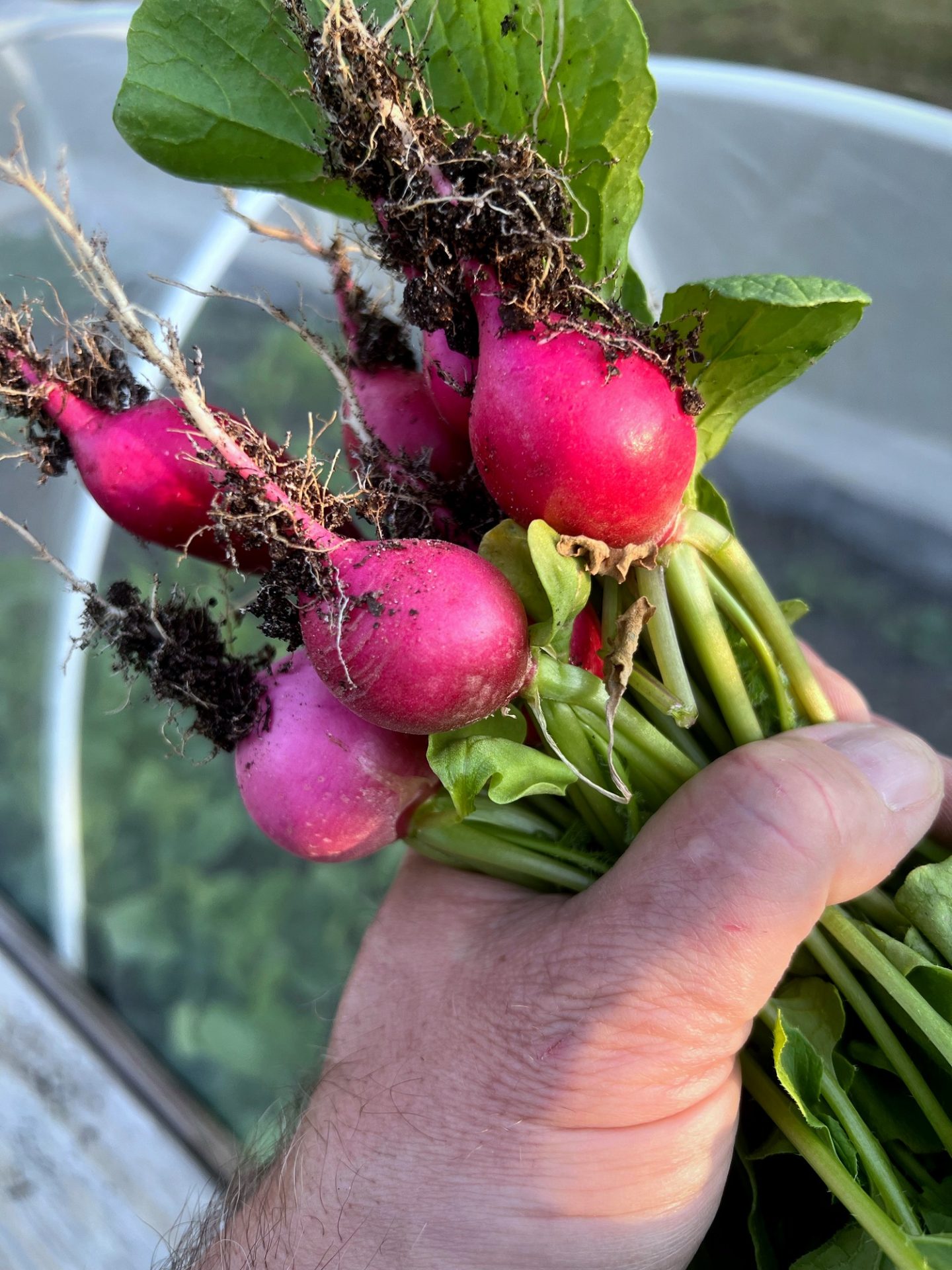
Right now I’ve got covers on all the garden greens, plus carrots, beets, and radishes. That’s the lineup that earns the hoop real estate when frost season starts.
When Frost Hits Blythewood (Not Mid-November)
For Blythewood and the Midlands, average first frost is late October into early November—not mid-November. Mid-November is closer to a hard freeze around here.
- NWS Columbia: average first 32°F around November 3.
- NOAA Cedar Creek 2E (near Blythewood): median first 32°F around October 28.
- Clemson HGIC: Midlands first frost is typically late October.
- Hard freeze note: mid-November is roughly when Columbia sees average ~28°F weather (NWS avg around November 16).
So if you’re waiting until Thanksgiving week to think about covers, you’re gardening on hope and vibes. I get the mesh ready before that late-October window.
How I Run It Day to Day
- Watch the forecast. When the night calls for frost, the cover goes on before sunset so it traps the day’s soil heat.
- Vent on warm days. Clemson advises taking covers off before temperatures under them climb above about 75°F. A sunny 70-degree afternoon in South Carolina will cook greens under a tunnel faster than a microwave Hot Pocket.
- Water under the cover. Rain gets through mesh, but in a dry spell, check the soil anyway.
- Pull back to harvest. Peel the mesh, pick what you need, put it back. No drama.
Pap Steve’s Field Notes
- DIY PEX-B over kit hoops: ½-inch white PEX-B; cheaper, easier to work with, more durable, lasts years in my gardens.
- Pipe + burial: ½-inch white PEX-B. Beds about 4 ft across; cut roughly 8–10 ft of pipe. About 1 ft into the ground at each end.
- Mesh: green ultra-fine PE insect/bird mesh, 10×30 ft, openings about 0.8 mm × 1 mm.
- Crops under cover now: all garden greens, plus carrots, beets, and radishes.
- Clemson timing note: in South Carolina, many cold-weather crops planted from mid-October to early November can be harvested through December, and even into early spring in a mild winter, depending on your zone.
- Storage: fold the mesh dry and keep it out of the sun so it lasts more than one season.
The folks on the family dairy farm up in Windham didn’t have ultra-fine PE mesh. They had old bedsheets, burlap, and stubbornness. Same instinct: don’t let a cold night waste good food. For more raised-bed talk, see the gardening category. If the harvest piles up, my canning posts are where the extras go.
Basic Gear
- ½-inch white PEX-B for DIY hoops (not the kit fiberglass)
- Ultra-fine PE insect/bird mesh (about 10×30 ft sheet works for me)
- Something to secure the edges—clips, pins, or weights so wind can’t steal it
- A forecast you actually check before bedtime
FAQ
Do I need hoops for row cover for frost protection?
I do. Frost can still form wherever cover touches the leaves. Hoops keep the mesh up off the plants, which means better protection and happier greens.
Why PVC instead of the hoops in the mesh kit?
The kit comes with fiberglass hoops. I make mine from flexible PVC because it’s cheaper, easier to work with, and more durable. Mine last years in the garden.
How deep do you bury the PVC?
About a foot on each end, shoved into the ground at the edge of the raised bed. I cut roughly 8 to 10 feet of ½-inch white PEX-B for a 4-foot-wide bed—shorter pipe for a lower tunnel, longer when the plants need more headspace. Farm math, not rocket science.
When is first frost around Blythewood?
Late October into early November on average—not mid-November. NWS Columbia’s average first 32°F is around November 3; NOAA’s Cedar Creek 2E station near Blythewood shows a median around October 28; Clemson puts Midlands first frost in late October. Mid-November is closer to hard-freeze territory in Columbia.
Can I leave the cover on all winter?
You can leave it on for long stretches in cold weather, but vent or remove it on warm days. Clemson recommends pulling covers before it gets above about 75°F underneath.
Got a hoop hack or a frost horror story? Drop it in the comments.
God Bless Y’all,
Pap Steve
papstevereviews.com


 English