Hey everyone, this is Pap Steve from papstevereviews.com. Today, I’m sharing my All American pressure canner review, covering the series that’s deeply personal to me—not just as a piece of equipment, but as a tool that helps preserve a family tradition passed down through generations.
Let me give you some background on why canning means so much to me. My grandparents lived through the Great Depression on their family dairy farm in the Catskill Mountains of New York. Those were difficult years; money was scarce, and families relied heavily on what they could produce themselves. They milked cows, maintained a large garden, hunted deer in the surrounding hills, and preserved everything possible to get through the long winters.


My grandmother was exceptional at canning—it was essential for their survival. It often meant the difference between having enough to eat and going without. They grew beans, tomatoes, corn, and potatoes, and preserved meat from steer, hogs and the occasional deer. High-acid foods like pickles and fruits could be water-bath canned, but for meats and low-acid vegetables, pressure canning was necessary. She understood the importance of proper technique long before modern guidelines were widely available: achieving the right pressure to prevent spoilage. Their root cellar was filled with shelves of quart jars containing venison, beef, green beans, and soups. That preserved food carried them through the hardest times, and my grandfather often credited it with teaching resilience and self-reliance.


As my mother grew up on the same farm, my grandmother taught her every step of the process—from peeling and chopping to packing jars and monitoring the pressure gauge. When I was young, my mother passed that knowledge on to me. I have vivid memories of summers spent in the kitchen, with steam filling the air and the steady sound of the canner at work. She emphasized that canning wasn’t just about food; it was about being prepared and taking care of your family.
Unfortunately, canning has become something of a lost art in recent years, which I believe is a real loss. In my view, it’s one of the most valuable skills for self-sufficiency. In today’s world—with unpredictable supply chains, rising food costs, and increasing weather events—knowing how to safely preserve food can provide genuine security for your household.
On our homestead here in South Carolina, we continue this tradition enthusiastically. The milder climate allows us to grow an abundance of vegetables each year: tomatoes, green beans, okra, squash, corn, peppers, and more. Our garden produces generously from spring through fall.


We preserve not only vegetables but also various meats, including venison when I harvest a deer during hunting season. There’s something incredibly satisfying about opening a jar of home-canned venison stew or roast in the winter—it’s tender, full of flavor, and you know exactly what went into it.
An important safety note: low-acid vegetables and meats must be pressure canned. Water-bath canning isn’t sufficient for these foods, as it doesn’t reach the temperatures needed to eliminate the risk of botulism. For tested processing times, I always follow the National Center for Home Food Preservation. This is where the All American series truly excels—it’s simply the best option available.
I personally own and use both the 41.5 quart model 941 and the 21.5-quart model 921 regularly, choosing based on the batch size. The 941 is impressive in capacity, holding 32 pint jars or 19 quart jars (with double-stacking for pints and quarts). It’s ideal for large harvests or processing an entire deer into chunks, broth, and stews—it saves a tremendous amount of time on big jobs.


For more typical sessions, such as a few bushels of beans or stock, the 921 works perfectly, accommodating 19 pint jars or 7 quart jars without dominating the stovetop.
I bought my 941 back in December 2012, and the 921 came along in January 2022. Over the last 14 years or so I’ve canned many hundreds of jars with All American canners, and I’m happy to report both of mine are still in tip-top shape. They just keep on going, batch after batch.
Unboxing My All American 921 Pressure Canner
When my 921 showed up back in January 2022, I snapped a few pictures while I opened it. Right on the side of the box it says what I’ve been telling you for years: “Designed and Manufactured in the United States of America,” with that exclusive metal-to-metal seal and no gaskets to crack, burn, replace or clean.
It comes packed good and snug. The lid rides on top in its own cardboard insert, a canning rack is tucked in under that, and the pot sits down at the bottom with another rack already inside. The box says it holds 19 pint jars or 7 quart jars and comes with 2 canning racks.
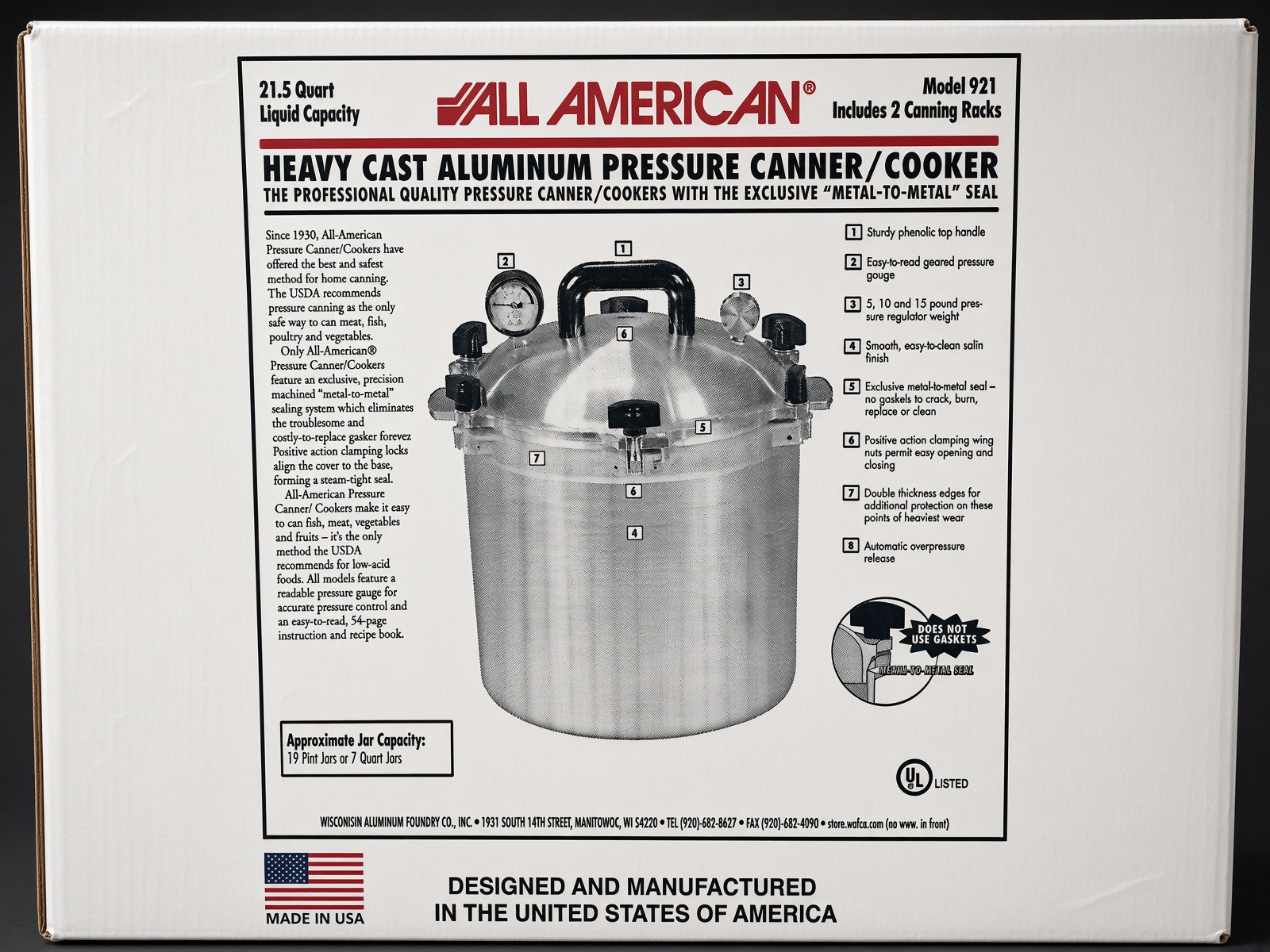
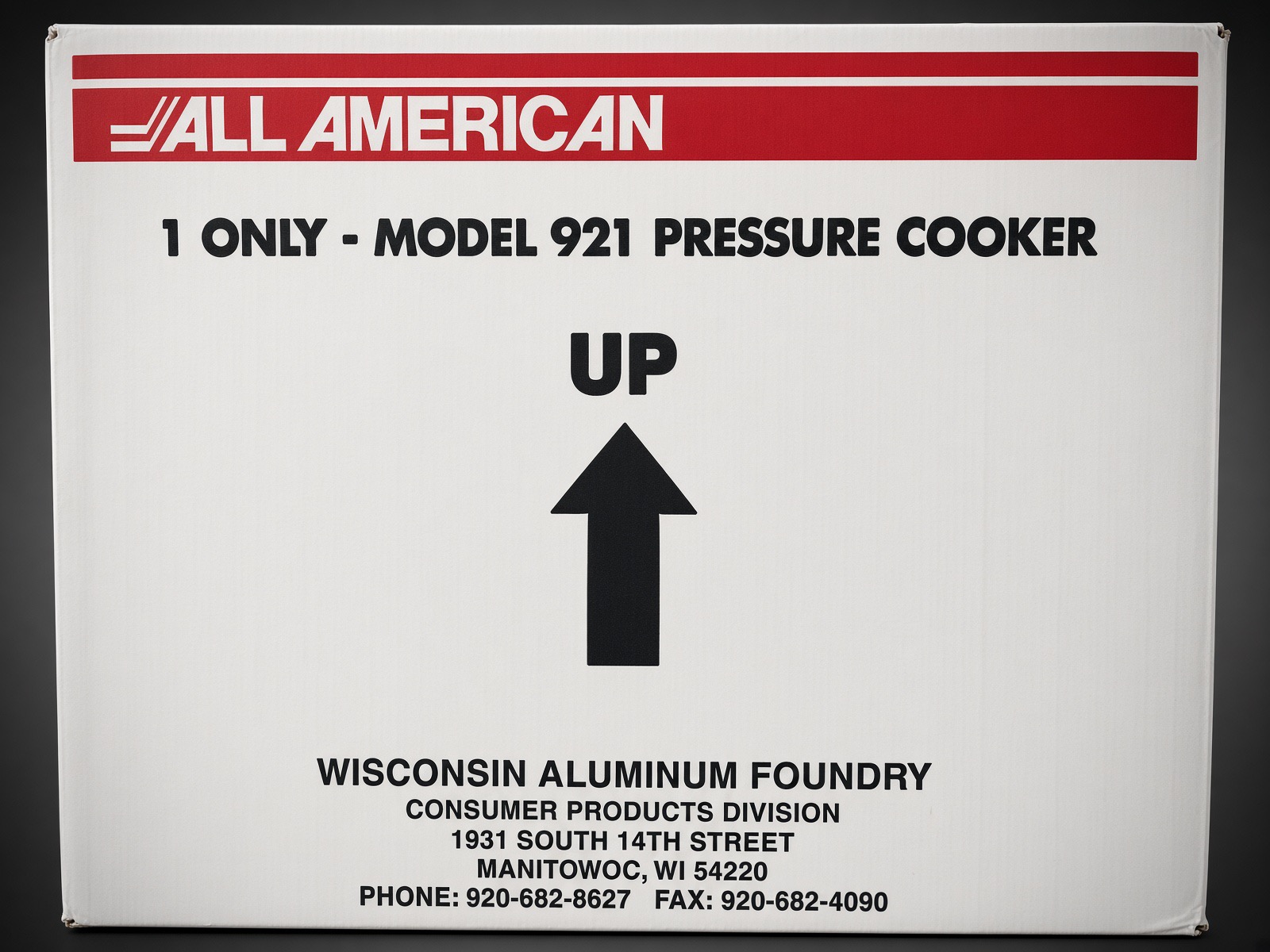
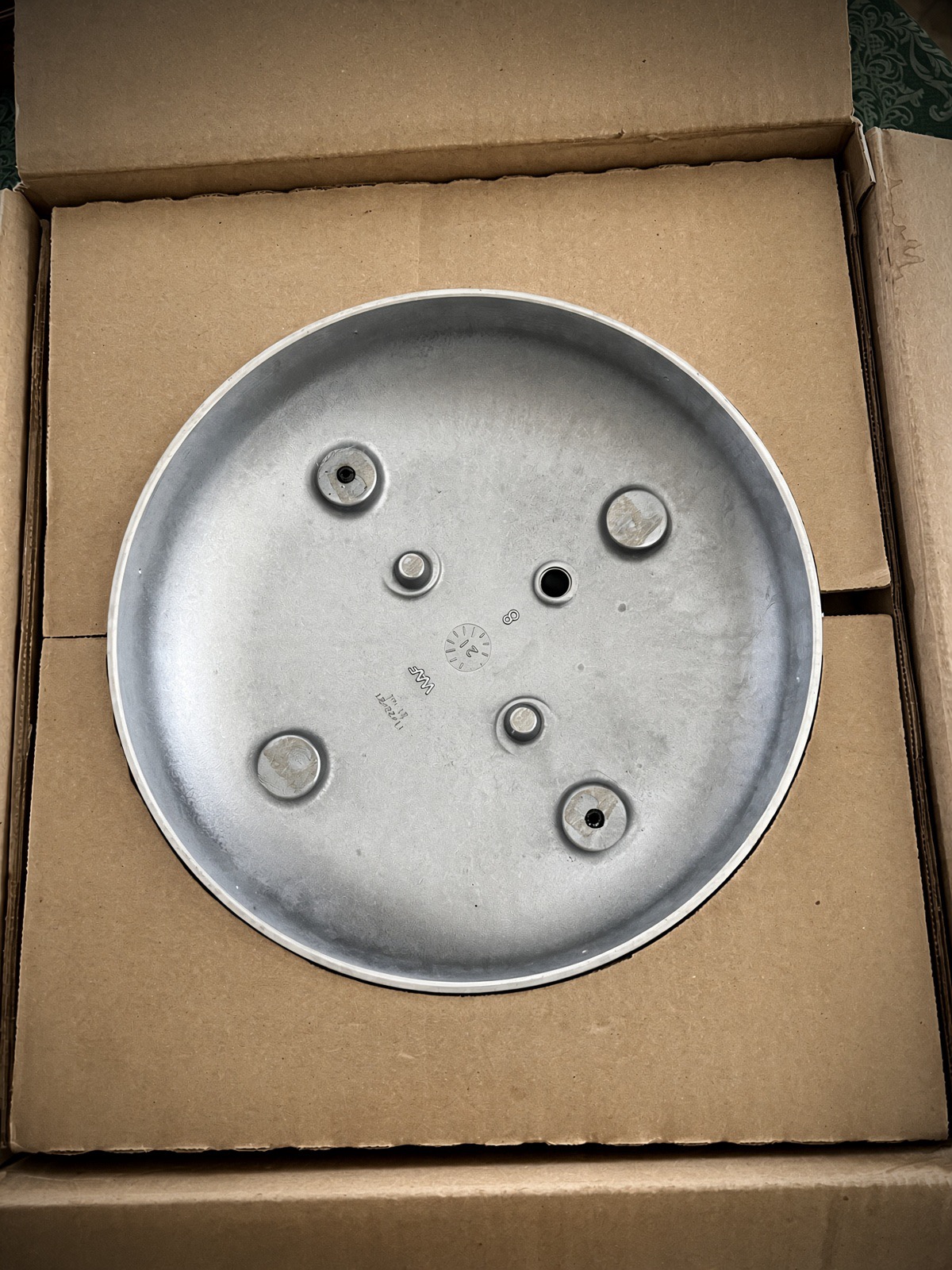
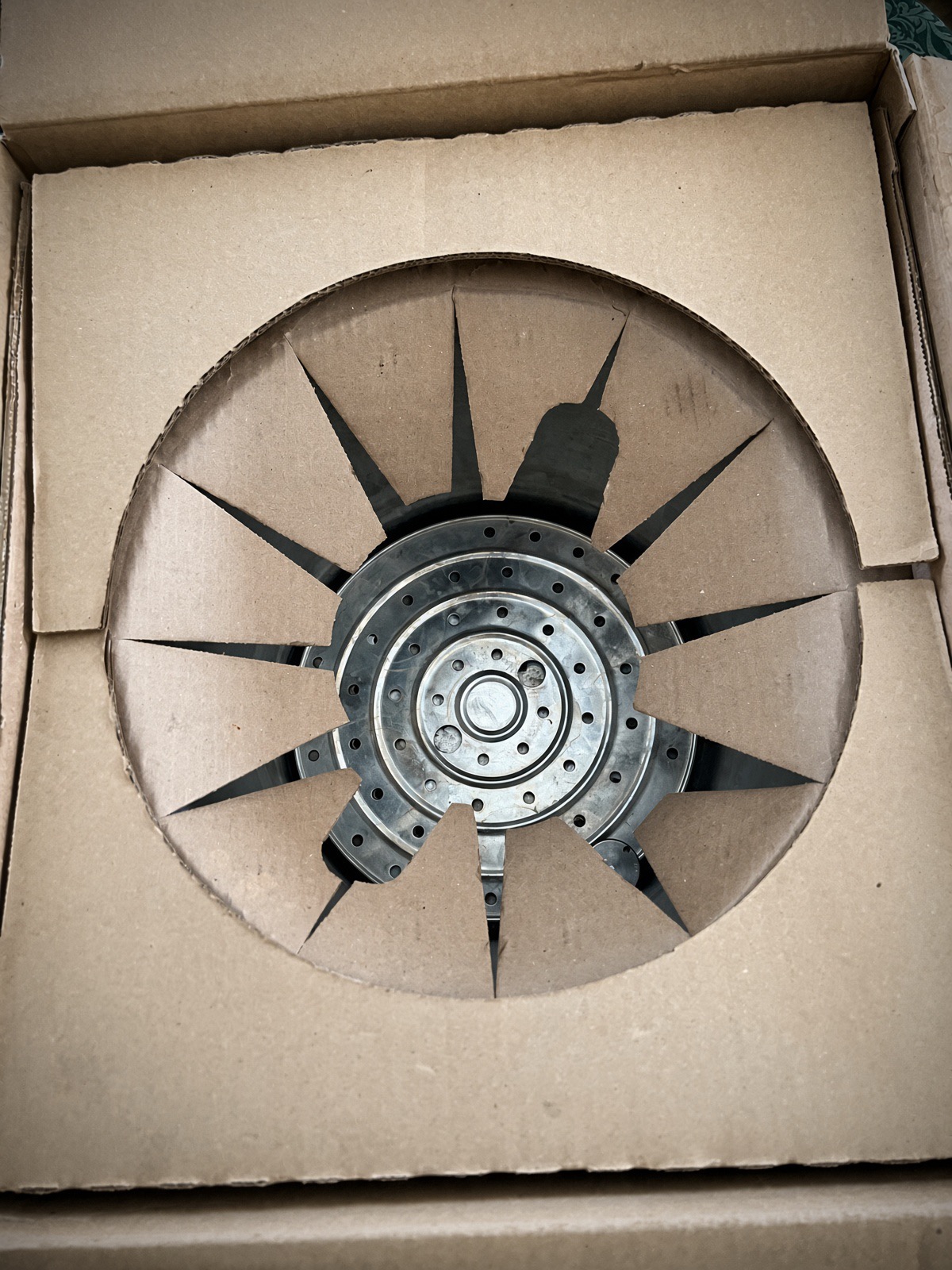
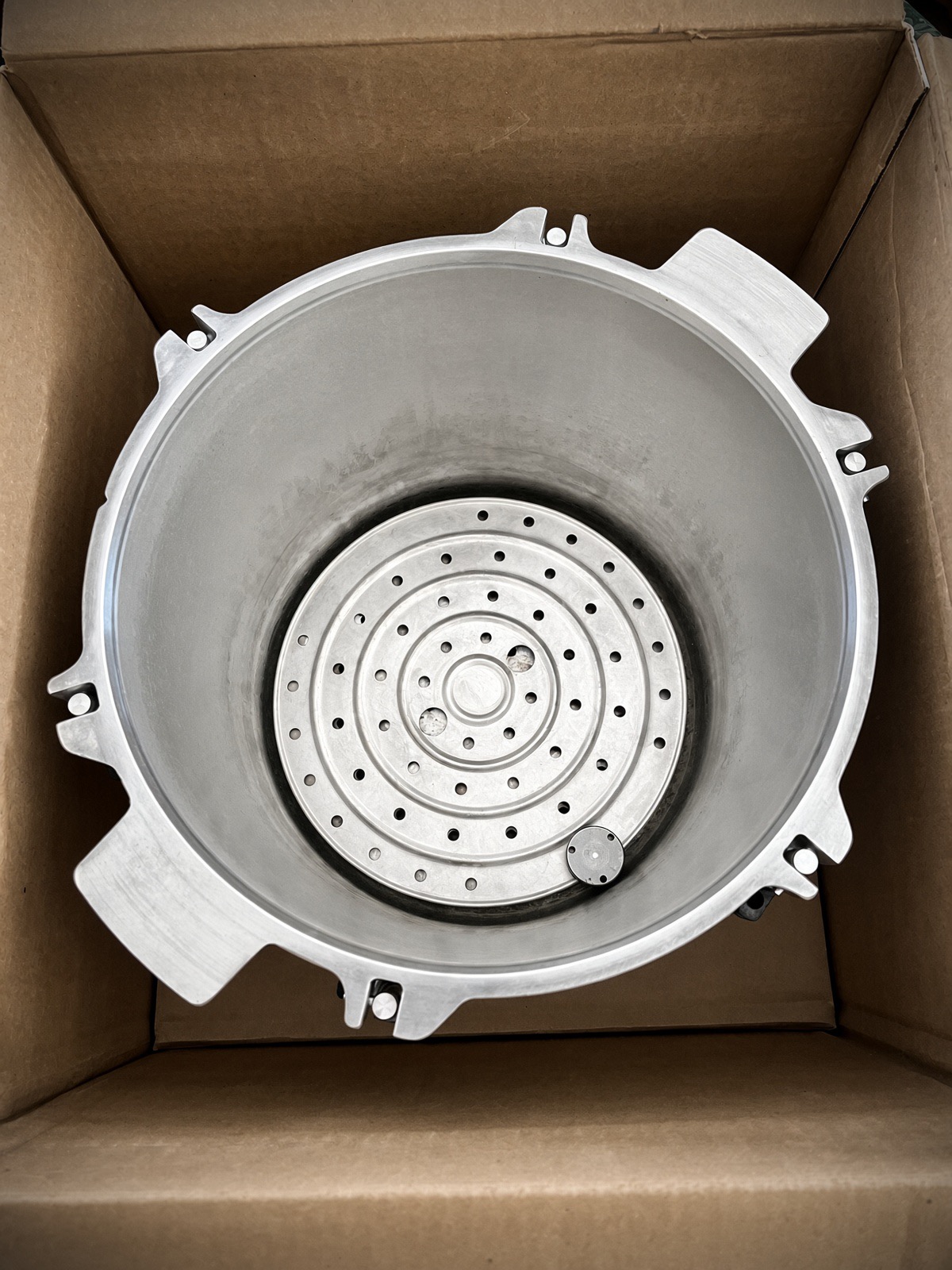
These canners are built in America by Wisconsin Aluminum Foundry and feature a unique metal-to-metal seal, eliminating the need for rubber gaskets that can degrade or fail over time. Constructed from thick cast aluminum with precise machining and secure wingnut locks, they maintain steady pressure via the weighted gauge system—no annual dial calibration required. They work on gas, electric, glass-top stoves (or induction with an adapter), and can double as large pressure cookers for everyday meals.
In my experience, there’s no siphoning or liquid loss, issues I’ve encountered with gasket-style models. Cleaning is straightforward, and these canners are designed to last for decades—much like the skills my grandmother shared.
Before I ever owned an All American, I used an old standard-style pressure canner I bought at a flea market, the kind with the rubber gasket. It got me started, but a rubber gasket is a part that wears out with time. With the All American there’s no gasket at all, because the lid seals metal-to-metal, so there’s one less thing to fail. I believe that’s a big reason mine have held up so well all these years.
If you’re starting out with canning, upgrading from a less reliable brand, or simply want confidence in safe food preservation, I strongly recommend the All American series. It’s more than equipment; it’s an investment in your family’s food security and a way to honor enduring traditions that have sustained my family for nearly a century.
That’s my All American pressure canner review in a nutshell: five stars without hesitation. Consider one for yourself and help keep this valuable skill alive.
Once the jars are sealed, label them so you know what’s what in the pantry. Try Pap Steve’s free Jar Label Maker.
God Bless Y’all,
Pap Steve


 English