(An honest look from a guy who has been in both kinds of kitchens)
PapSteveReviews.com, November 2026
Pap Steve here. I came across a video today, November 28, by @christinakerste called “Rebel canning vs. USDA-approved canning: What do the statistics actually tell us?” I’ve watched a lot of her videos before, but this particular one is new to me today. She asked a question I’ve been chewing on: how long have you been canning, and who taught you?
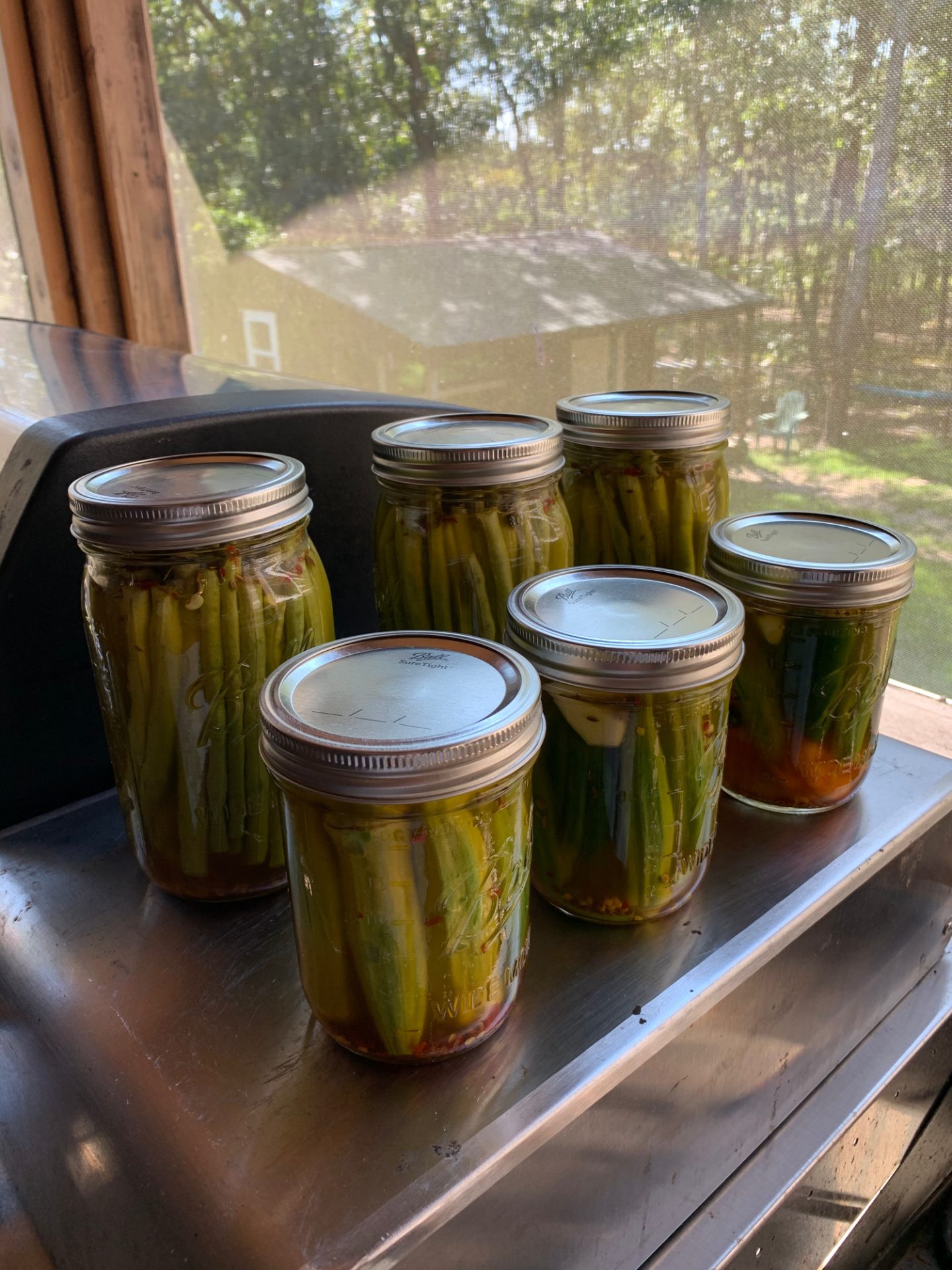
For me, the answer is easy. My mother taught me to can. For the most part she followed USDA guidelines. Mom was a nurse, and she knew quite a bit from her nursing days about being safe. But I do remember some hot-packed raw pickles that she turned upside down to seal. I can still see those jars on the shelves in our garage, back when I was a kid in the 1970s. I ate them, and I never got sick.
I’ve been canning for well over 30 years, and I’ve sealed thousands of jars, both water-bath and pressure canned. I’m not a professional wagging a degree, but 30 years teaches you a lot about canning.
If you’ve spent any time around rebel canners, you already know that’s the point they make, and I won’t pretend it isn’t a fair one. It’s also how survivorship works. The people who never got sick are the ones still telling the story, and a garage shelf full of uneventful jars doesn’t prove the next one is safe. Both of those things can be true at the same time.
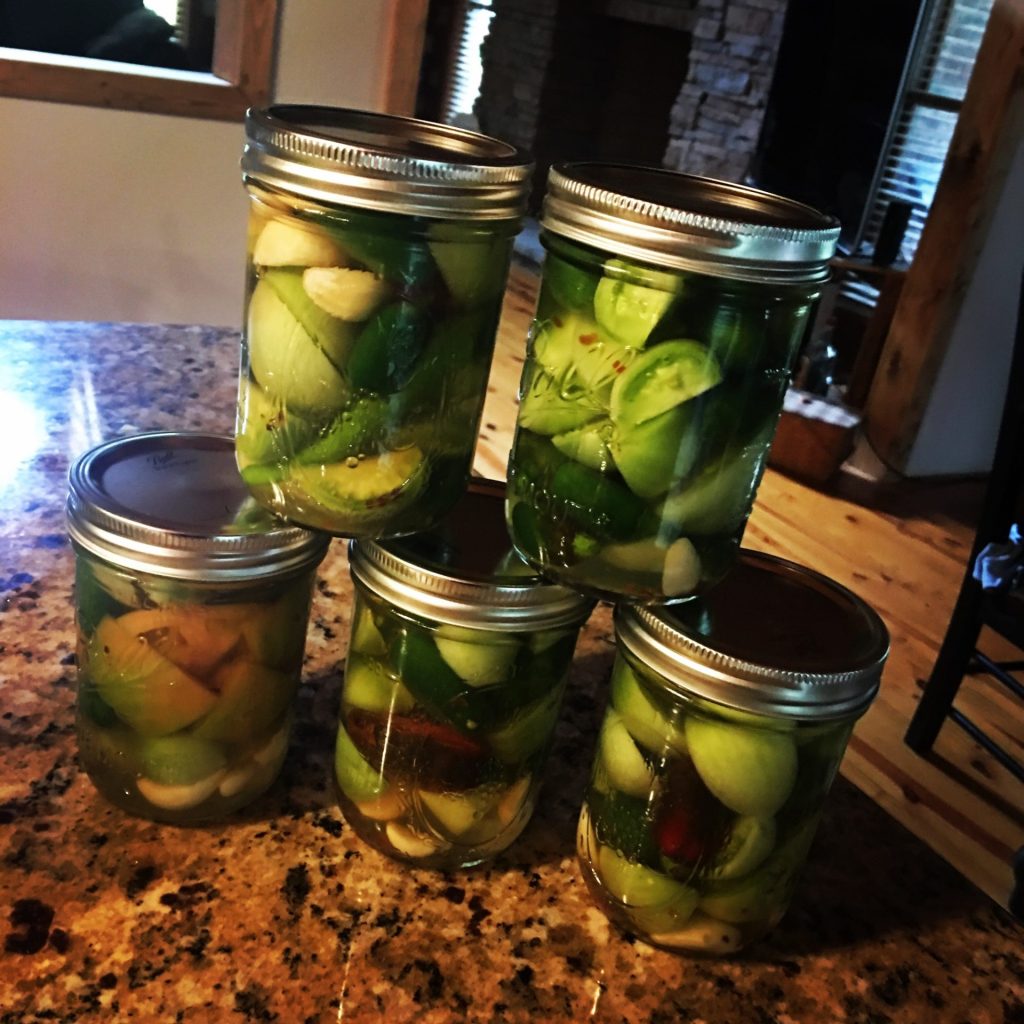
Here’s the other thing worth saying, fairly. Turning jars upside down to seal them, which canners call inversion, used to be commonly recommended. University Extension sources now say it isn’t advised, mainly because it can fail to make a reliable seal and leave you with spoiled food. South Dakota State University Extension notes that inversion was “once recommended by many accredited organizations,” before research showed the food doesn’t stay hot long enough and that flipping the jar can compromise the seal. Pickles are a little different from green beans or potatoes. They’re acidified, and at that acidity, botulism generally can’t grow, which is why a boiling-water bath is the tested method for them. That doesn’t make inversion a tested method. It just means those garage pickles were in a lower-risk category than a jar of low-acid vegetables put up the same way. I wouldn’t flip jars now. But I also won’t rewrite my childhood and claim I got sick when I didn’t.
So let me say this up front. I’m not writing this to wag my finger at anybody. Remember those ’80s “This is your brain on drugs” commercials with the frying egg? This isn’t that. I wanted to dig into the actual numbers and the actual documented cases, lay them on the table like a church potluck spread, and then hear from you.
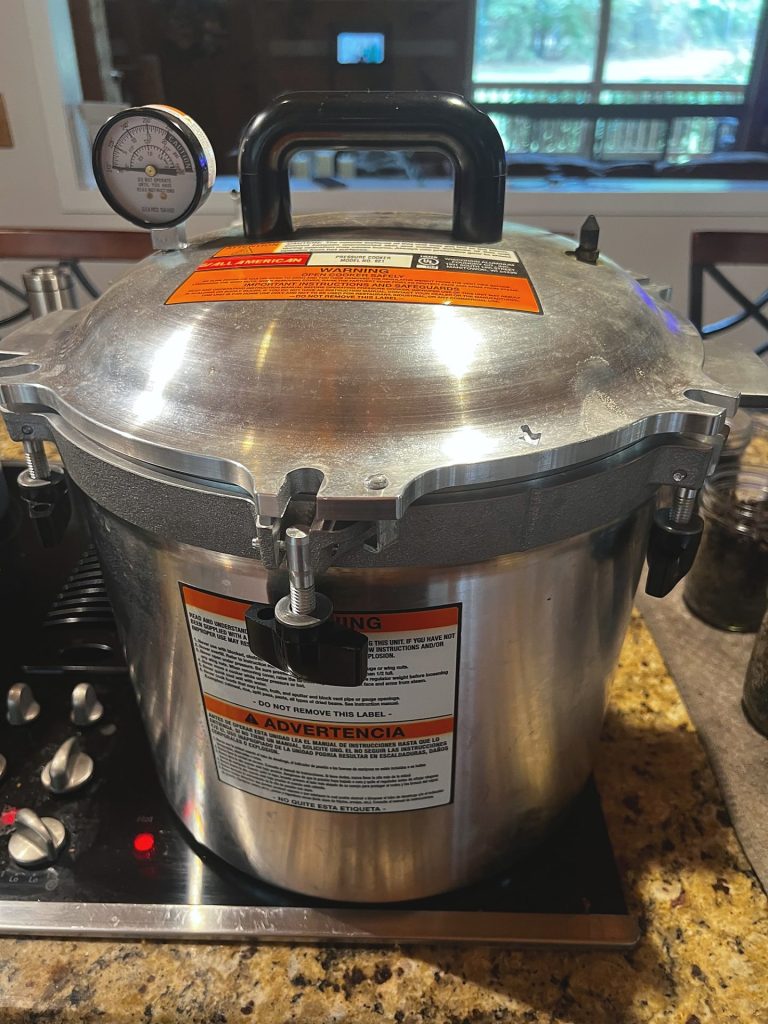
Here’s where I land, so you know my bias: I pretty much follow the proven canning methods. Here at Brandowdale South, my low-acid stuff goes in my All American pressure canner, by the tested NCHFP/USDA book. I’ll admit to being very curious about some of the rebel canning ways. One in particular is canning corned beef. I’ll come back to that, because I went looking for what the research actually says.
Video by @christinakerste on TikTok. Go give her a follow.
What “Rebel Canning” Actually Means
“Rebel canning” isn’t one thing. It’s an umbrella over a bunch of practices that the USDA and the National Center for Home Food Preservation (NCHFP) don’t recommend. Some are a big deal. Some honestly aren’t.
The ones food scientists consider true safety issues:
- Water-bath canning low-acid foods like green beans, corn, asparagus, beets, potatoes and meat. This is the big one. I’ll explain why below.
- Oven canning. Dry heat is slow to get into the jar, oven temperatures vary, no tested times exist, and jars can break.
- Open-kettle canning. You pack hot food into hot jars, put the lid on, and skip processing entirely.
- Inversion, meaning flipping hot jars upside down to seal them. This was once recommended by “many accredited organizations.” It’s no longer advised, mainly because it can fail to seal and leave you with spoiled food. (I wrote about my mom’s garage pickles above. Those are acidified, which is a lower botulism risk than low-acid vegetables, but inversion still isn’t a tested method.)
- “Dry canning” raw vegetables with no liquid, and canning dairy (milk, cheese, butter) for the shelf.
The ones that are mostly about quality, not safety:
- Leaving out the salt in canned vegetables. NCHFP says flat out that salt “is used for flavor only and is not necessary to prevent spoilage.”
- Using regular salt instead of canning salt. That mostly affects cloudiness and looks.
- Canning pasta in sauce. One well-known canning educator sent hers to a lab. She says it came back safe but “mushy and gross.”
The gray zone:
- Reusing flat lids. NCHFP says don’t, because the sealing compound is already dented and may not seal again.
- Old family recipes. Some of them are perfectly fine. Others never had a processing step at all.
And here’s something the rebel side is right about: guidance does change. Atmospheric steam canners were on the “not recommended” list until University of Wisconsin research in collaboration with NCHFP showed they work for acid foods with tested times. Now they’re accepted. Science moved.
The Science in Plain English
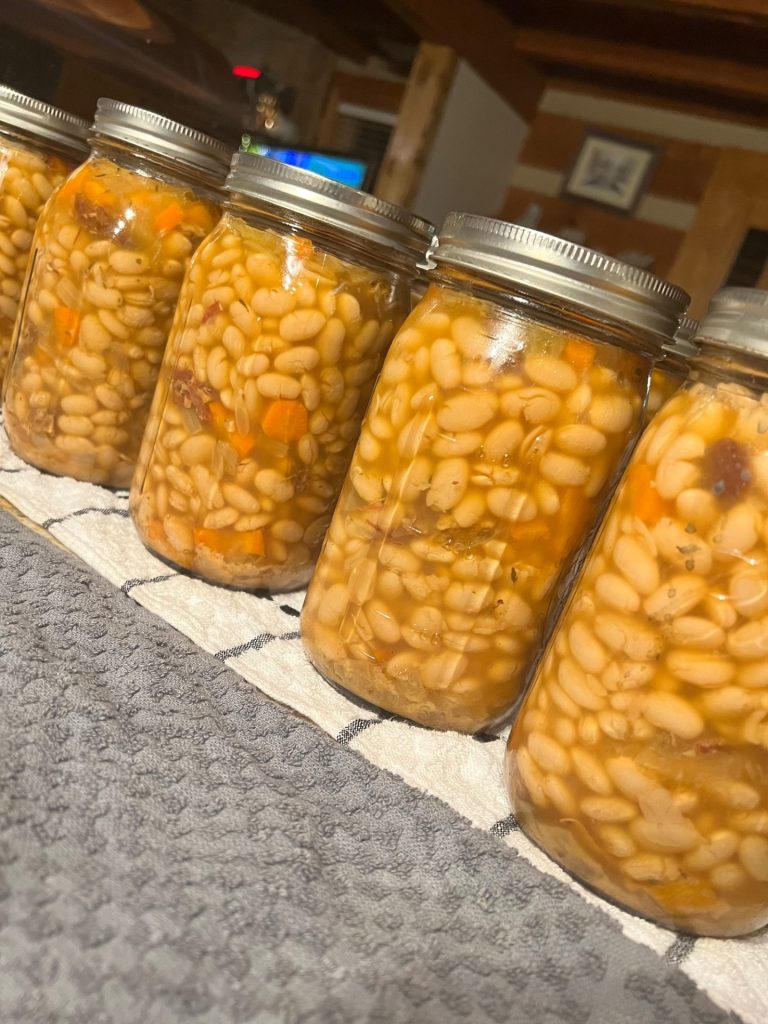
There’s a soil bacterium called Clostridium botulinum. Its spores are on most fresh produce, and on the counter they’re harmless. Put them in a sealed jar with low acid (pH above 4.6), no oxygen, moisture and room temperature, and they can wake up and make one of the most potent toxins known. NCHFP says that can happen within 3 to 4 days.
Boiling water tops out around 212°F at sea level, and less at altitude. According to the USDA guide, those spores are “very hard to destroy at boiling-water temperatures,” so low-acid foods need 240–250°F. You only get there with a pressure canner. To do the same job in a boiling-water bath, you’d need 7 to 11 hours. (No, that’s not a recipe. Don’t try it.)
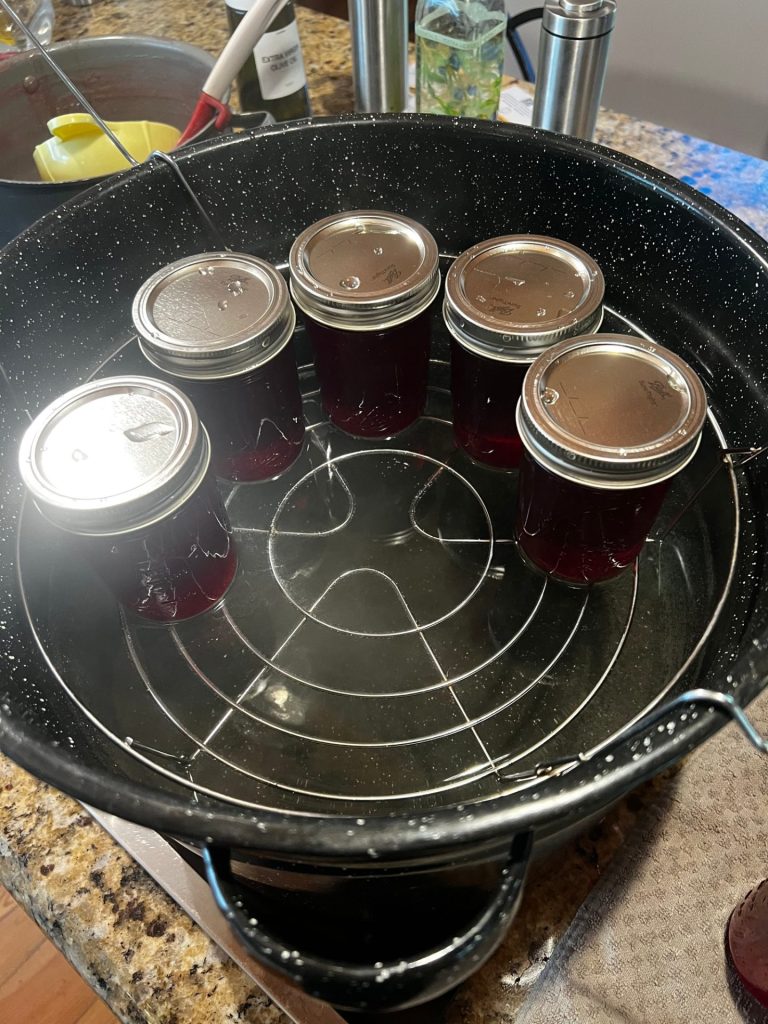
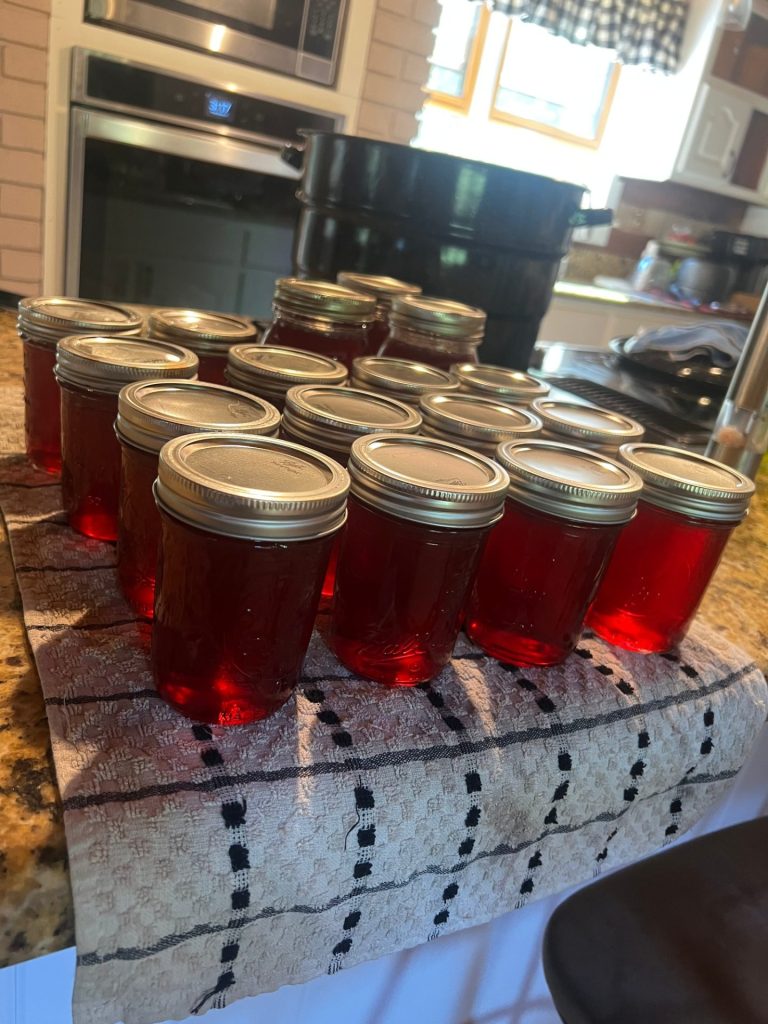
High-acid foods like most fruits, jams, pickles and properly acidified tomatoes are a different animal. Botulism can’t grow at that acidity, which is why the water bath works for them.
What the Numbers Say
This is where rebel canners have a real point, so let’s be fair about it.
Botulism is rare. A national survey published this month in Food Protection Trends found 17% of U.S. adults canned food in the prior year (the survey was done in 2024). Christina estimates that at 45–46 million people. That’s roughly what you get if you multiply 17% by the U.S. adult population. The survey itself doesn’t give a headcount.
Now set that against the CDC’s own count. A 2021 CDC study of lab-confirmed foodborne botulism from 2001 to 2017 found 326 cases total. 94 of them (29%) traced to home-canned foods, which works out to about 5 or 6 a year. Another 31 came from commercially canned food and 20 from commercially prepared food.
And modern medicine has changed the odds dramatically. In the first half of the 1900s, the case-fatality rate approached 70%. Today it’s under 5%, thanks mostly to intensive care and ventilators. In that 2001–2017 study, it was 5%.
So when a rebel canner tells you, “My family’s done it this way for 60 years and nobody ever got sick,” they’re probably telling you the truth. The odds were on their side.
But here’s the other half.
- The cases have a pattern. For decades, the CDC has found that home-canned vegetables are the most common cause of botulism outbreaks in the United States. In one CDC review of 1990–2000, asparagus led the list, followed by things like olives, beets, peppers, beans, greens and corn. Every home-canning outbreak report I read for this post traced back to a departure from tested methods.
- Some cases get missed. The CDC itself says mild cases can go unrecognized. A 1985 restaurant outbreak in Vancouver went undetected for weeks while patients were misdiagnosed with things like myasthenia gravis and stroke.
- Surviving isn’t the same as being fine. Botulism paralysis “lasts for weeks to months.” Patients have needed ventilators for up to 7 months. Antitoxin stops it from getting worse, but it doesn’t undo the damage that’s already done. You’re usually wide awake the whole time.
- One jar can hit a whole table. Which brings me to the cases.
Real Cases, Real Families
I’m only going to tell you what public health investigators documented. No embellishing.
Lancaster, Ohio, 2015: the church potluck. Seventy-seven people ate at a church potluck. Twenty-nine got botulism, 11 ended up on ventilators, and one person died. The source was potato salad made with home-canned potatoes, put up in a boiling-water canner instead of a pressure canner, and the potatoes weren’t heated after the jar was opened. It was the largest U.S. botulism outbreak in nearly 40 years. The CDC flew in 50 doses of antitoxin. (CDC MMWR)
Ohio, 2008: Grandpa didn’t like wasting food. This one hits close to home for me. A family shared home-canned green beans and carrots. The grandfather, his 15-year-old grandson and his wife all ended up on ventilators. Here’s the kicker: the canner’s recipe, from a 50-year-old Better Homes and Gardens cookbook, did say to use a pressure cooker. He didn’t have one, and he “was told by an old farmer’s wife that it was not needed,” so he water-bathed the jars for an hour. Some lids had popped, and the food smelled and tasted off. The grandfather, investigators wrote, “did not like wasting food.” (Journal of Food Protection, 2011)
Washington, 2009: the hot kitchen. A mother and her two young daughters got sick from garden green beans. The girls said the beans “smelled like cat litter.” The mom ate most of their portions too, and she was intubated. She’d shortened the processing time because the house had no air-conditioning, and the family had already eaten other jars from that same batch without trouble. (Same study.)
Washington, 2009: the asparagus that looked fine. Three men got sick from home-canned asparagus, and two were intubated. The old cookbook recipe said pressure cooker; the canner used a 15-minute hot water bath. This time the asparagus didn’t look, smell or taste unusual. (Same study.)
New York City, 2018: freezer trouble. The freezer quit, so a first-time canner used a peach preserves recipe in a boiling-water bath to put up frozen peas. All three women who ate them were intubated and spent 34 to 54 days in intensive care. (CDC MMWR)
Fresno County, California, 2024: a family method. Eight people got sick at two family gatherings from home-preserved cactus pads (nopales). Two needed ventilators, and all survived. The raw nopales went into jars that were boiled empty, with no processing after filling. The jars then sat for six weeks in a shed. Investigators noted the cook “had been home preserving foods for years using this technique, which was taught to her by friends and relatives.” (CDC MMWR)
Read those again and notice something. Nobody in them is a villain. They’re grandpas, moms, a church cook, and a family that’s done it this way for years. That’s exactly why I don’t think shaming people works.
A quick fairness note: the big outbreaks aren’t only home canners. In the CDC’s 2001–2017 review, the other large outbreaks came from commercial chili, a commercial hot dog chili sauce, gas station nacho cheese and prison-made “pruno.” Alaska’s high case count is mostly traditional fermented Native foods, which is a whole separate subject from canning.
Can You Tell If a Jar Has Botulism?
Short answer: not reliably. The CDC says you “cannot see, smell, or taste the toxin,” and that even a small taste can be deadly. Spoilage bacteria often do give you a warning, like a bulging or leaking lid, liquid that spurts when you open it, mold, or a bad smell. NCHFP warns that spoiled low-acid foods can show “very little evidence.” In the cases above, some families had warning signs and ignored them, and one had none at all. In a 2005 national survey, only 45% of home canners knew canned food could be spoiled without obvious signs.
What the CDC recommends:
- Throw out anything with warning signs. Don’t taste it.
- Boil home-canned low-acid foods and tomatoes before eating: 10 minutes below 1,000 feet, plus 1 minute for each additional 1,000 feet.
What @christinakerste’s Video Gets Right (and Where I’d Push Back)
I want to give Christina her due. Her video is calm, it’s respectful, and she says outright that “scientifically tested recipes remain the safest recommendation.” I checked her numbers against the original sources.
What checks out:
- The 17% figure is from a real national survey published this month.
- “Nearly one-third modifying instructions 20+ years ago” also holds up. NCHFP’s national surveys found 29% of canners adapted instructions in 2000–01 and 30.5% in 2005. (Small samples, though: about 135 and 174 canners.)
- The 326 / 94 / 31 / 20 botulism numbers match the 2021 CDC study exactly.
- The National Weather Service figure of about 270 lightning strikes and 27 deaths a year matches the NWS page. That’s a 2009–2018 average; more recent NWS numbers are about 21 deaths a year.
- The Florida Museum reported 29 unprovoked U.S. shark bites in 2024.
- She’s right that there’s no national study comparing USDA canners with rebel canners. I couldn’t find one either.
- She’s right that modern medicine makes death much rarer.
Where I’d push back, respectfully:
- Shark bites and lightning aren’t your personal odds. To her credit, she says so herself. Those are national counts. Your shark risk depends on whether you swim in the ocean. Your botulism risk depends on what’s in the jar and how it was processed. Even the math is a little generous: 29 shark bites against about 5.5 home-canning botulism cases a year is about 5 to 1, not “almost 6.”
- The timelines don’t line up. Her case count covers 2001–2017. Her canner count comes from a 2024 survey.
- “Adapted instructions” isn’t the same as “rebel.” Leaving out salt counts as adapting. Water-bathing green beans counts as adapting too. The surveys didn’t say which. So turning that 30% into “about 14 million rebel canners” stretches it.
- It leaves out what a case actually looks like: weeks or months on a ventilator. And it doesn’t mention that the toxin can’t be seen, smelled or tasted.
None of that makes her a bad source. She asked the right question. I just think the full picture belongs next to the comforting numbers.
So Where Does That Leave Us?
Here’s my honest take, and you’re welcome to disagree. The tested NCHFP/USDA methods are the safest choice we have, especially for low-acid foods. Every home-canning outbreak I read about came down to a departure from them. At the same time, the risk for any one canner is low, a lot of “rules” are about quality rather than safety, and the guidance really has changed over the years. People who cook the way their grandmothers did aren’t fools. They’re carrying on something that matters.
If you’re going to break one rule, please don’t let it be the one about pressure canning low-acid foods. That’s the one with the body count.
As I said up top, I pretty much follow the proven methods, but I am curious. The rebel practice I keep coming back to is canning corned beef. I went looking for a tested process, and here’s what I found. I’m not going to give you times or steps, because there aren’t official ones to give.
NCHFP puts it plainly: they “cannot support the canning of cured, brined or corned meats with the procedures for fresh meats.” Clemson Extension, working from that guidance and from comments by Dr. Elizabeth Andress at NCHFP, says there are “no science-based processes” for home-canning those meats. Kansas State Extension reaches the same conclusion and recommends freezing instead.
The reasons are more interesting than a simple no. Corned beef and other cured meats are often firmer and drier than fresh meat, so heat may move through the jar more slowly. Using the fresh-meat process could leave the center underprocessed. On the other hand, curing salts like nitrite and nitrate can make C. botulinum more sensitive to heat, which might mean a shorter process would be enough, and the regular meat time could overcook it. Nobody has done the testing to know which way it goes, and today’s corned beef isn’t even one product. Andress has said she can’t find evidence that the USDA research behind the current meat directions included cured meats. There was an early mention of corned beef in some 1940s work, but a literature review in the 1980s never pinned down those origins, and USDA dropped corned beef from later home-canning guides. Her line is a good one: she doesn’t make up processes for low-acid foods.
The USDA directions we do have are for fresh meat: strips, cubes or chunks of bear, beef, lamb, pork, veal or venison. They do not list ham or corned beef. They also tell you to trim off as much fat as you can, because fat on the rim can keep a lid from sealing.
What I’ve seen among rebel canners is usually some version of packing corned beef and running it like regular beef in a pressure canner. That’s the exact shortcut the research agencies say they can’t stand behind, because it hasn’t been tested for this product. I’m curious. For now, I stick with the tested methods, because there’s no official process to follow. If you have canned corned beef, I’d like to hear about it, including why you were comfortable with it, or why you decided not to.
Now It’s Your Turn
This is the part I actually care about. I want to hear from you, rebels and by-the-book canners alike:
- How did your family can? Who taught you?
- Have you ever changed a recipe, and how?
- Where do you draw the line? Is there something you’ll do “the old way” and something you never would?
- Have any of you canned corned beef?
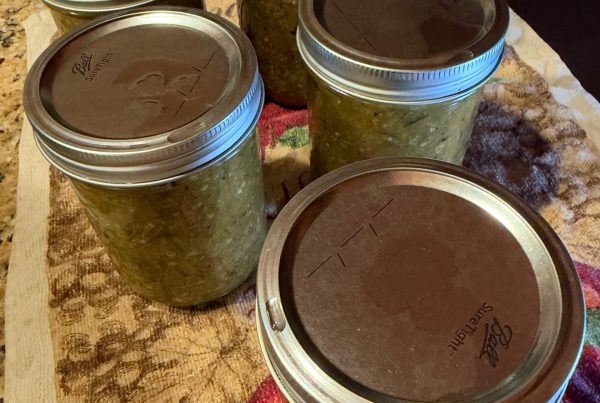
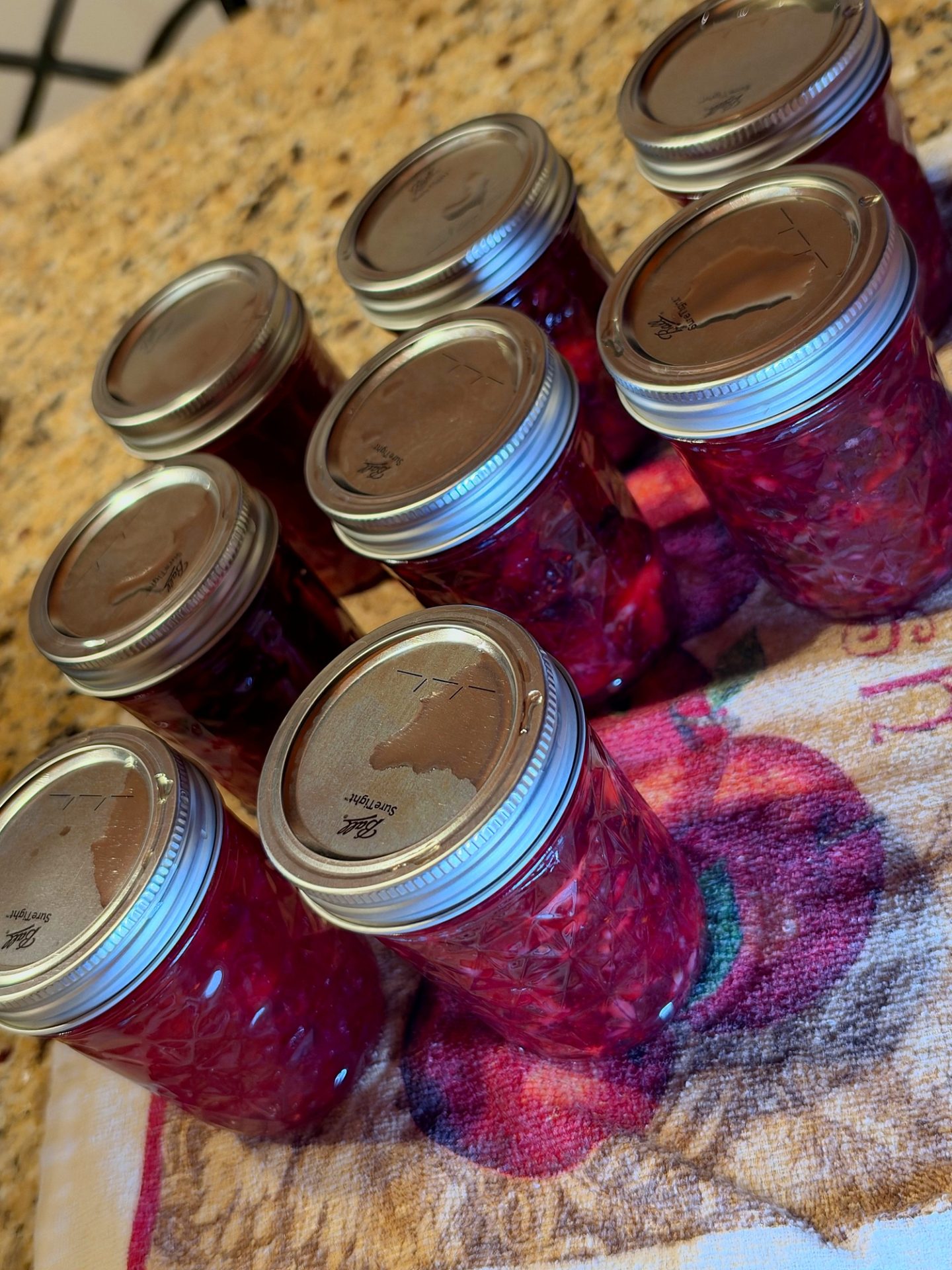
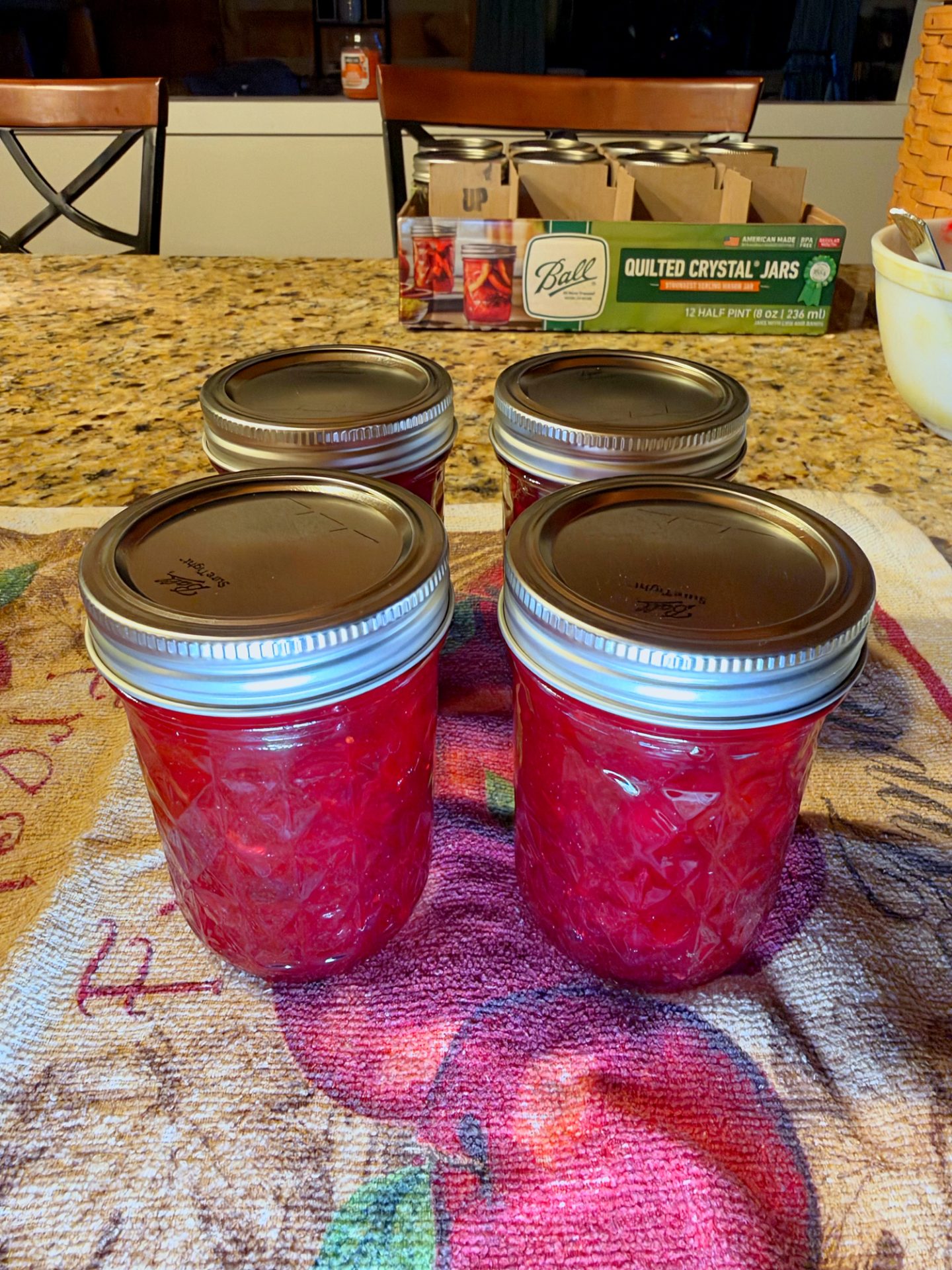
Drop it in the comments below. Keep it kind. Nobody gets yelled at around here. 😉 If you want to see how I put up my own jars, check out my apple butter canning recipe and my canning questions page.
God Bless Y’all,
Pap Steve
PapSteveReviews.com
P.S. Christina, if you ever read this: thanks for starting a conversation instead of a canning war.
FAQ
What is rebel canning?
Home canning that doesn’t follow USDA/NCHFP tested recipes and methods. Examples include water-bath canning low-acid foods, oven or open-kettle canning, inversion, canning dairy, and writing your own recipes.
How common is botulism from home canning?
Rare. A CDC study counted 94 lab-confirmed cases from home-canned foods in the U.S. from 2001 to 2017, about 5 or 6 a year, while roughly 17% of U.S. adults can at home.
Which home-canned foods cause botulism most often?
Low-acid vegetables. CDC data point to vegetables like asparagus, green beans, beets, corn, peppers and potatoes when they’re processed in a boiling-water bath instead of a pressure canner.
Why can’t I water-bath green beans?
They’re low-acid (pH above 4.6). Botulism spores survive boiling-water temperatures, and the USDA says low-acid foods need 240–250°F, which only a pressure canner reaches.
Can you smell or see botulism in a jar?
Not reliably. The CDC says the toxin can’t be seen, smelled or tasted. Bulging lids, spurting liquid, mold or bad smells mean spoilage, so throw those jars out. But a normal-looking jar isn’t proof that it’s safe.
Is botulism still deadly?
Less often than it used to be. Deaths have dropped from nearly 70% of cases in the early 1900s to under 5% today. Survivors can still spend weeks to months on a ventilator.
Is it safe to can butter or milk at home?
NCHFP and Clemson Extension say there are no science-based methods for home-canning dairy. Most online “butter canning” directions are open kettle. They also acknowledge the exact risk for high-fat butter hasn’t been studied.
Is there a tested way to can corned beef at home?
No. NCHFP says it cannot support canning cured, brined or corned meats with the procedures for fresh meats. Clemson and Kansas State Extension agree there is no science-based home process; K-State recommends freezing instead.
Sources
- @christinakerste, “Rebel canning vs. USDA-approved canning” (TikTok, Nov 24, 2026). https://www.tiktok.com/@christinakerste/video/7711928385764625678
- Schwan CL, et al. “How and Why Americans Are Preserving Food at Home: A 2024 Survey.” Food Protection Trends 46(6), Nov 2026. https://www.foodprotection.org/publications/food-protection-trends/archive/2026-11-how-and-why-americans-are-preserving-food-at-home-a-2024-survey/
- Andress EL, et al. “Current Home Canning Practices in the U.S.” NCHFP, 2002. https://nchfp.uga.edu/papers/2002/canning_survey.html
- D’Sa EM, et al. “Survey of Home Canning Practices and Safety Issues in the U.S.” NCHFP, 2007. https://nchfp.uga.edu/papers/2007/canning_survey.html
- Lúquez C, et al. (CDC). “Foodborne Botulism Outbreaks in the United States, 2001–2017.” Frontiers in Microbiology, 2021. https://www.frontiersin.org/journals/microbiology/articles/10.3389/fmicb.2021.713101/full
- Sobel J, et al. (CDC). “Foodborne Botulism in the United States, 1990–2000.” Emerging Infectious Diseases, 2004. https://wwwnc.cdc.gov/eid/article/10/9/03-0745_article
- Rao AK, et al. “Clinical Guidelines for Diagnosis and Treatment of Botulism, 2021.” CDC MMWR. https://www.cdc.gov/mmwr/volumes/70/rr/rr7002a1.htm
- McCarty CL, et al. “Large Outbreak of Botulism Associated with a Church Potluck Meal — Ohio, 2015.” CDC MMWR. https://www.cdc.gov/mmwr/preview/mmwrhtml/mm6429a6.htm
- Date K, et al. “Three Outbreaks of Foodborne Botulism Caused by Unsafe Home Canning of Vegetables — Ohio and Washington, 2008 and 2009.” J Food Prot, 2011. https://nchfp.uga.edu/papers/bot_outbreak.pdf
- Bergeron G, et al. “Botulism Outbreak Associated with Home-Canned Peas — New York City, 2018.” CDC MMWR. https://www.cdc.gov/mmwr/volumes/68/wr/mm6810a5.htm
- Vohra R, et al. “Foodborne Botulism Outbreak After Consumption of Home-Canned Cactus (Nopales) — Fresno County, California, June 2024.” CDC MMWR, 2025. https://www.cdc.gov/mmwr/volumes/74/wr/mm7424a1.htm
- St. Louis ME, et al. “Botulism from chopped garlic: delayed recognition of a major outbreak.” Ann Intern Med, 1988. https://pubmed.ncbi.nlm.nih.gov/3341673/
- CDC. “Home-Canned Foods” (botulism prevention). https://www.cdc.gov/botulism/prevention/home-canned-foods.html
- CDC. National Botulism Surveillance. https://www.cdc.gov/botulism/php/national-botulism-surveillance/
- NCHFP / USDA Complete Guide. “Ensuring Safe Canned Foods.” https://nchfp.uga.edu/how/can/general-information-on-canning/ensuring-safe-canned-foods/
- NCHFP. “Identifying and Handling Spoiled Canned Food.” https://nchfp.uga.edu/how/can/general-information-on-canning/identifying-and-handling-spoiled-canned-food/
- NCHFP. “Equipment and Methods Not Recommended.” https://nchfp.uga.edu/how/general/equipment-and-methods-not-recommended/
- NCHFP. General, vegetable and miscellaneous canning FAQs. https://nchfp.uga.edu/faqs/general-canning/category/faq-canning
- NCHFP. “Green Beans and Botulism.” https://nchfp.uga.edu/newsflash/green-beans-and-botulism
- South Dakota State University Extension. “The ‘Why’ Behind Unsafe Canning Practices.” https://extension.sdstate.edu/why-behind-unsafe-canning-practices
- Clemson HGIC. “Canning Controversies: No to Home Canning Dairy Products.” https://hgic.clemson.edu/canning-controversies/
- National Weather Service. “How Dangerous is Lightning?” https://www.weather.gov/safety/lightning-odds
- Florida Museum of Natural History. “Unprovoked shark bites plummeted in 2024.” https://www.floridamuseum.ufl.edu/science/unprovoked-shark-bites-plummeted-in-2024/
- McCarthy A. “‘Rebel Canning’ Is Having a Moment, Whether or Not It Should.” Eater, Aug 18, 2023. https://www.eater.com/23832985/rebel-canners-home-canning-usda-regulations-food-safety
- NCHFP. “Preparing and Canning Poultry, Red Meats, and Seafoods” (strips, cubes or chunks). https://nchfp.uga.edu/how/can/preparing-and-canning-poultry-red-meats-and-seafoods/meat-strips-cubes-or-chunks/
- NCHFP. Meats FAQs (fat and seals). https://nchfp.uga.edu/faqs/meats/category/faq-canning
- Clemson Extension. “There is no safe approved process for home canning cured, brined or corned meats.” (Canning Tip #55, quoting NCHFP and Dr. Elizabeth Andress, Aug 2015.) Original: https://www.clemson.edu/extension/food/canning/canning-tips/55home-cured-brined-corned-meats.html Archived March 27, 2025: https://web.archive.org/web/20250327072854/https://www.clemson.edu/extension/food/canning/canning-tips/55home-cured-brined-corned-meats.html
- Blakeslee K. “Canning Cured, Brined or Corned Meat, is it Safe?” Kansas State University, April 19, 2022 (updated Sept 16, 2026). https://www.k-state.edu/news/you-asked-it/articles/2022/04/canning-cured-brined-or-corned-meat-is-it-safe.html


 English